
Table of Contents
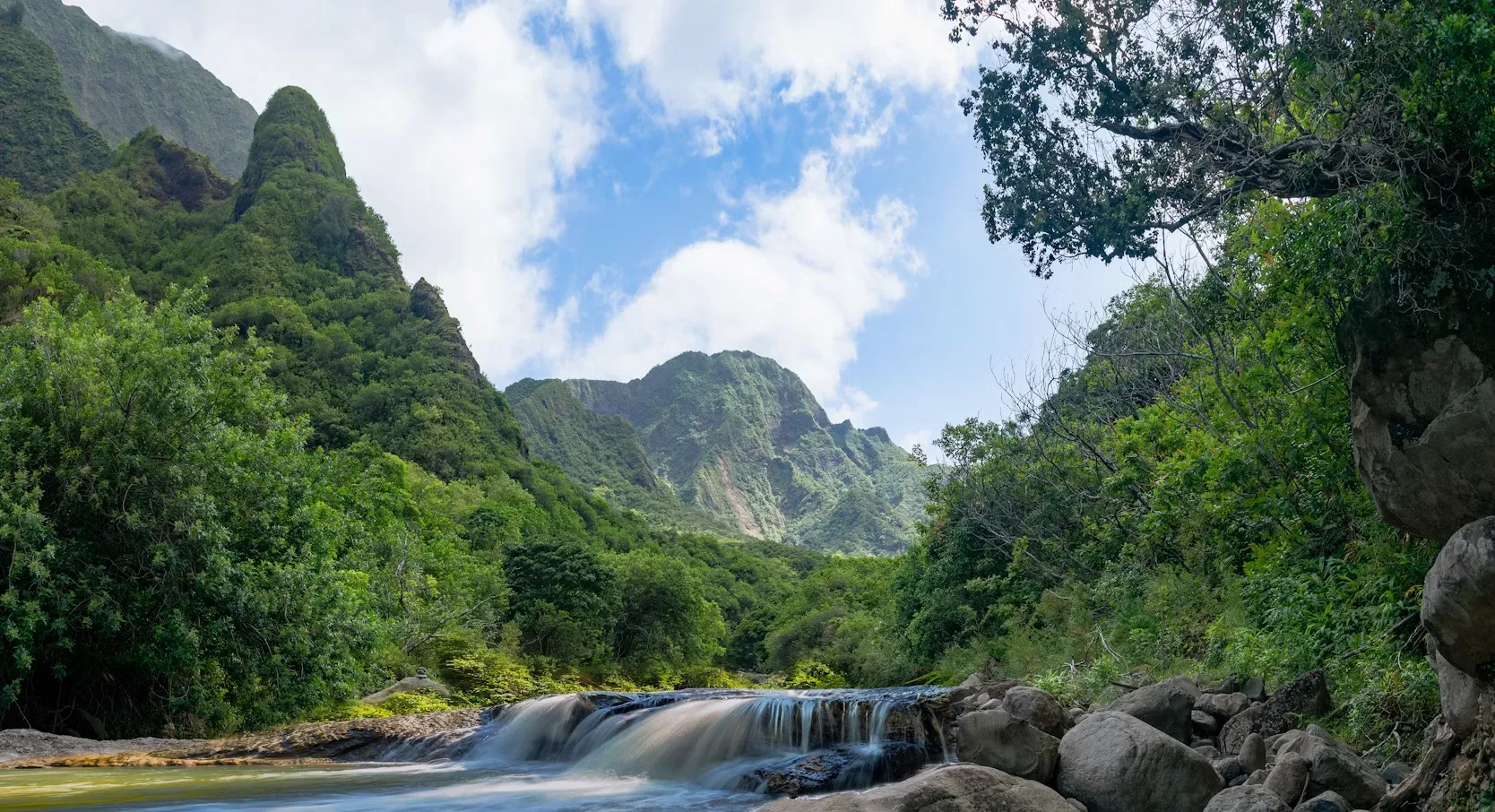
In the lush embrace of the West Maui Mountains or better known as Mauna Kahalawai, ʻĪao Valley is one of Hawaii’s most breathtaking and historically significant locations. With its emerald-green peaks, misty waterfalls, and deep cultural roots, this valley is more than just a scenic destination—it’s a place where history and nature intertwine. However, beneath its serene beauty lies a dramatic and bloody past, etched in Hawaiian history as the site of one of the most pivotal battles ever fought in the islands.
A Valley of Natural Wonders
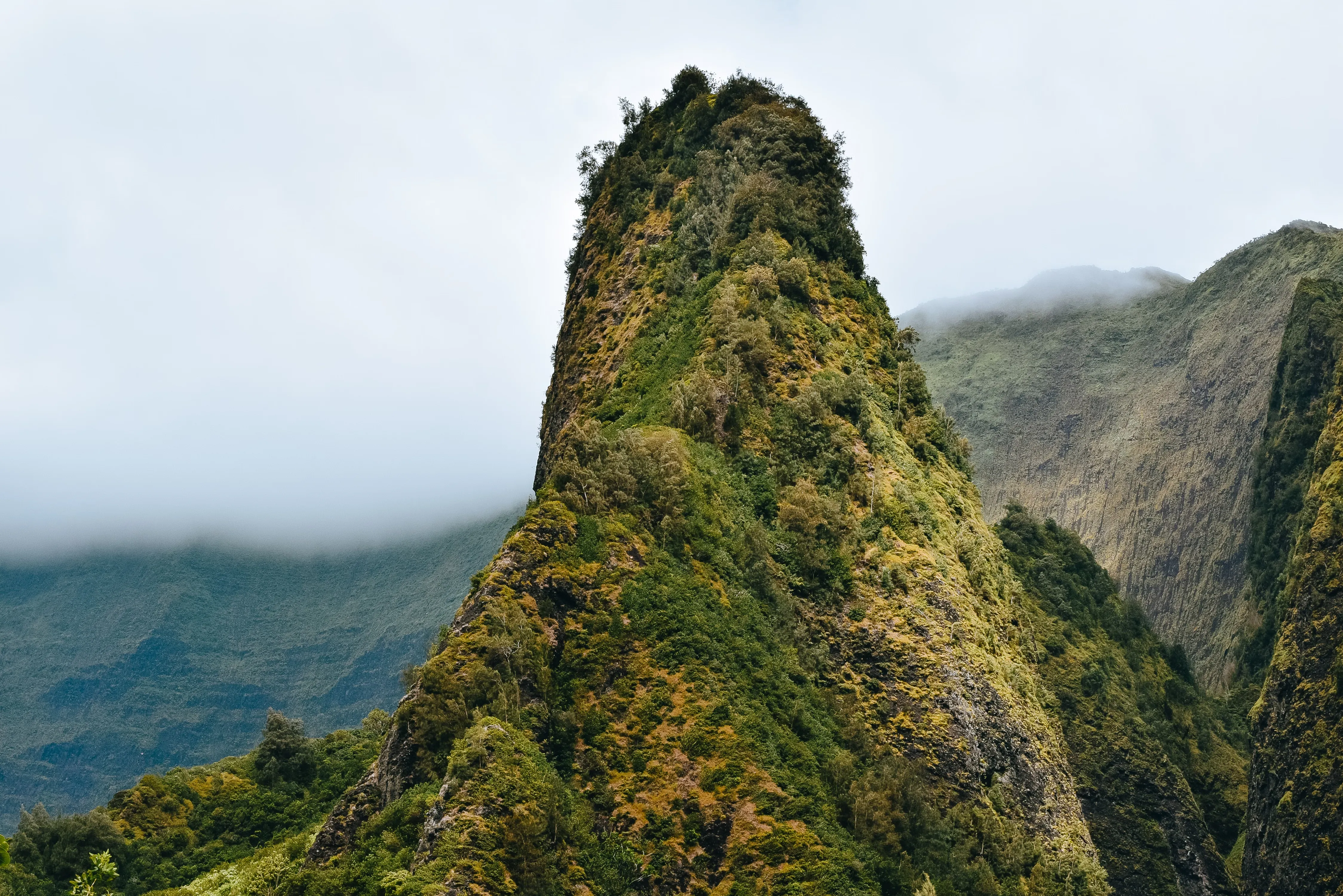
ʻĪao Valley is a deeply spiritual and sacred place for Native Hawaiians. The valley is home to the iconic ʻĪao Needle, a 1,200-foot-tall basalt pinnacle covered in lush vegetation. The name "ʻĪao" in Hawaiian means "supreme cloud", as the ʻĪao needle is often covered in a layer of clouds. The Needle is the tip of a long, winding ridge shaped by streams and waterfalls that gradually eroded the softer rock around it. Īao Valley, enclosed by the towering walls of Puʻu Kukui Crater, is a remnant of the central crater of Mauna Kahalawai, the ancient West Maui volcano. This natural monument, once used as a lookout by Hawaiian warriors, stands as a silent guardian over the valley.
The area receives frequent rainfall, making it one of the wettest places in Hawaii. Its streams and waterfalls nourish the surrounding flora, creating a verdant paradise that has long been revered by locals and visitors alike.
The ʻĪao Stream, which winds through the valley, can quickly transform into a powerful torrent during storms, leading to flash floods, landslides, and significant erosion. In 2016, a major flood event destroyed sections of the state park, washing away roads, trails, and parts of the parking lot. Restoration efforts have since reinforced riverbanks and infrastructure, but the valley remains highly vulnerable.
*Visitors are urged to check weather conditions before exploring and respect any closures. While ʻĪao’s beauty is undeniable, its ever-changing landscape is a powerful reminder of nature’s force in shaping Maui’s terrain.*
Today, the ʻĪao Valley State Monument offers well-maintained trails and viewpoints, allowing travelers to appreciate the valley’s majesty while reflecting on its storied past. Upon visiting and walking in ʻĪao valley, there are signs posted throughout the area teaching you Hawaiian prayers, and Hawaiian sayings enhancing the atmosphere of the area.
The Battle of Kepaniwai: When the River Ran Red
Despite its beautiful and lush appearance today, ʻĪao Valley was the site of one of the bloodiest conflicts in Hawaiian history—the Battle of Kepaniwai, fought in 1790. This battle was a turning point in King Kamehameha I’s relentless campaign to unite the Hawaiian Islands. At the time, Maui was ruled by King Kahekili, a formidable leader who had successfully resisted Kamehameha’s advances. However, in 1790, while Kahekili was away on Oʻahu, Kamehameha saw an opportunity to strike.Kamehameha’s forces, armed with Western firearms acquired from European traders, landed on Maui and advanced toward ʻĪao Valley, where they faced Maui’s warriors led by Kahekili’s son, Kalanikūpule. The battle was fierce and unforgiving, with Kamehameha’s superior firepower ultimately overwhelming Maui’s defenders.
*NOT AN ACTUAL REFERENCE OF THE BATTLE*
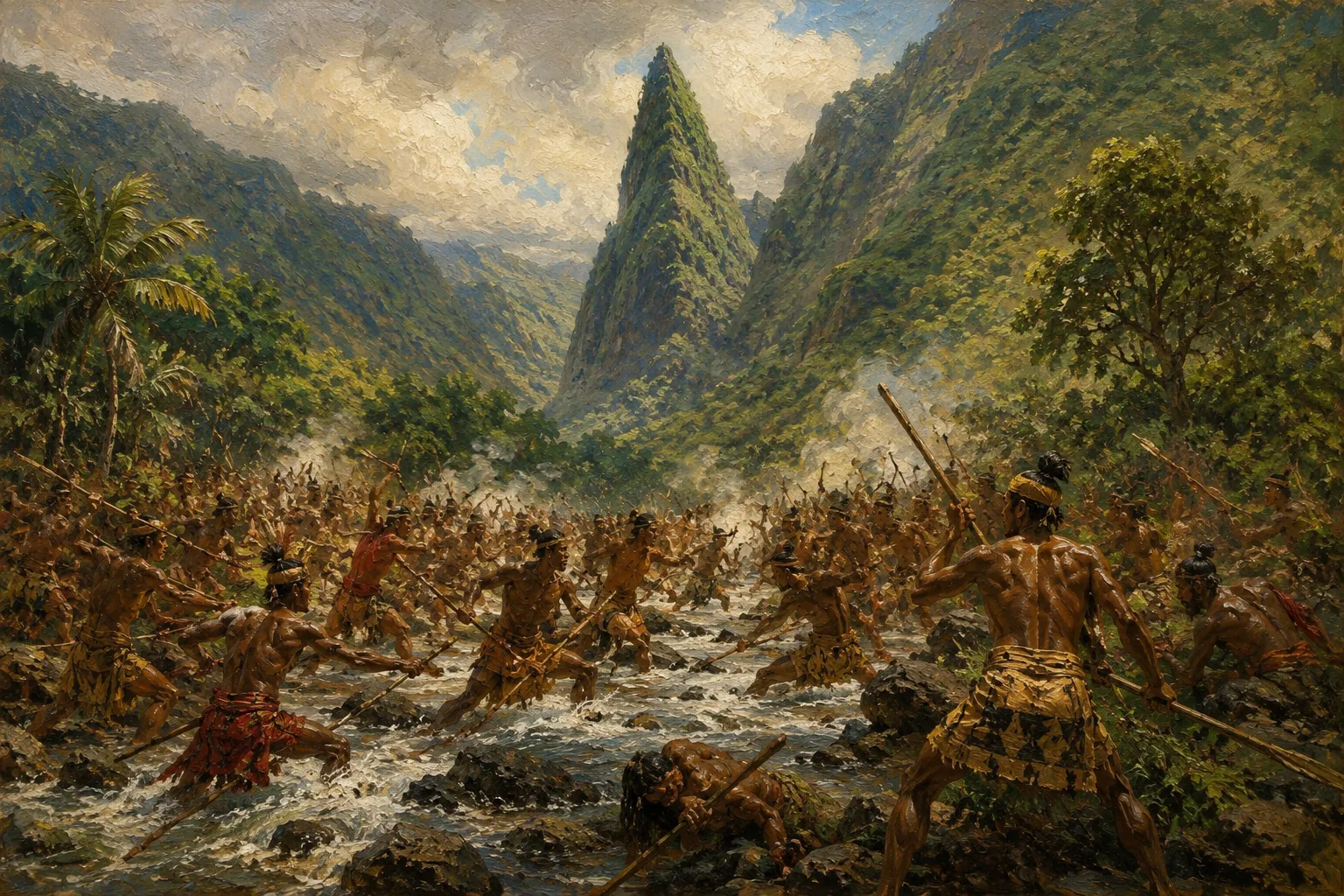
The slaughter was so intense that it is said the waters of ʻĪao Stream were choked with the bodies of fallen warriors, giving rise to the battle’s haunting name—Kepaniwai, meaning “the damming of the waters.” The river quite literally ran red with blood, marking one of the most devastating defeats in Maui’s history.
The Legacy
Although Kamehameha emerged victorious, he was unable to fully secure Maui at that time, as Kahekili later returned and reclaimed control. However, this battle foreshadowed Kamehameha’s eventual conquest of all the Hawaiian Islands, culminating in the unification of the kingdom in 1810.
Today, ʻĪao Valley stands as a place of reflection and reverence. Visitors who walk its trails are not only stepping into a natural wonderland but also onto a battlefield where warriors fought for their land and legacy. Hawaiian cultural practitioners continue to honor the spirits of those who perished here, ensuring that the valley’s history is never forgotten.
Visiting ʻĪao Valley Today
If you plan to visit ʻĪao Valley, take the time to appreciate both its breathtaking scenery and its profound historical significance. The ʻĪao Valley State Monument is easily accessible from Wailuku and offers a short but rewarding hike to vantage points where you can admire the towering peaks and lush landscapes.
While exploring, remember that this land is sacred. Respect the valley by staying on designated paths, avoiding the disturbance of cultural sites, and embracing the deep spiritual energy that continues to flow through its misty air.
ʻĪao Valley is a testament to both the resilience of nature and the enduring power of Hawaiian history. Whether you visit to learn, to reflect, or simply to take in its awe-inspiring beauty, this sacred valley will leave an indelible mark on your soul.
If you would like to set a reservation for Iao Valley, this is the only website you are able to set a date and time for your adventure: https://gostateparks.hawaii.gov/iao-valley
Helpful Links
- ʻĪao Valley State Monument – Hawaiʻi State Parks — Official park information, hours, fees, trail details, and visitor updates.
- ʻĪao Valley Reservations – Hawaiʻi State Parks — Make required entry and parking reservations for out-of-state visitors.
- ʻĪao Needle Lookout Trail – Hawaiʻi State Parks — Official information about the ʻĪao Needle Lookout Trail and Ethnobotanical Loop.
- NorthShore Zipline Maui Blog — Explore more guides to Maui history, culture, outdoor adventures, and things to do.
Frequently Asked Questions About ʻĪao Valley and the Battle of Kepaniwai
Why is ʻĪao Valley famous?
ʻĪao Valley is famous for its dramatic rainforest scenery, the iconic Kukaʻemoku or ʻĪao Needle, and its importance in Hawaiian history. The valley was also the site of the Battle of Kepaniwai in 1790, a major battle during Kamehameha I's campaign to unite the Hawaiian Islands.
What happened at the Battle of Kepaniwai?
The Battle of Kepaniwai took place in ʻĪao Valley in 1790 between the forces of Kamehameha I and the Maui army led by Kahekili II's son, Kalanikūpule. Kamehameha's forces ultimately prevailed in the fierce battle, strengthening his campaign to bring the Hawaiian Islands under unified rule.
Why was the Battle of Kepaniwai called the Battle of the Dammed Waters?
The name Kepaniwai is commonly translated as "the damming of the waters." Accounts of the battle describe fighting so intense that the bodies of fallen warriors obstructed ʻĪao Stream, giving rise to the name and making the battle one of the most remembered conflicts in Hawaiian history.
Is ʻĪao Valley really called Maui's River of Blood?
"River of Blood" is a dramatic description associated with stories of the Battle of Kepaniwai rather than the official name of ʻĪao Stream or ʻĪao Valley. Historical accounts describe an exceptionally violent battle in which large numbers of warriors were killed along the stream.
Who fought in the Battle of Kepaniwai?
The battle was fought between the invading forces of Kamehameha I and Maui forces commanded by Kalanikūpule, the son of Maui's ruler Kahekili II. Kamehameha's army included warriors from Hawaiʻi Island as he continued his campaign to expand his rule.
Did Kamehameha conquer Maui at ʻĪao Valley?
Kamehameha's forces defeated the Maui army at the Battle of Kepaniwai in 1790, giving him an important military victory. However, the political unification of the Hawaiian Islands was a longer process, and the Battle of Kepaniwai was one major event within that larger history.
Why was ʻĪao Valley important to Native Hawaiians?
ʻĪao Valley holds deep cultural and spiritual significance in Hawaiian history. In addition to being the location of the Battle of Kepaniwai, the valley was associated with Hawaiian chiefs and was valued for its abundant water, fertile environment, and protected location within the West Maui Mountains.
What is the ʻĪao Needle?
The famous ʻĪao Needle is traditionally known as Kukaʻemoku. It is an erosional feature covered in vegetation that rises approximately 1,200 feet from the valley floor. Visitors can view it from the paved ʻĪao Needle Lookout Trail.
Can you hike to the top of the ʻĪao Needle?
No. Visitors do not hike to the top of Kukaʻemoku. Instead, the official ʻĪao Needle Lookout Trail provides a scenic viewpoint of the formation and surrounding valley.
How long is the ʻĪao Needle Lookout Trail?
The official ʻĪao Needle Lookout Trail and Ethnobotanical Loop is approximately 0.6 miles. It is a paved walk with about 200 feet of elevation gain and provides views of Kukaʻemoku along with opportunities to learn about plants associated with Hawaiian culture.
Is ʻĪao Valley a difficult hike?
The official trail is considered an easy walk rather than a strenuous backcountry hike. The paved route is relatively short, although it does include stairs and elevation changes. Wet weather can also make surfaces slippery.
Do you need reservations for ʻĪao Valley?
Out-of-state visitors currently need advance reservations to enter ʻĪao Valley State Monument. Reservations include specific entry periods and should be made before arriving. Hawaiʻi residents with a valid Hawaiʻi driver's license or state ID do not need to pay the standard entry or parking fees.
How much does it cost to visit ʻĪao Valley?
Current nonresident fees are $5 per person for entry and $10 per vehicle for parking. Children age three and under are admitted free. Hawaiʻi residents with valid state identification receive free entry and parking. Always check the official Hawaiʻi State Parks website for current pricing before visiting.
What are the hours for ʻĪao Valley State Monument?
ʻĪao Valley State Monument is currently open daily from 7:00 a.m. to 6:00 p.m. Hours and access can change because of maintenance, weather, flooding, or other conditions, so visitors should check current park notices before traveling to the valley.
How long should you spend at ʻĪao Valley?
Many visitors can comfortably explore the main lookout and botanical areas in approximately one to two hours. Travelers interested in photography, Hawaiian history, plants, and spending more time enjoying the scenery may want to stay longer.
Is ʻĪao Valley worth visiting on a Maui vacation?
Yes. ʻĪao Valley offers a combination of natural beauty, Hawaiian history, cultural significance, and an accessible walking trail. It is especially appealing to travelers who want to experience something beyond Maui's beaches.
Is ʻĪao Valley good for families with kids?
Yes. The relatively short paved trail makes ʻĪao Valley one of Maui's more approachable natural attractions for families. Parents should still supervise children around stairs, streams, wet surfaces, and steep terrain.
Does it rain a lot in ʻĪao Valley?
ʻĪao Valley is located within the lush West Maui Mountains and receives considerable rainfall. Passing showers, clouds, and wet conditions are common and contribute to the valley's dense tropical vegetation. Visitors should be prepared for changing weather.
Can you swim in ʻĪao Stream?
Visitors should follow all current State Parks signs, closures, and instructions regarding stream access. Heavy rainfall in the West Maui Mountains can cause stream levels to change quickly, so never enter streams during unsafe or restricted conditions.
What should I wear to ʻĪao Valley?
Comfortable walking shoes and lightweight clothing are good choices. Because the valley is frequently wet, visitors may also want to bring a light rain jacket. Shoes with good traction can be useful when pathways are damp.
Where is ʻĪao Valley located in Maui?
ʻĪao Valley State Monument is located in Central Maui near Wailuku, within the West Maui Mountains. Its location makes it relatively easy to combine with other attractions around Wailuku and Central Maui.
What else can you do near ʻĪao Valley?
Visitors can explore Wailuku, learn more about Maui's history and culture, visit local restaurants and shops, or continue toward other areas of the island. ʻĪao Valley can also be combined with additional Maui outdoor activities for a full day of exploring.
If you would like to read and learn more about interesting things in Hawaii! Check out our blog page here on our website!
or
Image Credits:
Hero:
"Mountains and lush greenery overlook a small waterfall" by RJB Studios, via Unsplash
"A breathtaking view of a green mountain peak surrounded by fog, exuding serenity." by Tim Gouw, via Pexels