

CYBER MONDAY DEAL! USE CODE "CYBERMONDAY15" TO GET 15% OFF YOUR BOOKING!
The Hawaiian Islands are not only breathtaking landscapes of volcanic peaks, lush rainforests, and endless coastlines; they are also lands alive with stories, chants, and legends passed down for generations. These mo‘olelo (traditional stories) are woven deeply into the fabric of Hawaiian identity, explaining natural phenomena, teaching cultural values, and honoring the sacred relationship between people and the land.
One of the most celebrated figures in Hawaiian mythology is the demigod Māui. Known across Polynesia in many forms, Māui is remembered as a trickster, a hero, and a benefactor of humanity. In Hawaii, his legends are especially tied to the island of Maui, which bears his name. To explore the island without learning the stories of this demigod would be to miss an essential part of its soul.
Māui is not unique to Hawaii—his stories are found throughout Polynesia, from Tahiti to Samoa to Aotearoa (New Zealand). Yet, while the details shift with each culture, he consistently embodies the traits of intelligence, resourcefulness, and mischief. He is often seen as a kupua, a supernatural being with both divine and human qualities, who uses cleverness and courage to challenge nature itself.
In Hawaii, Māui is not considered one of the four primary gods (akua)—Kāne, Kū, Lono, and Kanaloa—but rather a heroic demigod whose actions brought great benefits to humankind. His tales are told not just as entertainment, but as teaching stories filled with lessons about perseverance, balance, and respect for the forces of the natural world.

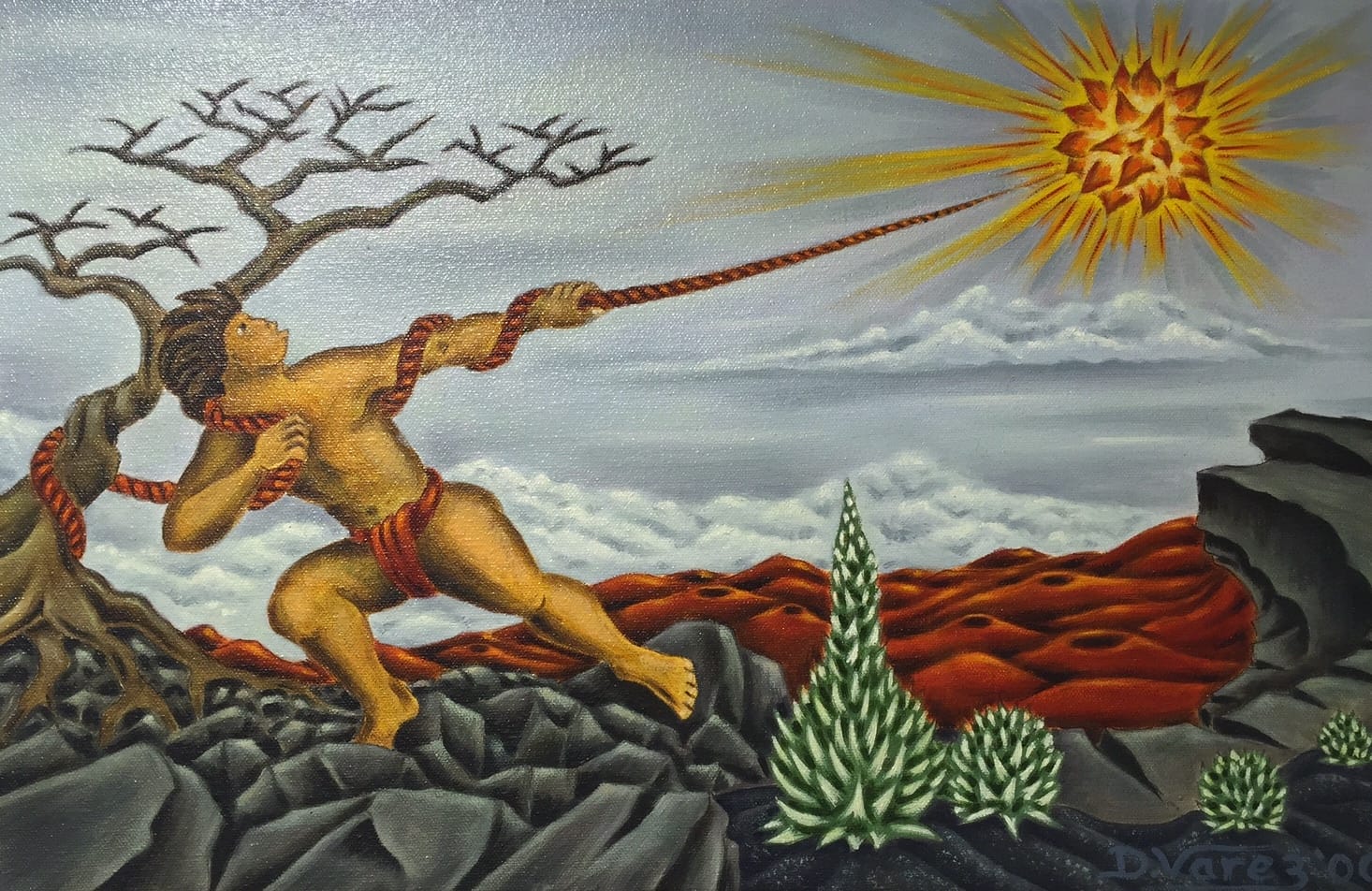
Perhaps the most famous Hawaiian legend of Māui tells of his battle with the sun. In ancient times, the sun raced across the sky, leaving days too short for people to grow crops, dry their kapa (bark cloth), or prepare food. Māui, determined to help his mother and his people, climbed to the summit of Haleakalā, the massive volcano that dominates the island of Maui.
There, he lay in wait until dawn, crafting ropes from coconut fiber and lashing them with his great strength. When the sun appeared, Māui snared its rays and refused to release them until the sun agreed to slow its journey. The sun relented, granting longer days and blessing humanity with time to live and thrive. Today, visitors to Haleakalā National Park watch the sunrise and recall this powerful story, a reminder of Māui’s triumph and the island’s spiritual depth.
Another story tells of Māui’s magical fishhook, called Manaiakalani. With it, Māui pulled great land masses from the depths of the ocean. In some traditions, it is said that he fished up islands themselves. In Hawaiian legend, this reflects the volcanic creation of new lands rising from beneath the Pacific, linking myth with the geologic truth of the islands’ origins.
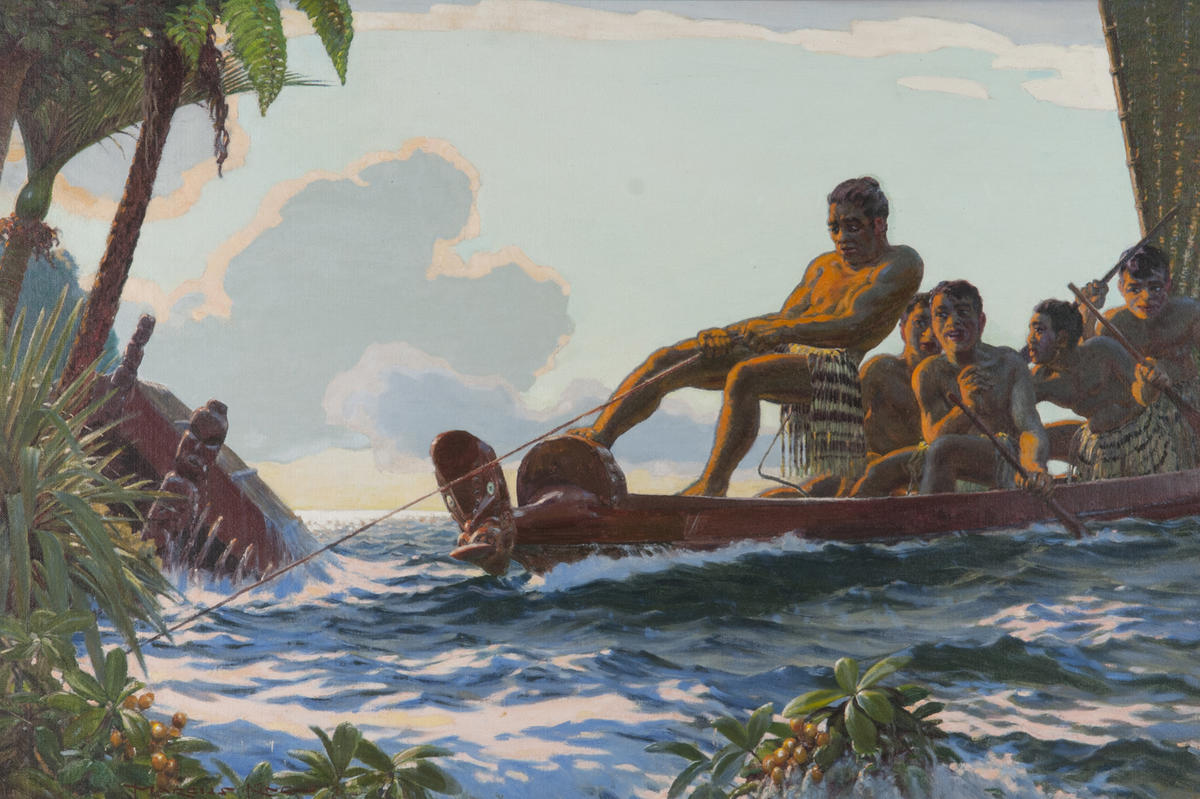
Māui’s ingenuity was not limited to the sun and sea. In one tale, he captured the powerful winds that made sailing dangerous. By taming these forces, he allowed Polynesian navigators to voyage more safely across vast stretches of the Pacific Ocean, ensuring survival and expansion. This legend resonates with Hawaii’s deep voyaging traditions and the revival of navigation by stars, currents, and winds in modern times through groups such as the Polynesian Voyaging Society.
Māui’s feats are more than just fantastical tales. They symbolize humanity’s relationship with the natural world and highlight values central to Hawaiian culture:
In this way, Māui reflects the Hawaiian concept of pono—living in balance and righteousness with the world around you.
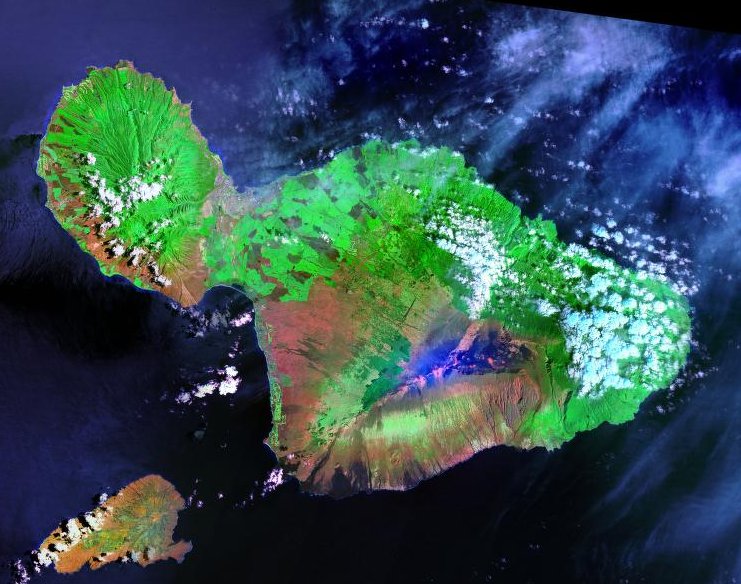
The island of Maui itself is said to be named after the demigod. In the kumulipo (Creation Chant) it is told that Māui’s father, 'Akalana, named the island in his honor. Others suggest that the island’s very shape, dominated by Haleakalā’s vast shield volcano, recalls the legends of Māui’s great deeds.
For Hawaiians, this connection is more than symbolic. The island and the demigod are spiritually tied, reminding residents and visitors that Maui is not only a place of natural beauty but also a sacred landscape shaped by story and tradition.
Though centuries have passed, Māui’s stories remain alive. They are shared through oli (chants), hula (dance), and mo‘olelo (oral traditions), connecting each new generation to the wisdom of the past. Cultural practitioners continue to honor these legends as living knowledge, not relics of history.
For visitors, learning about Māui is a way to deepen their experience of the island. Watching the sunrise at Haleakalā, paddling in the ocean, or simply walking the land becomes more meaningful when one understands that these places are alive with history, myth, and spirit.

Māui, the demigod of the Hawaiian island of Maui, embodies the enduring spirit of ingenuity, courage, and connection to nature. His legends—snaring the sun, fishing up islands, and taming the winds—are not only stories of heroism but also reflections of the Hawaiian worldview: that humanity must live in balance with the powerful forces that shape our world.
The island of Maui, bearing his name, is both a geographical wonder and a cultural treasure. To explore it is to step into a landscape where myth and reality blend, where every sunrise recalls an ancient victory, and where the legacy of Māui continues to inspire those who walk upon his island.
1. Who is Māui in Hawaiian mythology?
Māui is a heroic demigod celebrated across the Hawaiian Islands for his cleverness, bravery, and contributions to humanity. Although not one of the four major Hawaiian gods, Māui appears in countless mo‘olelo (traditional stories) as a kupua—someone with both divine and human qualities. His feats often help people, such as slowing the sun, controlling the winds, and raising land from the ocean. These Hawaiian legends highlight values of resourcefulness, respect for nature, and the importance of living in balance.
2. How is Māui connected to the island of Maui?
The island of Maui is said to be named after the demigod. Some stories say Māui’s mother, Hina, gave the island his name; others say the island’s shape and rugged volcanic features reflect his legendary deeds. For many Hawaiians, this connection is more than symbolic—the island and the hero share spiritual importance. Visiting Maui while learning about Māui deepens your understanding of the land, culture, and history woven into the island.
3. Is Māui found only in Hawaiian stories?
No—Māui is a prominent figure throughout Polynesia. His legends appear in places such as Tahiti, Samoa, Tonga, and Aotearoa (New Zealand). While each region tells different versions of his stories, Māui consistently appears as a clever, mischievous, and heroic figure. In Hawaii specifically, the tales emphasize his ability to help humanity and teach lessons about perseverance and harmony with nature.
4. What is the story of Māui snaring the sun on Haleakalā?
One of the most famous Hawaiian legends tells how Māui slowed the sun to give people longer days. According to the story, days were once too short for cooking, fishing, and kapa-making, so Māui climbed to the summit of Haleakalā with strong ropes made from coconut fiber. When the sun rose, he snared its rays and refused to release them until the sun agreed to move more slowly. Today, watching sunrise at Haleakalā National Park is a powerful reminder of this legendary feat.
5. What is Māui’s magical fishhook, and what did he do with it?
Māui’s fishhook, Manaiakalani, is central to one of his most famous exploits. Hawaiian legends say Māui used the fishhook to pull land from the depths of the ocean. In some Polynesian traditions, he fished up islands themselves. This myth beautifully mirrors Hawaii’s real volcanic origins—new land rising from the sea—blending science with storytelling and cultural meaning.
6. What does the legend of Māui controlling the winds teach us?
In this lesser-known story, Māui captures and tames powerful winds that once made ocean voyaging difficult and dangerous. By controlling these winds, he allowed ancient Polynesian navigators to travel more safely across vast distances. This legend highlights Hawaii’s deep ocean-voyaging heritage and emphasizes how Māui symbolizes guidance, navigation, and human connection to natural forces.
7. What values or lessons do Māui’s legends teach?
The stories of Māui illustrate several core Hawaiian values:
These lessons continue to guide Hawaiian cultural practices and storytelling today.
8. Why are Hawaiian legends and mo‘olelo so important?
Hawaiian mo‘olelo are more than myths—they are cultural maps, teaching tools, and historical records that explain natural phenomena, honor ancestors, and preserve knowledge. These stories connect Hawaiians to their land, values, and identity. Learning these legends helps visitors appreciate the islands not just as destinations, but as living cultural landscapes filled with meaning and history.
9. How is Māui’s legacy preserved in Hawaii today?
Māui’s stories are kept alive through oli (chants), hula (dance), and oral storytelling traditions. Cultural practitioners, educators, and families continue to share these legends as living knowledge. When visitors explore places like Haleakalā, paddle along the coast, or walk the land, they are stepping into spaces shaped by both volcanic history and the stories of Māui that still echo across the island.
10. Do these legends add meaning to visiting Maui as a tourist?
Absolutely. Learning about Māui before or during your trip adds depth to every experience—sunrise at Haleakalā becomes a connection to an ancient legend, island landscapes become reminders of volcanic creation stories, and even the ocean winds feel tied to ancestral navigation. Understanding the demigod’s role in Hawaiian culture enriches your visit and helps you appreciate Maui as a sacred, storied island.
If you would like to read and learn more about interesting things in Hawaii! Check out our blog page here on our website!
or
Hawaiʻi is often celebrated for its beaches, volcanoes, and lush rainforests, but the islands are also home to one of the most fascinating bird communities in the world. Due to their isolation in the middle of the Pacific, Hawaiʻi’s birds evolved in unique ways, creating species found nowhere else on Earth. From jewel-toned honeycreepers to soaring seabirds, the avifauna of Hawaiʻi is as diverse as it is fragile.
This blog explores the rich world of Hawaiian birds—their history, ecological role, cultural importance, and the ongoing efforts to protect them.
Roughly five million years ago, a single finch-like bird made its way to the Hawaiian Islands. Over millennia, this ancestor gave rise to an astonishing radiation of species known today as the Hawaiian honeycreepers. With beaks adapted to specific foods—from nectar to seeds to insects—these birds became a striking example of adaptive evolution. Their plumage is equally remarkable, ranging from bright reds and yellows to subtle greens and browns.
Unfortunately, many of these species are now extinct, and many of the survivors are critically endangered. Yet those that remain provide a living window into evolution’s creativity.
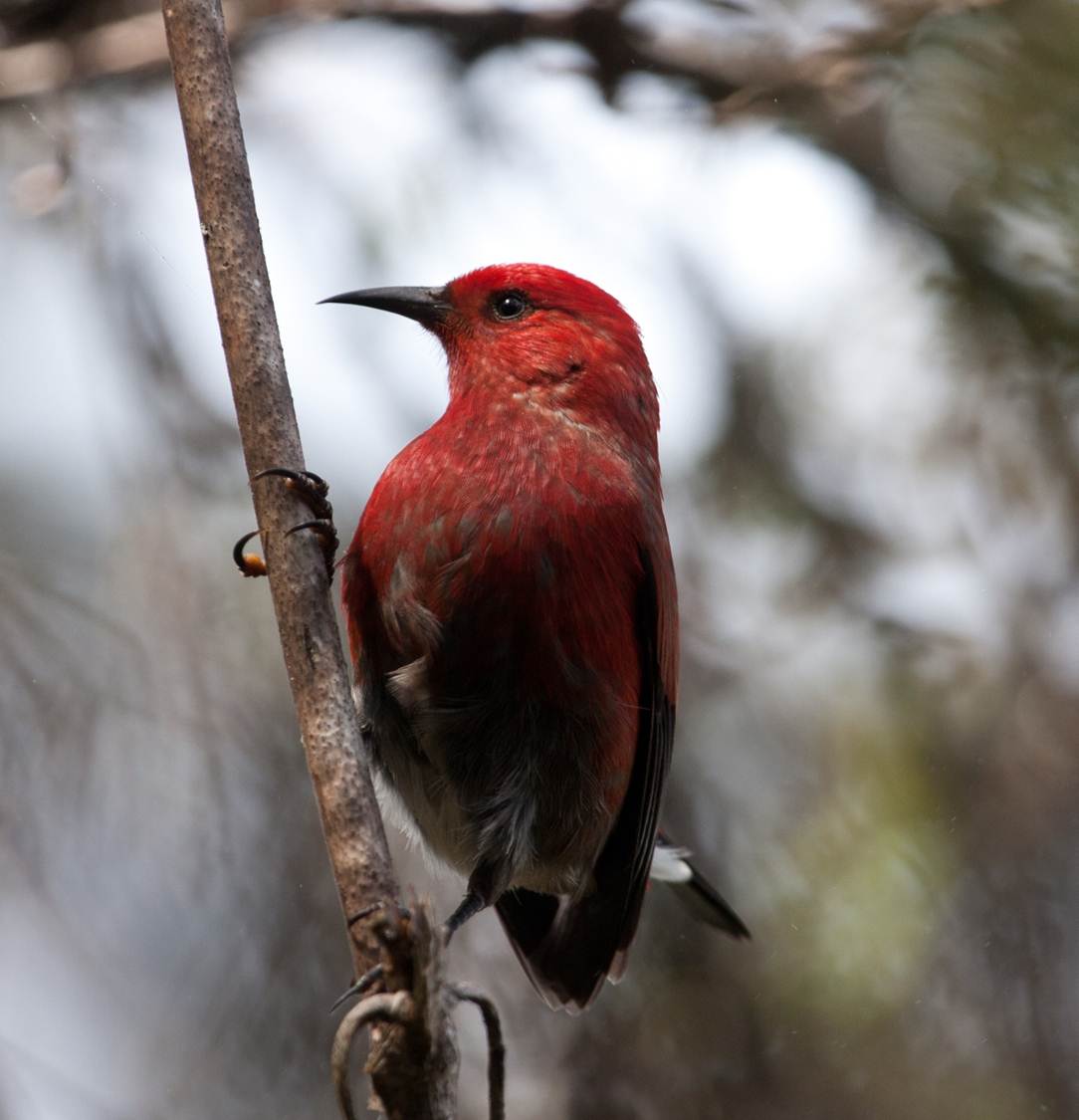
The ʻiʻiwi is perhaps the most recognizable of Hawaiʻi’s native birds. With scarlet feathers, black wings, and a gracefully curved bill, it feeds primarily on the nectar of native ʻōhiʻa lehua blossoms. Once widespread across all islands, the ʻiʻiwi is now mostly found at higher elevations, where mosquitoes that carry avian malaria are less common.
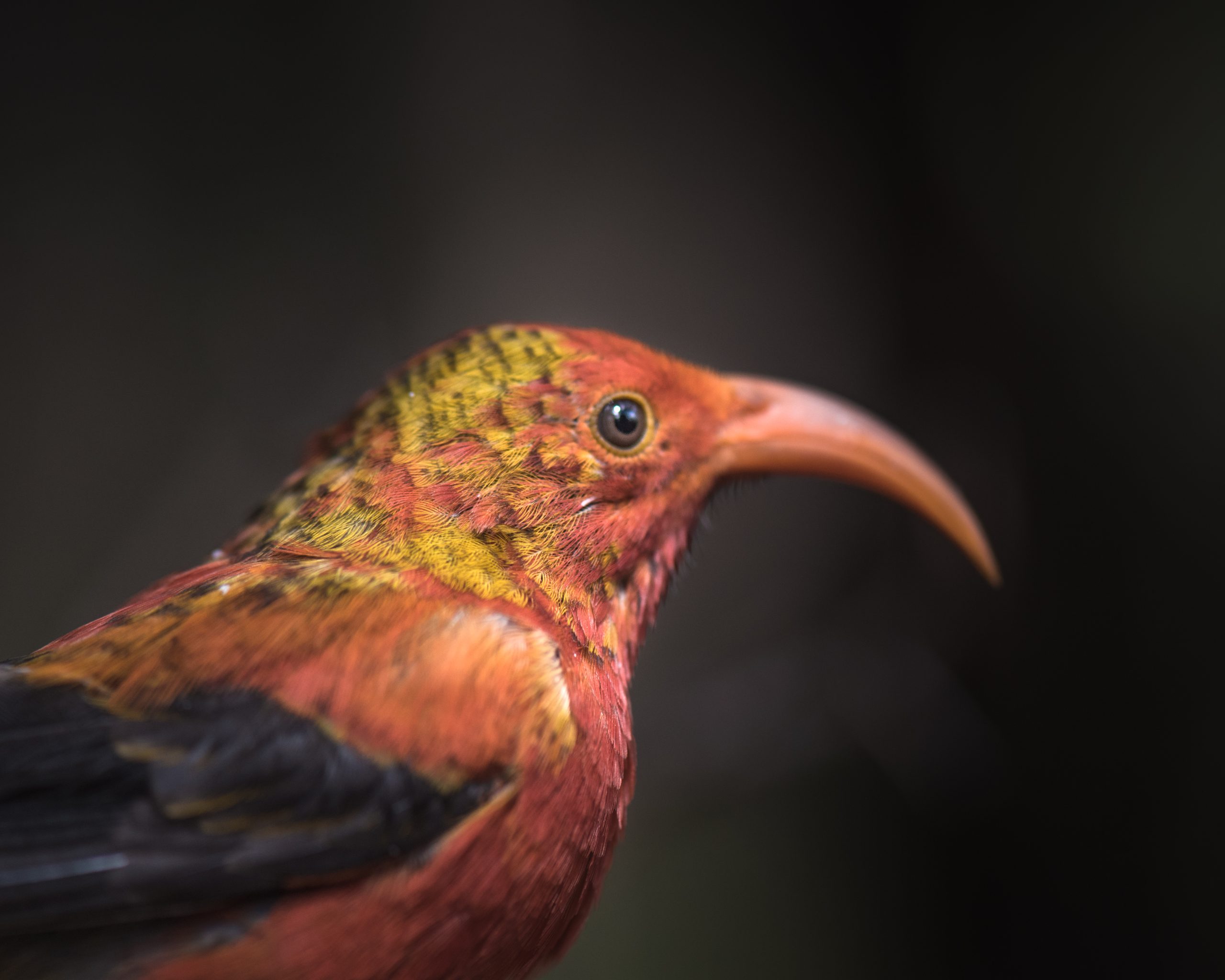
Another nectar-feeding honeycreeper, the ʻapapane thrives in ʻōhiʻa forests and is known for its loud, complex song. Though still relatively common, it plays an important ecological role as a pollinator.
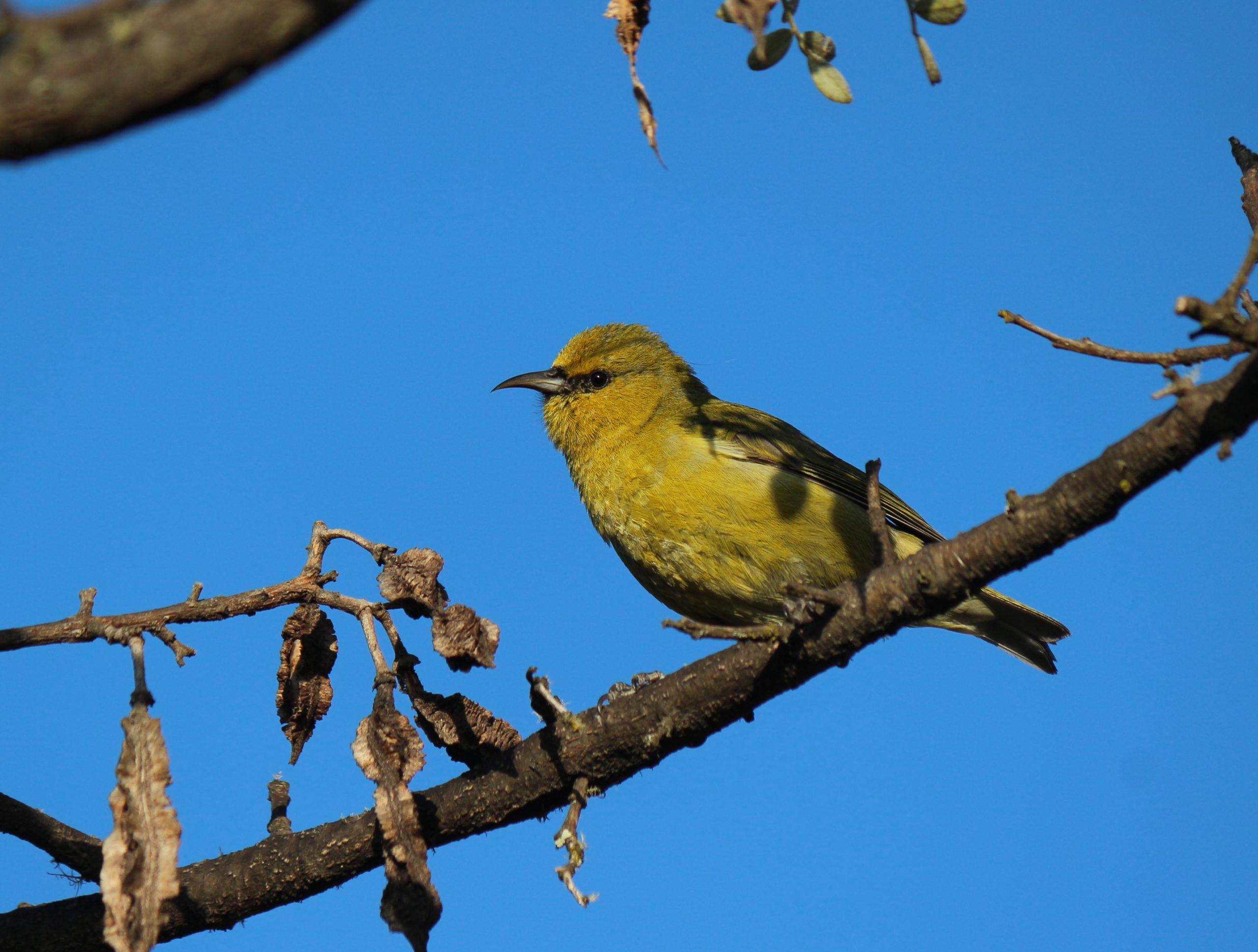
Resilient and adaptable, the Hawaiʻi ʻamakihi is one of the few native birds showing resistance to avian malaria. Its olive-yellow feathers and versatility in feeding—nectar, insects, and fruits—have helped it persist even as other species decline.
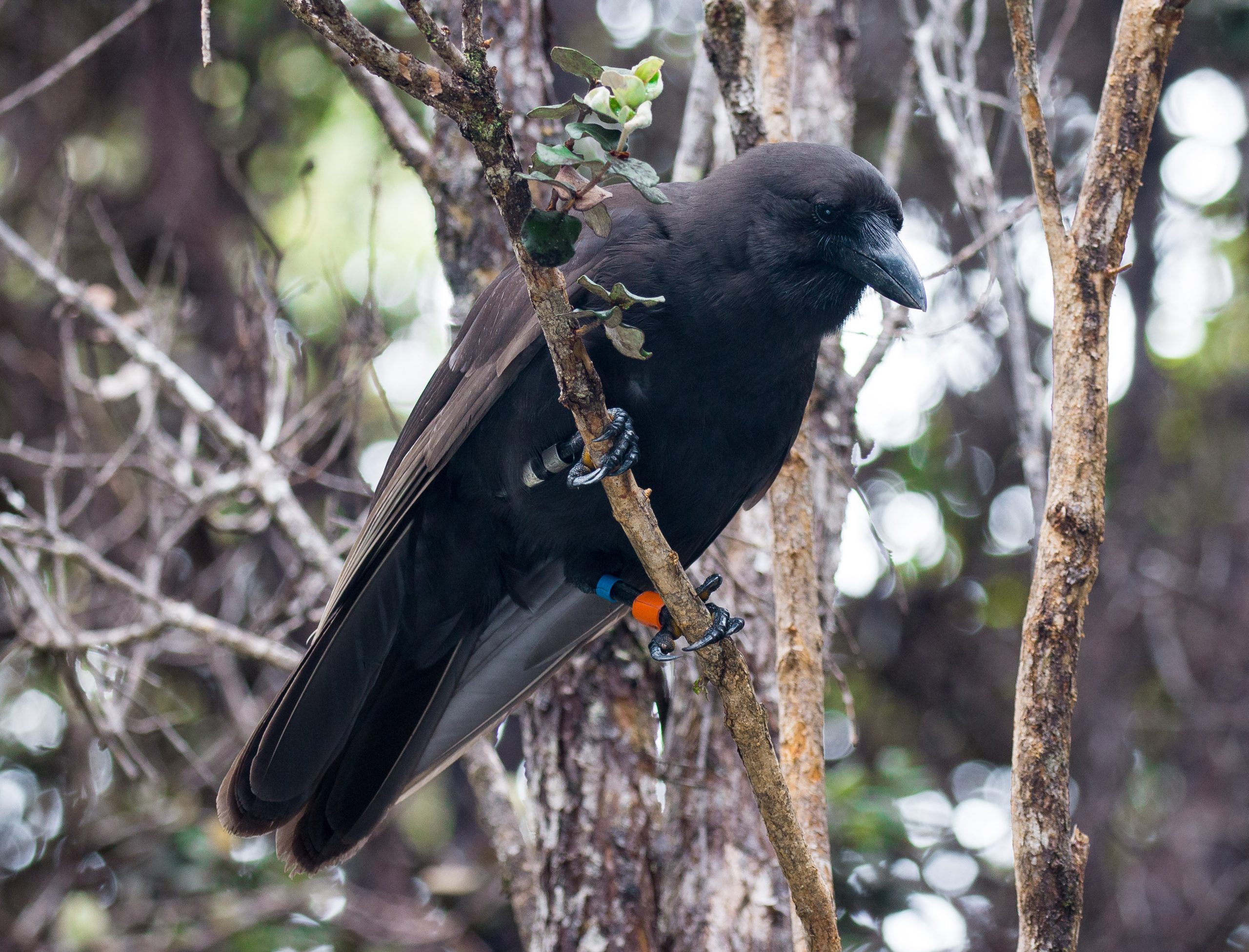
Deeply significant in Hawaiian culture, the ʻalalā was once considered a guardian spirit and messenger. Sadly, it became extinct in the wild in the early 2000s, though captive breeding and reintroduction programs are ongoing. The ʻalalā is highly intelligent, known for using tools and complex vocalizations.
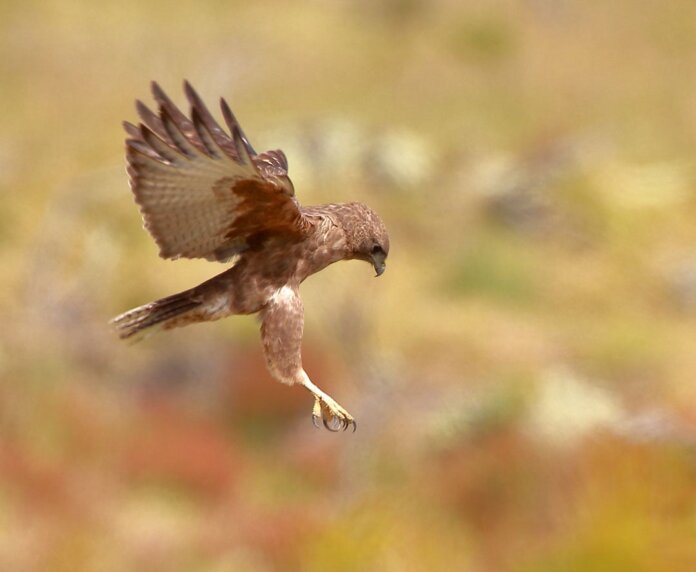
The only hawk native to Hawaiʻi, the ʻio is found only on the Big Island. Revered in Hawaiian tradition as an embodiment of royalty and a messenger of the gods, the ʻio is a powerful predator that soars over forests and open fields alike.
While forest birds often capture attention, Hawaiʻi’s seabirds are equally extraordinary. The islands provide nesting grounds for millions of seabirds that roam the Pacific.
Not all birds in Hawaiʻi are native. Humans have introduced species such as the common myna, zebra dove, and house sparrow, which are now among the most commonly seen in towns and cities. While these birds add to the islands’ avian diversity, some compete with native species for food and nesting sites.
For Native Hawaiians, birds are deeply intertwined with tradition, art, and spirituality. The vibrant feathers of species like the ʻiʻiwi and ʻōʻō were once used to create royal cloaks and helmets, symbols of mana (spiritual power) and authority. Birds also appear in chants, legends, and proverbs, serving as guides, protectors, and omens.

The ʻio, for instance, was seen as a protector of chiefs, while the ʻalalā was viewed as a voice of the forest, bridging the human and spiritual realms.
Hawaiʻi is often called the “extinction capital of the world.” Since human arrival, more than half of the islands’ bird species have vanished. The primary threats today include:
Conservation efforts are underway to protect the remaining species. Strategies include mosquito control programs, captive breeding and reintroduction of endangered birds, and habitat restoration. Organizations and agencies are working tirelessly to ensure that Hawaiʻi’s unique birds continue to thrive for generations to come.
The birds of Hawaiʻi are more than just beautiful creatures—they are storytellers of evolution, stewards of native ecosystems, and cultural treasures. Whether watching an ʻiʻiwi dart among ʻōhiʻa blossoms, listening to the haunting call of a shearwater, or spotting an ʻio soaring above the Big Island, one cannot help but feel a deep connection to the land and its living heritage.
Protecting these birds is not only about conservation—it is about preserving the soul of Hawaiʻi itself.
1. Why are Hawaiian birds so unique compared to birds elsewhere in the world?
Hawaiian birds are incredibly unique because the islands’ remote location allowed species to evolve in isolation for millions of years. A single finch-like ancestor led to the creation of the famous Hawaiian honeycreepers—birds with dramatically different beak shapes, colors, and feeding habits. Many Hawaiian birds are endemic, meaning they exist nowhere else on Earth, making them some of the rarest and most remarkable birds on the planet.
2. What are Hawaiian honeycreepers, and why are they so important?
Hawaiian honeycreepers are a group of native birds that evolved from one common ancestor around five million years ago. Through adaptive evolution, these birds developed specialized beaks to eat nectar, seeds, insects, and fruits. Their vibrant colors—from reds and yellows to greens—make them some of the most striking birds in Hawaiʻi. Honeycreepers are essential pollinators in native forests and are a living example of evolution’s creativity.
3. Which native Hawaiian birds should visitors look out for?
Some of the most notable native Hawaiian birds include:
These species represent Hawaiʻi’s natural heritage and ecological diversity.
4. What seabirds and shorebirds can be found in Hawaiʻi?
Hawaiʻi is home to impressive seabirds and waterbirds, including:
Many seabirds nest in colonies on remote islands or steep cliffs, making Hawaiʻi a crucial habitat for Pacific bird populations.
5. Are all the birds in Hawaiʻi native?
No—many birds in Hawaiʻi are introduced species brought by humans over the past 200 years. Common urban birds like mynas, zebra doves, and house sparrows are not native. While they add to the visual diversity of the islands, some introduced species compete with native birds for food and nesting areas, creating conservation challenges.
6. Why are so many Hawaiian birds endangered or extinct?
Hawaiʻi is known as the extinction capital of the world, and sadly, many native birds have disappeared. The main threats include:
These factors create difficult conditions for native species, especially honeycreepers that rely on high-elevation forests.
7. What conservation efforts are being made to protect Hawaiian birds?
Conservation in Hawaiʻi is extensive and ongoing. Efforts include:
8. What role do birds play in Hawaiian culture and tradition?
Birds are deeply woven into Hawaiian culture. Feathers from birds like the ʻiʻiwi and ʻōʻō were once used to create royal cloaks and helmets, representing mana (spiritual power). Birds also appear in Hawaiian chants, mythology, and proverbs. For example:
Birds symbolize connection, protection, and the natural balance that is central to Hawaiian identity.
9. Where can visitors see native Hawaiian birds in the wild?
Some of the best places to see native Hawaiian birds include:
These areas protect native forests where honeycreepers and other endemic species still thrive.
10. Why is protecting Hawaiian birds so important?
Protecting Hawaiian birds means preserving Hawaiʻi’s ecology, culture, and history. These birds pollinate forests, control insects, and reflect the islands’ evolutionary heritage. They carry cultural meaning and connect Hawaiians to their ancestral past. Saving them is about more than conservation—it’s about keeping the spirit and identity of Hawaiʻi alive for future generations.
If you would like to read and learn more about interesting things in Hawaii! Check out our blog page here on our website!
or
The Hawaiian Islands are known worldwide for their beauty, culture, and aloha spirit—but behind each island’s name lies a story rooted in history, language, and tradition. Some names are tied to Hawaiian gods and legends, others to early explorers and migrations, and still others to natural features that inspired their titles. Understanding how Hawai‘i’s islands got their names offers a deeper appreciation for the archipelago’s cultural and linguistic heritage.
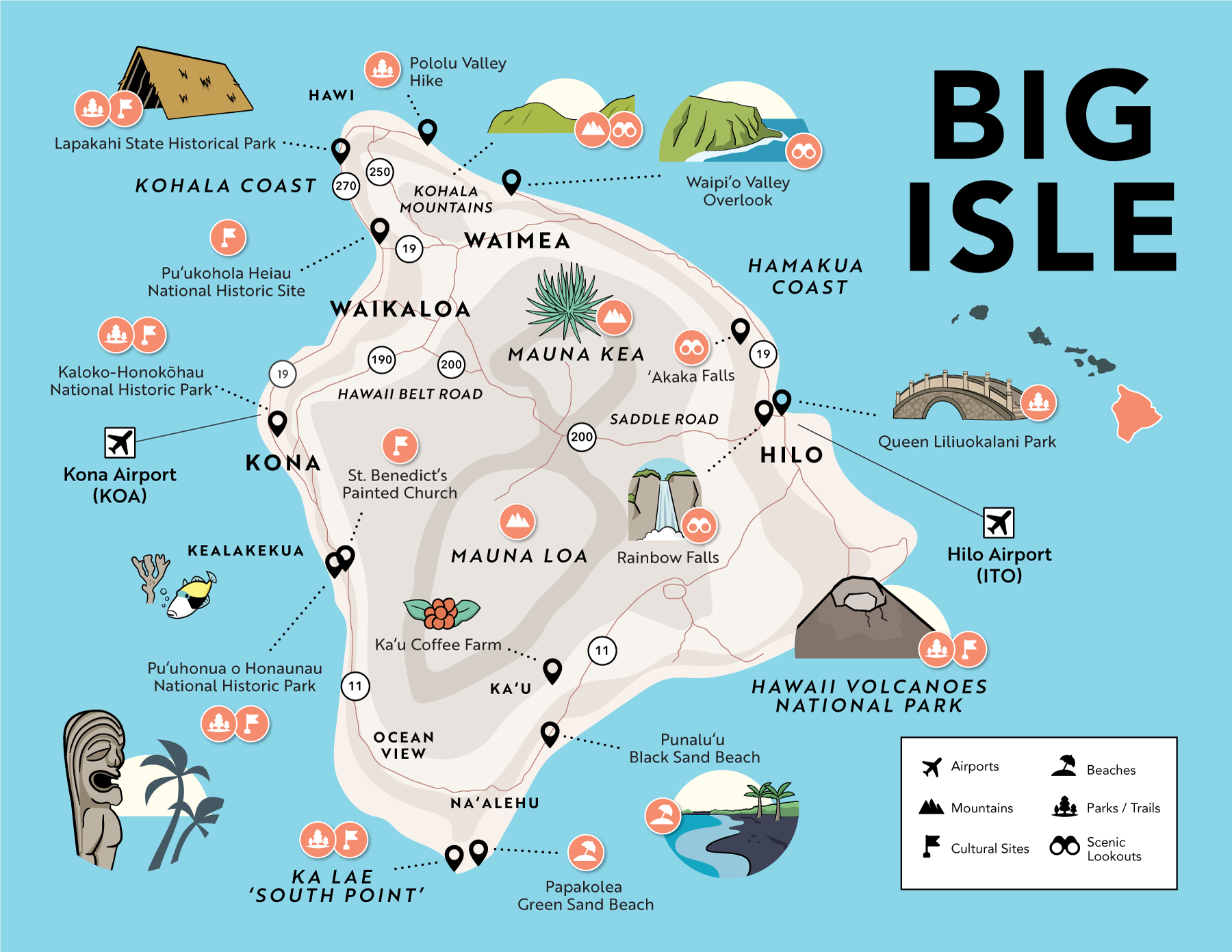
The largest island in the chain, Hawai‘i Island, shares its name with the entire state. According to Hawaiian tradition, the name comes from Hawai‘iloa, a legendary Polynesian navigator credited with discovering the islands. Some oral histories suggest Hawai‘iloa named the island after himself, while others connect the word Hawai‘i to the ancestral homeland of the Polynesians, Hawaiki, a place referenced in oral traditions across the Pacific.
Because of its size, Hawai‘i Island is often called “The Big Island” to avoid confusion with the state name. Its vast landscapes, from active volcanoes to snow-capped Mauna Kea, make it a fitting bearer of the archipelago’s central name.
Learn more about Hawai‘i Island
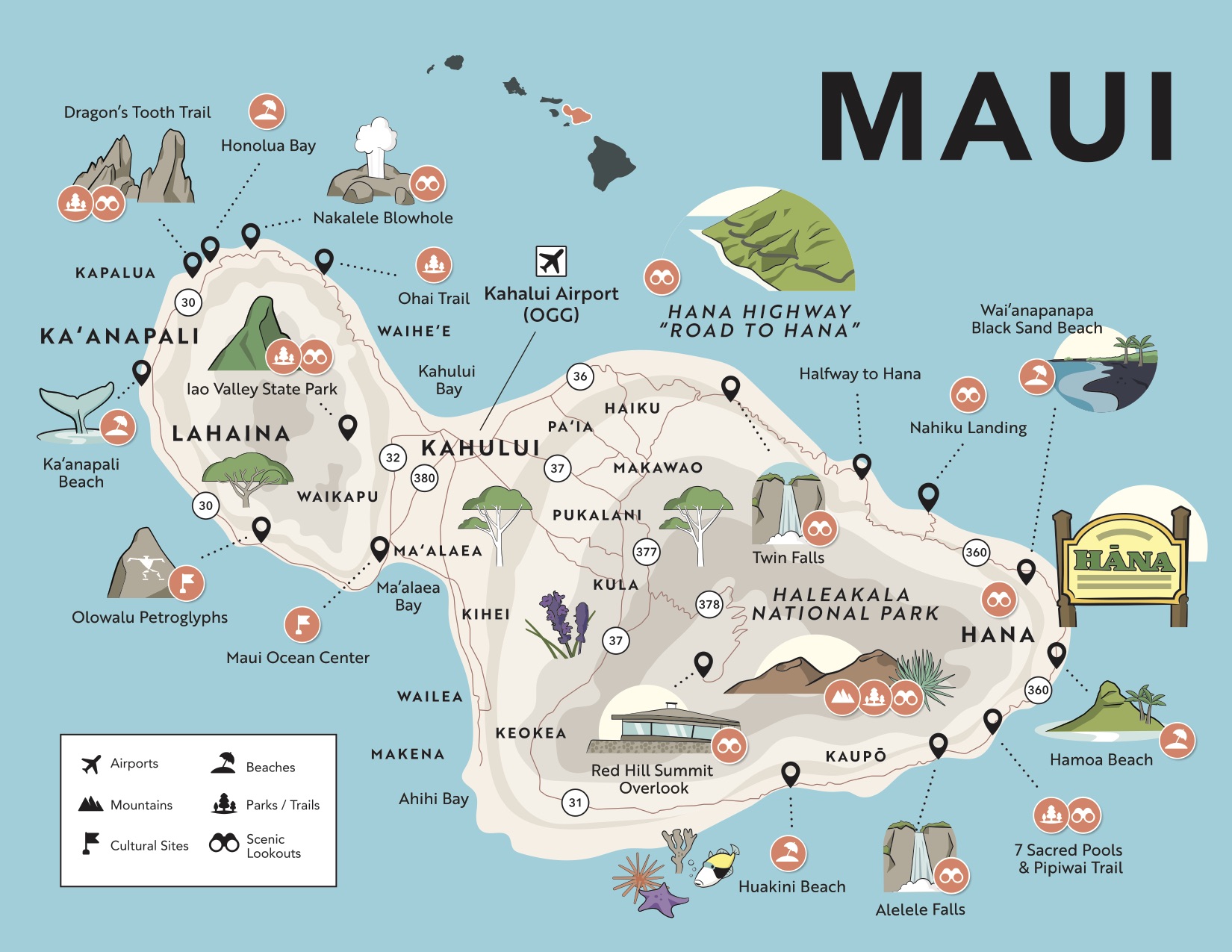
The island of Maui is named after the demigod Māui, a heroic figure common in Polynesian mythology. In Hawaiian lore, Māui is famous for his strength and cleverness—he is said to have fished the islands out of the sea and slowed the sun to give humanity longer days.
Some traditions say the island was named by the navigator Hawai‘iloa in honor of his son, who was named after the demigod. The association between the island and this cultural hero makes Maui a land of legendary stature.
Explore Maui’s history
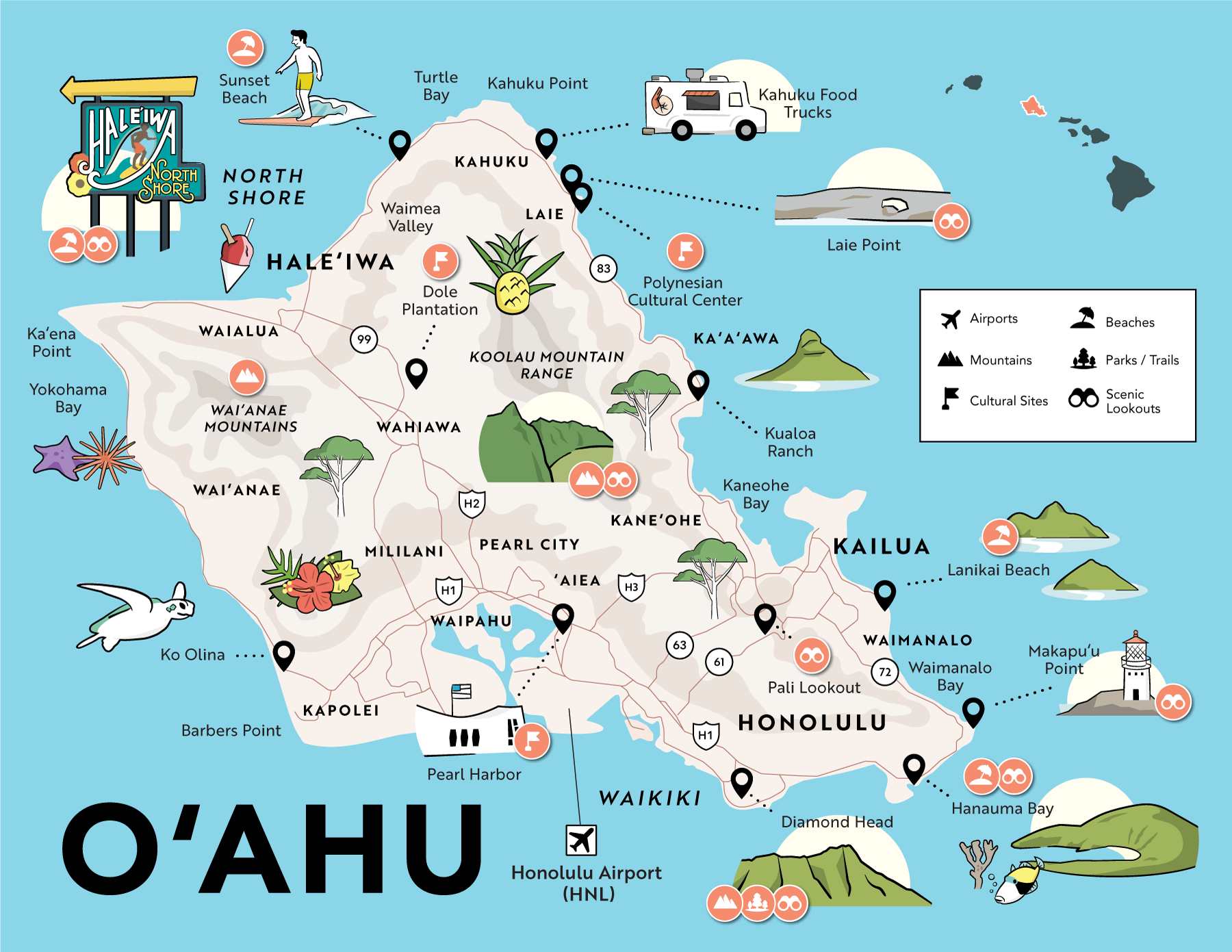
O‘ahu translates to “The Gathering Place,” though its exact origins are less clear than some other islands. The name appears in Hawaiian oral traditions and songs, but no definitive explanation exists. Some suggest that O‘ahu was named by Hawai‘iloa after one of his relatives.
True to its title, O‘ahu has always been a gathering place—it is home to Honolulu, the state capital, and the majority of Hawai‘i’s population today. With historic sites like Pearl Harbor and cultural landmarks such as ʻIolani Palace, O‘ahu remains a center of both ancient and modern Hawaiian life.
More on O‘ahu’s culture
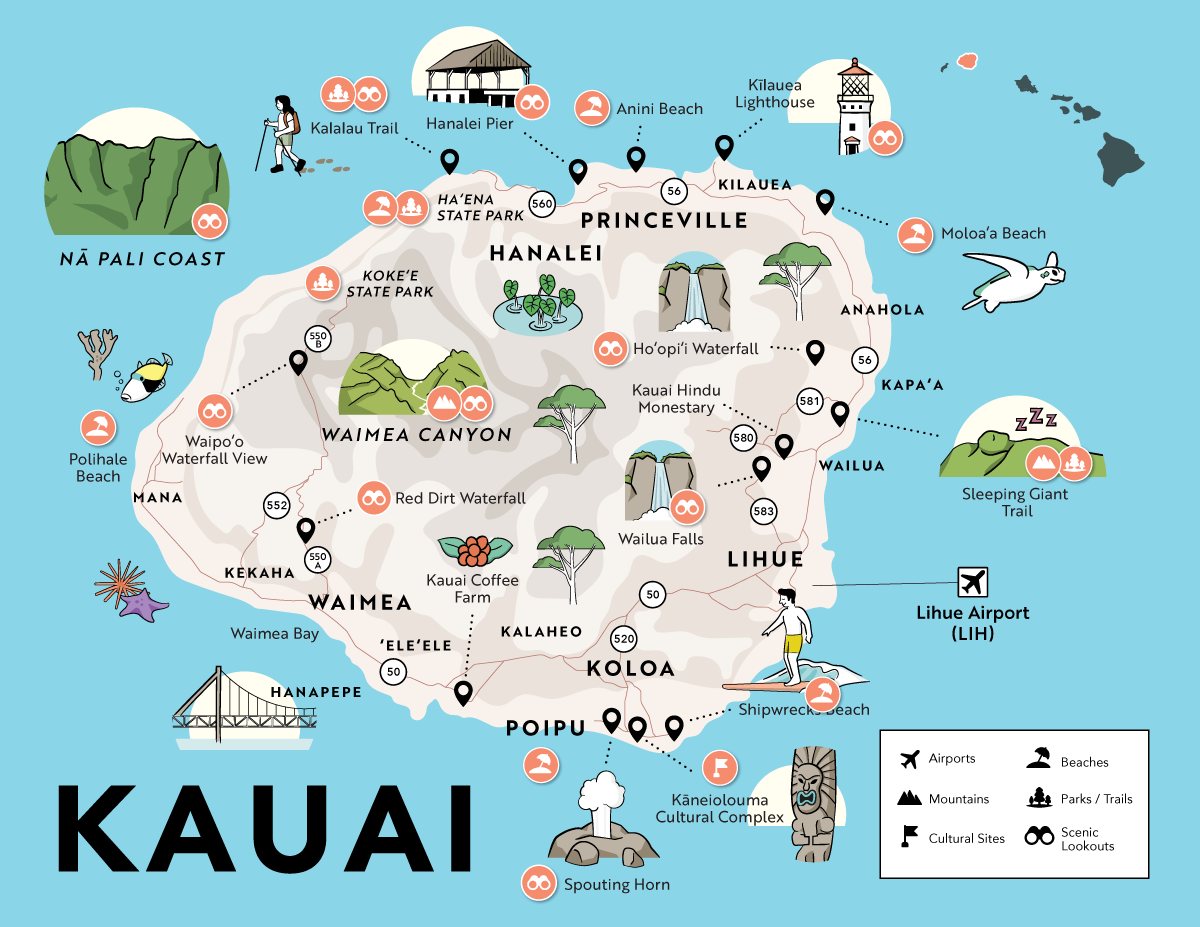
Kaua‘i, often called the “Garden Island,” may derive its name from the Hawaiian word kau (to place) and a‘i (to eat). Some interpret this as “a place around the neck,” referencing the island’s shape. Others link it to legends of Hawai‘iloa, who is said to have named the island after his son.
Kaua‘i is the oldest of the main Hawaiian Islands geologically, and its name reflects a deep connection to family and tradition. Its lush mountains and valleys give it a timeless, almost mystical quality, matching the poetic beauty of its name.
Discover Kaua‘i
Known as the “Friendly Isle,” Moloka‘i is deeply tied to Hawaiian culture. It is home to Kalaupapa, the historic settlement where Saint Damien and Saint Marianne cared for people with Hansen’s disease (leprosy), and it is regarded as a place where traditional Hawaiian practices remain strong.
Learn more about Moloka‘i

Lāna‘i is often called the “Pineapple Isle,” but its traditional name is said to mean “day of conquest.” According to legend, the island was once inhabited by spirits until a Maui chief’s son, Kaululā‘au, banished them and claimed the island for people. Another interpretation ties the name to lā (day) and na‘i (conquer), reflecting the conquest of these spirits.
In modern times, Lāna‘i was famous for its pineapple plantations, once producing most of the world’s pineapples. Today it is known for its quiet landscapes and luxury resorts.
Explore Lāna‘i

The privately owned island of Ni‘ihau has a name with uncertain origins. Some suggest it means “snatched away,” possibly referring to its creation in myth when it was pulled from the sea. Others connect it to words meaning “withered” or “dry,” reflecting its arid climate.
Ni‘ihau is unique as the “Forbidden Island,” closed to most visitors, and it is one of the last places where Hawaiian is spoken as the primary language.
Learn more about Ni‘ihau
The smallest of the main islands, Kaho‘olawe, is named for its natural environment. Known as "The Target Isle" as it was used as a bombing target practice for the United States military during World War II.
Kaho‘olawe has a turbulent modern history, as it was used by the U.S. military for bombing practice during World War II and afterward. Today, it is uninhabited and managed by the Kaho‘olawe Island Reserve Commission, dedicated to cultural and ecological restoration.
Learn about Kaho‘olawe
The names of Hawai‘i’s islands are not just labels—they are living reminders of legends, family ties, and natural features. They connect modern residents and visitors to the islands’ ancient past and help preserve the Hawaiian language and worldview.
When you say Maui or Kaua‘i, you are invoking the names of gods, ancestors, or poetic descriptions of the land itself. Recognizing the origins of these names adds depth to any journey across Hawai‘i and reinforces the importance of respecting the culture that continues to thrive here.
1. How did the Hawaiian Islands get their names?
Each Hawaiian island’s name reflects a mix of legend, language, history, and geography. Some names come from Hawaiian gods and demigods, such as Maui; others come from ancient Polynesian navigators like Hawai‘iloa; and some connect to natural features or poetic descriptions. These names preserve Hawai‘i’s ancestral stories and offer deeper insight into the culture and worldview of Native Hawaiians.
2. Why is Hawai‘i Island called “The Big Island”?
Hawai‘i Island shares its name with the entire state, so people call it “The Big Island” to avoid confusion. According to tradition, the island’s name comes from Hawai‘iloa, a legendary navigator who discovered the archipelago. Some stories say he named the island after himself, while others link the name to Hawaiki, the ancestral homeland referenced across Polynesia.
3. Why is the island of Maui named after the demigod Māui?
Maui is named after Māui, the iconic Polynesian demigod known for slowing the sun and pulling islands from the sea. Some legends say Hawai‘iloa named the island after his son, who was named in honor of the demigod. This connection gives the Valley Isle a strong tie to myth and heroic tradition.
4. What does the name O‘ahu mean?
O‘ahu is often translated as “The Gathering Place.” While its exact linguistic origin isn’t fully documented, the name appears frequently in chants, oral histories, and ancient stories. Fittingly, O‘ahu is still the “gathering place” today as the home of Honolulu, Waikīkī, and the majority of Hawai‘i’s population.
5. Where does the name Kaua‘i come from?
The origin of Kaua‘i is not completely certain. One interpretation links its name to kau (to place) and a‘i (to eat), while another ties it to Hawai‘iloa’s son. As the oldest of the main Hawaiian Islands, Kaua‘i’s poetic name reflects its deep roots in family tradition, age-old legends, and the island’s lush, mystical landscapes.
6. What is the meaning behind the name Moloka‘i?
Moloka‘i, known as “The Friendly Isle,” holds a strong cultural and spiritual history. Its name’s origin is debated, but the island itself remains closely tied to Hawaiian traditions, including storytelling, farming, fishing, and historical sites like Kalaupapa, where Saint Damien and Saint Marianne cared for people with Hansen’s disease.
7. Why is Lāna‘i called “the Pineapple Isle,” and what does its name originally mean?
Lāna‘i earned the nickname “The Pineapple Isle” thanks to its once-massive pineapple plantations. Traditionally, however, the name Lāna‘i is said to mean “day of conquest.” Legend says a Maui chief’s son, Kaululā‘au, drove away spirits from the island, making it suitable for human settlement.
8. What is the meaning of Ni‘ihau’s name?
The exact meaning of Ni‘ihau is uncertain. Some legends interpret it as “snatched away,” referencing mythological creation stories, while others translate it as “withered” or “dry,” reflecting its arid environment. Today, Ni‘ihau is known as “The Forbidden Island,” privately owned and known for its preservation of Hawaiian language and culture.
9. Why is Kaho‘olawe considered sacred, and how did it get its name?
Kaho‘olawe’s name is often linked to its natural environment, with some translations meaning “the carrying away” or connected to storms and dryness. It is considered sacred by Native Hawaiians and has been the focus of significant cultural and ecological restoration after decades of military use. Today, it is uninhabited and protected by the Kaho‘olawe Island Reserve Commission.
10. Why do the names of Hawai‘i’s islands matter so much?
The names of Hawai‘i’s islands are more than geographic labels—they are living reflections of culture, language, genealogy, and spirituality. Knowing their meanings helps visitors appreciate the islands on a deeper level and encourages respect for Hawaiian traditions. When you say names like Maui or Kaua‘i, you’re speaking words rooted in ancient stories and cultural identity.
11. How can learning the meanings of Hawaiian island names enhance my visit?
Understanding each island’s name deepens your connection to the places you explore. Whether visiting Maui’s legendary landscapes, Kaua‘i’s ancient valleys, or O‘ahu’s historic sites, the stories behind the names enrich your experience and help you travel with greater respect for Hawai‘i’s culture and heritage.
If you would like to read and learn more about interesting things in Hawaii! Check out our blog page here on our website!
or