

WE HAVE REOPENED! Our team has worked hard to repair, inspect, and prepare our course following Hurricane Lala.
We're ready to safely welcome you back !
BOOKINGS ARE OPEN!
Mahalo for your patience and support! 💛
If you are dreaming of trading cold winter mornings for tropical beaches, lush landscapes, and warm Pacific sunsets, travel to Hawaii in February can be an excellent choice. While much of the mainland United States is still experiencing the heart of winter, February in Hawaii offers comfortable temperatures, plenty of outdoor adventures, and one of the biggest seasonal attractions of the year: humpback whales.
February does fall within Hawaii's wetter winter season, and ocean conditions can vary considerably from one side of an island to another. However, travelers who build a little flexibility into their itinerary can experience everything from snorkeling and hiking to waterfalls, scenic drives, cultural attractions, and world-class whale watching.
Here is what to know when planning a February vacation to the Hawaiian Islands.
February is part of Hawaii's winter season, but "winter" means something very different in the islands. At sea level, daytime conditions are generally warm enough for shorts, sandals, swimming, and other outdoor activities. Evenings and early mornings may feel noticeably cooler, particularly at higher elevations and in windier areas.
Hawaii also contains numerous microclimates. One side of an island can be rainy while another is enjoying sunshine. Windward areas tend to receive more precipitation, while many leeward resort areas are comparatively dry.
That means a rainy forecast doesn't necessarily mean your entire vacation will be washed out. When planning travel to Hawaii in February, it is helpful to keep your schedule somewhat flexible and check conditions for the specific part of the island you plan to visit.
One of the strongest reasons to visit Hawaii in February is humpback whale season.
Thousands of humpback whales, known in Hawaiian as koholā, migrate to Hawaiian waters during the winter to breed, give birth, and nurse their calves. The Hawaiian Islands Humpback Whale National Marine Sanctuary notes that humpbacks are generally seen in Hawaii from November through April, with peak season occurring from January through March.
Maui is especially famous for whale watching because of the shallow waters surrounding Maui, Molokaʻi, and Lānaʻi. Hawaii's Division of State Parks identifies this area as having some of the state's highest concentrations of humpback sightings.
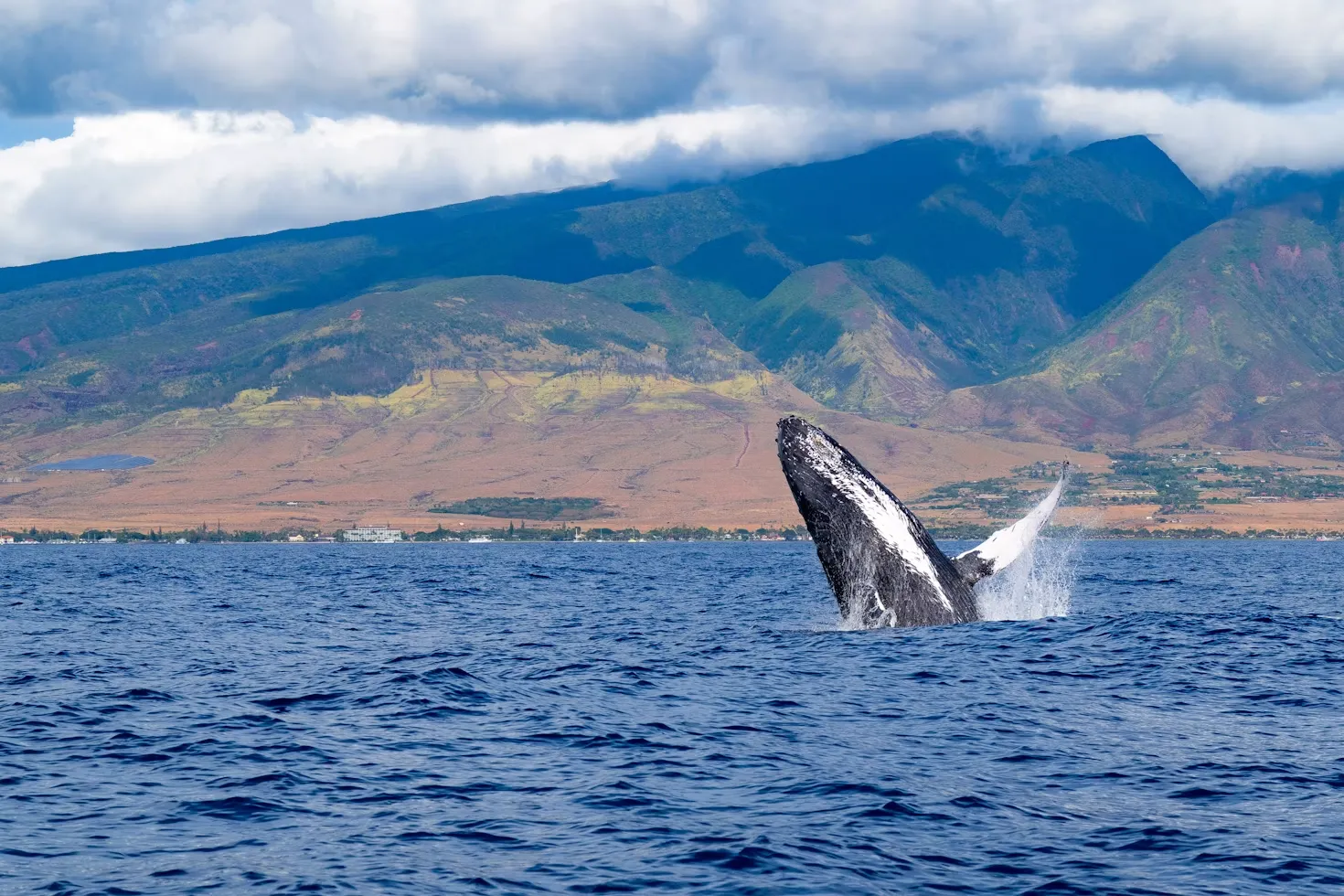
Visitors may spot whales from shore, particularly from elevated coastal viewpoints, but a responsible whale-watching excursion can provide another perspective.
Remember that humpback whales are federally protected. Boats and other ocean users must remain at least 100 yards away from them.
Choosing an island is one of the biggest decisions when planning a Hawaii vacation.
Maui is an especially appealing February destination for travelers interested in outdoor adventures, scenic drives, beaches, and whale watching.
You can spend your trip exploring Upcountry Maui, driving toward Hāna, visiting waterfalls, relaxing along the coast, or heading approximately 10,000 feet above sea level to explore Haleakalā.
February's whale activity adds another reason to spend time around Maui's coastline.
Oʻahu works well for travelers who want a combination of beaches, restaurants, nightlife, history, shopping, and outdoor recreation.
Popular experiences include Waikīkī, Pearl Harbor, the North Shore, and hiking at Diamond Head (Lēʻahi). Non-Hawaii residents currently need advance reservations to enter Diamond Head State Monument, which can be booked through the official Hawaii State Parks reservation system.
Winter also brings powerful swells to many north-facing shores, so always pay attention to posted warnings and local ocean conditions.
Travelers seeking dramatic scenery, hiking, waterfalls, and a quieter atmosphere may prefer Kauaʻi. February rainfall can make the island particularly lush, although rain and trail conditions can also affect outdoor plans.
Consider leaving extra room in your itinerary rather than scheduling every outdoor activity for a specific day.
The Island of Hawaiʻi, commonly called the Big Island, offers an enormous variety of landscapes. Travelers can experience beaches, tropical forests, volcanic terrain, ranch country, and high-elevation environments during the same vacation.
It is a great option for visitors who prioritize exploration and don't mind spending more time driving between attractions.
If Maui is part of your February Hawaii trip, consider visiting Haleakalā National Park.
The summit reaches 10,023 feet above sea level, creating conditions dramatically different from Maui's beaches. Temperatures around the summit can be at least 20 degrees colder than at sea level and can sometimes drop below freezing.
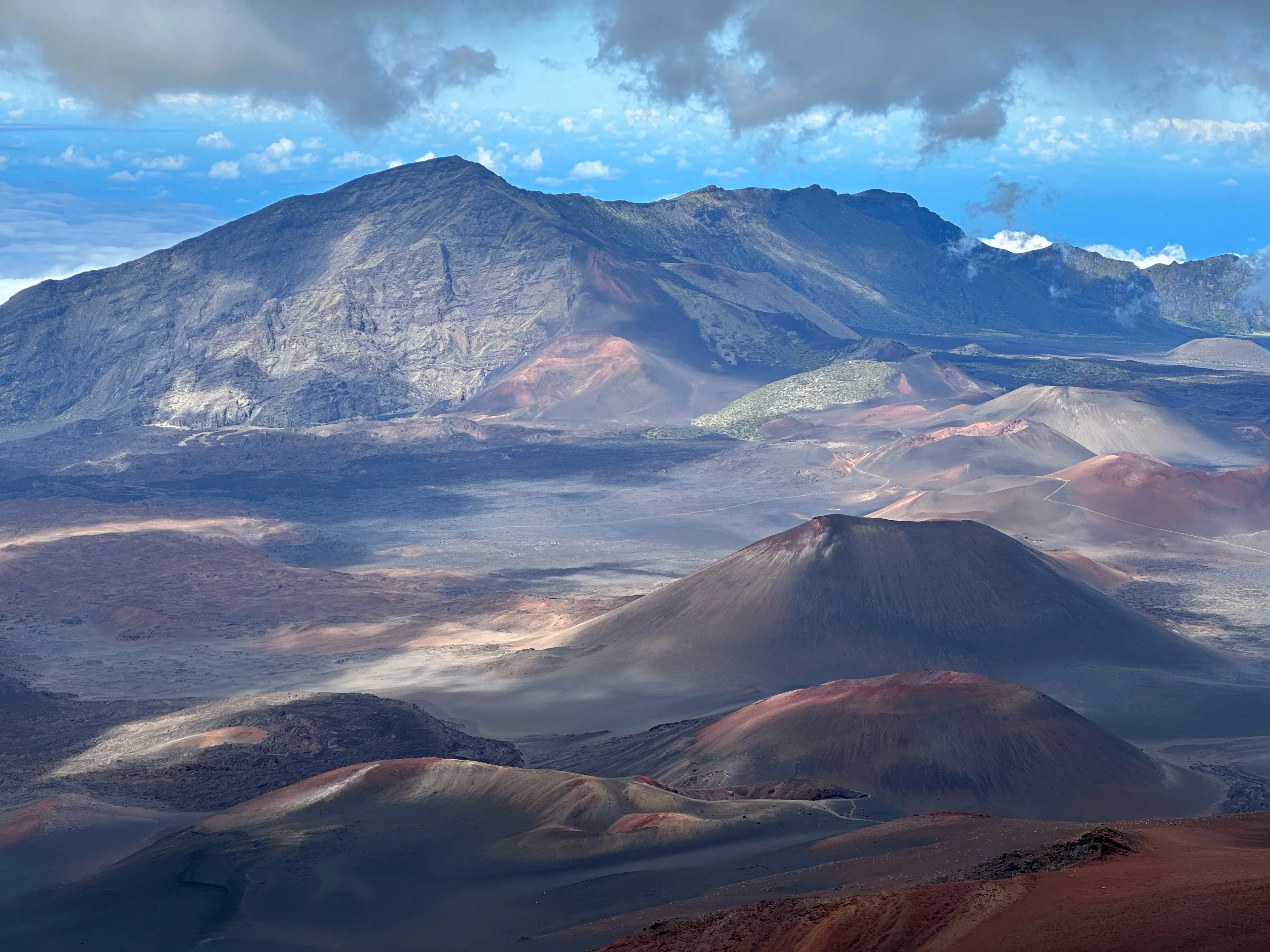
Sunrise is particularly popular. Visitors entering the Summit District between 3:00 a.m. and 7:00 a.m. currently need an advance sunrise reservation in addition to paying the park entrance fee or presenting an eligible park pass. Reservations are released through Recreation.gov up to 60 days in advance, with another portion released two days beforehand.
Even if your beach day requires nothing more than swimwear and a light cover-up, bring warm layers if Haleakalā is on your itinerary.
Absolutely—but ocean conditions matter.
February can provide beautiful swimming and snorkeling opportunities, especially along protected and leeward coastlines. At the same time, winter is known for larger north and northwest swells.
A beach that looks inviting from shore may have strong currents, shorebreak, or other hazards that aren't obvious to an inexperienced visitor.
Check daily ocean conditions, obey posted signs, speak with lifeguards when available, and avoid entering unfamiliar water when conditions appear questionable. If you are uncertain, choosing a lifeguarded beach or professionally guided ocean activity is a safer approach.
Packing for February requires slightly more variety than travelers might expect from a tropical destination.
Bring lightweight clothing, swimwear, comfortable walking shoes, sun protection, a reusable water bottle, and a light rain jacket. A sweater or light jacket can be useful during cooler evenings.
If your itinerary includes Haleakalā or another high-elevation destination, pack genuinely warm layers rather than assuming a thin sweatshirt will be sufficient.
Reef-conscious sun protection, hats, sunglasses, and quick-drying clothing are also useful when spending long days outdoors.
Some of Hawaii's most popular natural attractions now require advance reservations, particularly for nonresidents.
In addition to Diamond Head and Haleakalā sunrise, advance reservations are required for non-Hawaii residents visiting several Hawaii state parks, including ʻĪao Valley State Monument and Waiʻānapanapa State Park on Maui and Hāʻena State Park on Kauaʻi.
Use the Hawaii State Parks reservation portal when planning your itinerary.
It is also wise to reserve rental cars, accommodations, luaus, whale-watching excursions, and other must-do activities ahead of your arrival rather than waiting until you are already on the island.
For many visitors, February is one of the most interesting months to visit Hawaii.
You get warm tropical weather while escaping winter elsewhere, and humpback whale season is near its peak. Hawaii's landscapes can also be exceptionally green during the wetter months.
The tradeoff is that February weather can be more variable than during some summer periods, and winter swells can affect certain beaches and ocean activities.
Instead of planning every hour of your vacation, build a few flexible periods into your itinerary. If weather changes your plans on one part of the island, you may be able to explore somewhere else.
With a little preparation, travel to Hawaii in February can offer an incredible combination of beaches, culture, wildlife, hiking, scenic drives, and unforgettable winter sunshine.
Yes. February offers warm weather, outdoor activities, lush scenery, and peak humpback whale season. Travelers should simply be prepared for occasional rain and changing ocean conditions.
Yes. Swimming, snorkeling, surfing, and other ocean activities continue throughout the winter. However, conditions vary by island and shoreline, so always check local ocean and surf reports before entering the water.
February falls within Hawaii's wetter season, but rainfall varies significantly depending on the island and location. Windward regions generally receive more rain than leeward areas, and showers do not necessarily last all day.
There is no single best island for everyone. Maui is excellent for whale watching and varied outdoor adventures, Oʻahu combines beaches with urban attractions and history, Kauaʻi offers dramatic natural scenery, and the Island of Hawaiʻi provides exceptionally diverse landscapes.
Yes. February falls within the peak period for humpback whales in Hawaiian waters. NOAA identifies January through March as the peak season.
Yes. February is an excellent time to visit Maui, especially for travelers interested in humpback whales, scenic drives, beaches, hiking, Upcountry Maui, and Haleakalā National Park.
Pack warm-weather clothing along with a light rain jacket and sweater or jacket for cooler evenings. Bring substantially warmer layers if you plan to visit high-elevation destinations such as the summit of Haleakalā.
Popular beaches and resort areas can still be busy, particularly around holiday periods. Visiting beaches earlier in the day and exploring beyond the busiest resort areas can provide a quieter experience.
Seven to ten days works well for many travelers visiting one or two islands. If you only have a week, spending most or all of the trip on one island can reduce travel time and allow for a more relaxed vacation.
Whale watching, snorkeling when conditions permit, hiking, scenic drives, visiting cultural and historic sites, attending a luau, exploring national and state parks, and watching sunsets are all excellent February activities.
If you would like to read and learn more about interesting things in Hawaii! Check out our blog page here on our website!
or
Image Credits:
Blog Photos:
"humpback whale tail breaching ocean" by Abigail Lynn, via Unsplash
"a whale jumping out of the water" by Steve Wrzeszczynski, via Unsplash
"majestic Haleakala volcano landscape in Hawaii" by Rushi Patel, via Pexels
If you are dreaming of trading freezing temperatures, snow-covered roads, and heavy winter coats for warm beaches and tropical sunshine, Hawaii in the winter can be an incredible escape. But just how warm is Hawaii during the winter months?
The good news is that Hawaii in the winter temperature range remains pleasantly warm compared with most of the continental United States. At sea level, Hawaii's average daytime winter temperature is around 78°F (25.6°C), with nighttime temperatures generally about 10 degrees cooler.
Winter does bring some changes, however. Cooler evenings, increased rainfall, larger ocean swells, and significant differences between sunny coastal areas and higher elevations can all affect what visitors experience. Understanding Hawaii's winter weather can make it much easier to decide what to pack, where to stay, and which activities to plan.
Hawaii generally recognizes two primary seasons: summer (kau), from May through October, and winter (hoʻoilo), from November through April. Unlike destinations with four dramatically different seasons, Hawaii experiences relatively small temperature changes throughout the year.
According to Hawaii's official tourism website, average daytime temperatures at sea level are approximately 78°F during winter, compared with about 85°F during summer. Nighttime temperatures are typically around 10°F cooler.
For travelers visiting in December, January, or February, that generally means plenty of weather suitable for beaches, hiking, sightseeing, snorkeling, and other outdoor activities.
January and February are among the cooler months. Typical daytime highs across popular coastal destinations are often in the upper 70s to low 80s, while nighttime temperatures can fall into the 60s.
For perspective, Honolulu averages around 81°F for the daytime high and 67°F for the nighttime low in both January and February.
Along the coast, "cold" is relative.
A morning temperature in the upper 60s might feel chilly to a Hawaii resident, but visitors arriving from snowy climates may find it extremely comfortable. During the afternoon, sunshine can quickly make temperatures in the upper 70s or low 80s feel much warmer.
Elevation is where things change dramatically.
Hawaii contains numerous microclimates because of its mountains, trade winds, and volcanic geography. Visitors can encounter warm beaches, tropical rainforests, dry landscapes, and genuinely cold alpine conditions during the same vacation.
This is particularly important on Maui and Hawaii Island. Visiting the summit of Haleakalā on Maui or high-elevation areas around Mauna Kea on Hawaii Island is nothing like spending the afternoon on the beach.
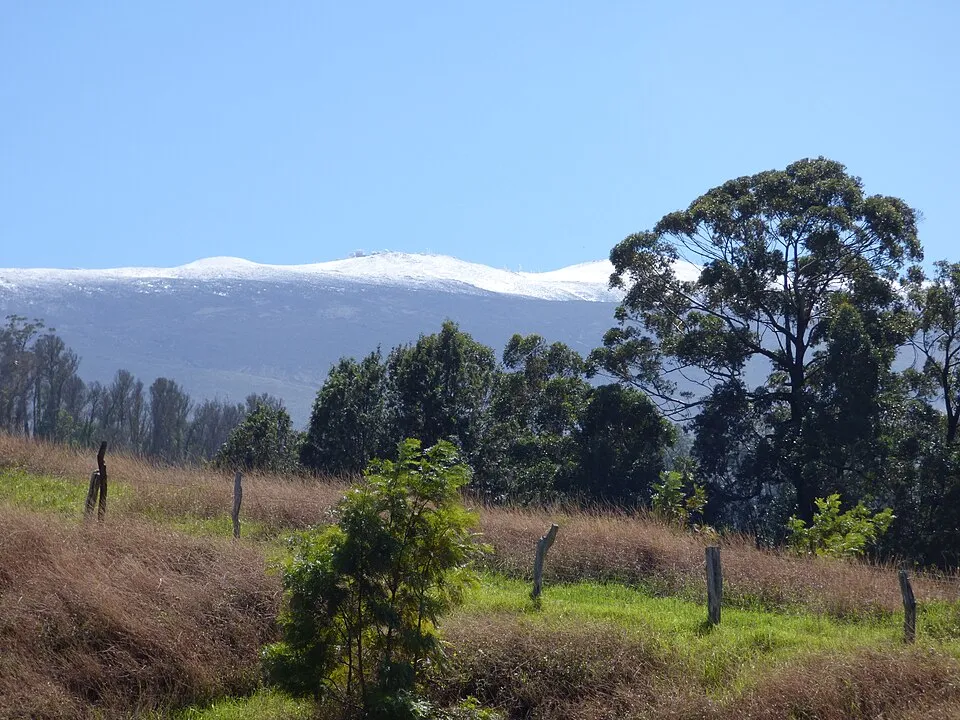
Temperatures at high elevations can become extremely cold, especially overnight and around sunrise. Winter snow can even occur on Hawaii's highest volcanic summits.
So, while you probably won't need a winter jacket for Waikiki or Wailea, warm layers can be essential for high-elevation adventures.
Yes. Winter is generally considered Hawaii's wetter season.
However, that does not mean visitors should expect nonstop rain throughout their vacation. The National Weather Service notes that winter weather can become more unsettled as storm systems and cold fronts reach the islands. At the same time, normal trade-wind conditions still occur frequently, bringing sunshine mixed with relatively brief showers.
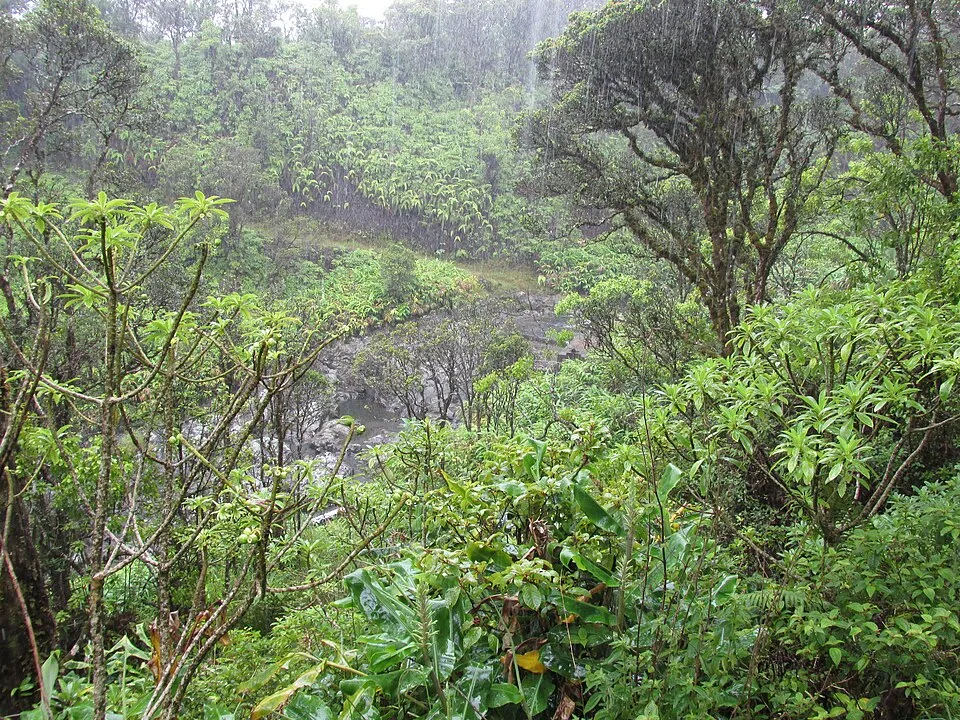
Where you stay also makes a major difference.
Hawaii's mountains create significant differences between windward and leeward areas. Windward areas generally receive more clouds and rainfall, while many leeward resort areas tend to be sunnier and drier.
For example, on Maui, conditions around Kapalua or Hāna can be very different from those around Kīhei and Wailea on the same day.
That variety is part of Hawaii's tropical climate. A rainy morning doesn't necessarily mean an entire day of activities needs to be canceled.
The Pacific Ocean surrounding Hawaii plays a major role in keeping the islands' temperatures relatively stable.
According to the National Weather Service, sea surface temperatures around Hawaii generally reach their annual low of approximately 73°F to 74°F in late February and March, compared with around 80°F near their early-fall peak.
For many visitors, the ocean is still comfortable enough for swimming, snorkeling, surfing, and other water activities during winter.
Ocean conditions, however, deserve just as much attention as ocean temperature.
Winter produces some of Hawaii's largest surf, particularly along exposed north-facing shores. Hawaii's official tourism website describes winter as the heart of the islands' surf season, with large and consistent swells attracting experienced surfers.
Always check local ocean conditions and posted warnings before entering the water.
Temperature is only one reason travelers choose Hawaii during winter.
December through the winter months combines warm tropical weather with several seasonal experiences that aren't available year-round. Most notably, winter falls within Hawaii's humpback whale season, making it an especially exciting time for visitors interested in whale watching.
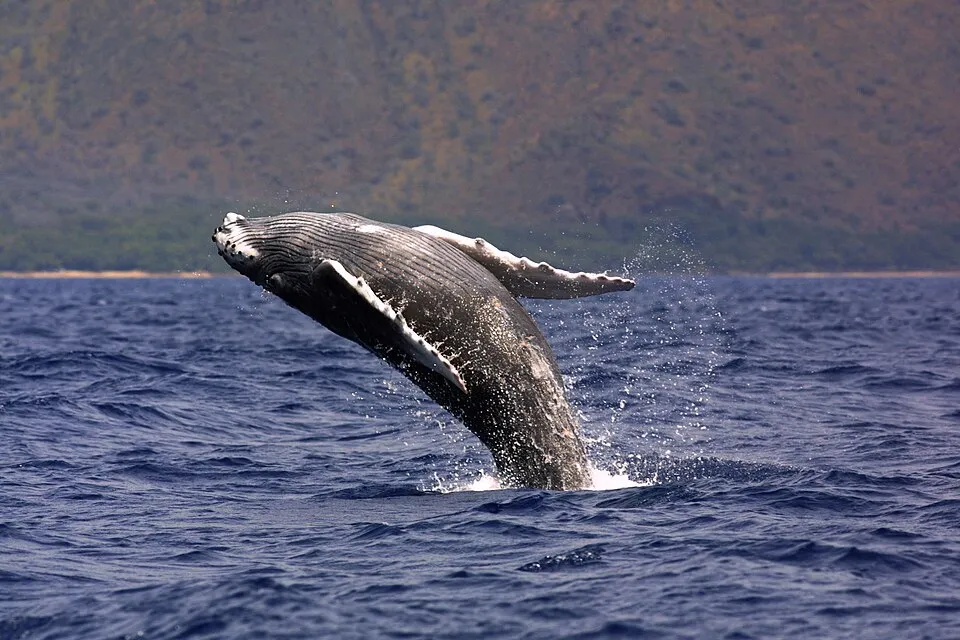
Winter is also an excellent season for hiking, sightseeing, scenic drives, ziplining, cultural experiences, and exploring Hawaii's diverse landscapes without the hottest temperatures of the year.
Surfers have another reason to visit: winter brings powerful swells to Hawaii's famous north-facing surf breaks.
The trade-off is that winter—particularly the holiday period—is a popular travel season. Travelers may encounter higher demand for airfare, accommodations, rental cars, and popular activities.
Packing for a Hawaii winter vacation usually doesn't require an entirely different wardrobe from a summer trip.
Shorts, T-shirts, swimsuits, sandals, sun protection, and lightweight clothing will still be useful for most days. However, adding a light sweater, sweatshirt, or rain jacket is a smart idea for cooler mornings, evenings, rainy weather, and higher elevations.
If you're planning a Haleakalā sunrise or another high-elevation excursion, bring genuinely warm layers rather than relying solely on beach clothing.
It is also smart to pack based on your planned activities instead of looking only at Hawaii's average temperature. A traveler spending a week at a beachfront resort will have very different clothing needs from someone planning rainforest hikes and summit adventures.
For many travelers, absolutely.
Hawaii's winter temperatures provide an appealing balance: warm enough to enjoy the beach and ocean but generally cooler than the hottest months of the year. There may be more rain, particularly in windward areas, but sunny weather remains common.
The combination of roughly upper-70s to low-80s coastal daytime temperatures, warm ocean water, whale season, dramatic winter surf, lush scenery, and outdoor activities makes winter one of Hawaii's most distinctive seasons.
If your idea of winter involves escaping freezing temperatures without giving up outdoor adventures, Hawaii is difficult to beat.
For current forecasts and additional trip-planning information, these resources can help:
At sea level, Hawaii's average daytime winter temperature is approximately 78°F (25.6°C). Nighttime temperatures are generally about 10°F cooler.
Coastal areas generally remain warm during December, with daytime temperatures commonly reaching the upper 70s or low 80s. For example, Honolulu's normal December high is around 82°F.
Yes. Many visitors swim, snorkel, surf, and participate in other ocean activities throughout winter. Sea surface temperatures around Hawaii reach their coolest levels around 73°F to 74°F in late February and March.
February and March tend to be Hawaii's coolest period because the surrounding Pacific Ocean takes time to cool after summer.
Snow is possible at the highest elevations, particularly on Hawaii Island's tallest volcanic summits. Coastal resort areas do not experience snowy winter conditions.
Winter is Hawaii's wetter season, but rain varies considerably by island, elevation, and whether you are staying on the windward or leeward side. Rain does not necessarily last all day, and sunny periods are common even during winter.
All three can be excellent months. December offers holiday travel and warm weather, while January and February generally bring slightly cooler temperatures and remain excellent months for seasonal activities such as whale watching.
Light summer clothing is appropriate for most coastal areas during the day. Bring a light jacket or sweatshirt for evenings, rain protection for changing weather, and significantly warmer clothing if visiting high-elevation locations such as Haleakalā.
Yes. Maui's coastal resort areas remain pleasantly warm throughout winter. Conditions vary considerably around the island, however, because elevation and geography create distinct microclimates.
It depends on your priorities. Winter offers slightly cooler temperatures, whale watching, powerful surf, and lush landscapes, while summer typically brings warmer temperatures and generally more consistent dry-season conditions.
If you would like to read and learn more about interesting things in Hawaii! Check out our blog page here on our website!
or
Image Credits:
Blog Photos:
Mauna Kea Snow as Seen from Hilo — Photo by International Gemini Observatory/NOIRLab/NSF/AURA/K. Puʻuohau-Pummill. Licensed under the Creative Commons Attribution 4.0 International (CC BY 4.0). Source: Wikimedia Commons.
Snow on Haleakalā, Maui — Photo by Forest & Kim Starr. Licensed under the Creative Commons Attribution 3.0 Unported (CC BY 3.0). Source: Wikimedia Commons.
Waikamoi Stream and Rain, Haʻikū Uka, Maui — Photo by Forest & Kim Starr. Licensed under the Creative Commons Attribution 3.0 United States (CC BY 3.0 US). Source: Wikimedia Commons.
Breaching Humpback Whale, Hawaiian Islands Humpback Whale National Marine Sanctuary — Photo by NOAA / National Marine Sanctuaries. Public domain. Source: Wikimedia Commons.
If you search “whale Maui” while planning a Hawaiian vacation, you are probably wondering when whales are around, where you can see them, and whether Maui is a good island for whale watching. The answer is simple: Maui is one of Hawaiʻi’s premier destinations for seeing humpback whales during the winter months.
Every year, thousands of North Pacific humpback whales, known in Hawaiian as koholā, migrate to the warm waters surrounding the Hawaiian Islands. Hawaiʻi serves as an important breeding, calving, and nursing area for these enormous marine mammals. According to NOAA, approximately half of the North Pacific humpback whale population uses Hawaiian waters during the winter and spring.
For Maui visitors traveling during whale season, spotting a humpback can become one of the most memorable experiences of the entire trip.
The Maui whale season generally runs from November into April or May, although the exact arrival and departure of the whales varies each year.
If whale watching is one of the main reasons for your trip, January through March is typically the best window to visit Maui. NOAA identifies these months as the usual peak period for humpback abundance in Hawaiian waters.
During the beginning of the season, visitors may notice occasional whales appearing offshore. Numbers generally increase as winter progresses before declining again during spring as whales begin migrating back toward northern feeding grounds.
Because whales are wild animals, sightings are never completely guaranteed. However, visiting during peak season can significantly improve your chances.
Humpback whales don't come to Hawaiʻi primarily to feed. Instead, the islands provide important winter breeding habitat.
The whales travel from colder northern feeding areas to Hawaiʻi's warm waters to mate, give birth, and nurse their calves. The relatively warm, shallow waters surrounding the Hawaiian Islands provide important habitat during this stage of their lives.
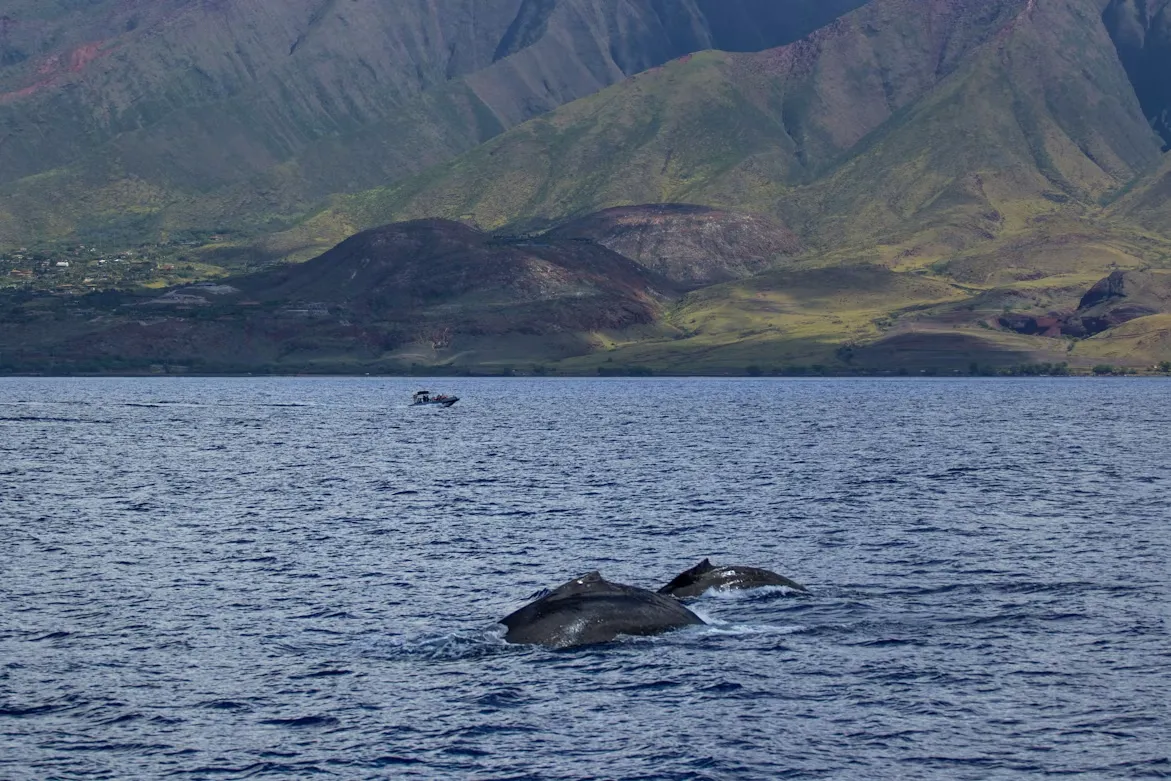
This migration is impressive considering the enormous distances the whales travel between their seasonal habitats.
Maui is especially interesting because of the extensive shallow-water habitat surrounding Maui Nui. NOAA has conducted dedicated vessel surveys off West Maui to better understand the abundance and distribution of humpback whales in the region.
One of the great things about searching for whales on Maui is that you don't necessarily have to get on a boat.
During peak season, whales can sometimes be spotted directly from shore. Elevated viewpoints can be particularly useful because they provide a wider view of the ocean.
Visitors often look for activity in the waters around West and South Maui, including areas facing the channels between Maui, Lānaʻi, Molokaʻi, and Kahoʻolawe.
Watch carefully for a sudden misty plume above the ocean. This is the whale's blow, created when it exhales at the surface.
You might also see a dark back rolling through the water, a tail disappearing beneath the surface, or more dramatic behaviors such as breaches and fin slaps.
Bringing binoculars can make shoreline whale watching even better.
For travelers who want to dedicate part of their vacation specifically to whales, a guided Maui whale-watching tour can be worthwhile.
Boat tours allow visitors to experience the ocean environment while knowledgeable guides explain humpback whale behavior, migration, conservation, and Hawaiian marine ecology.
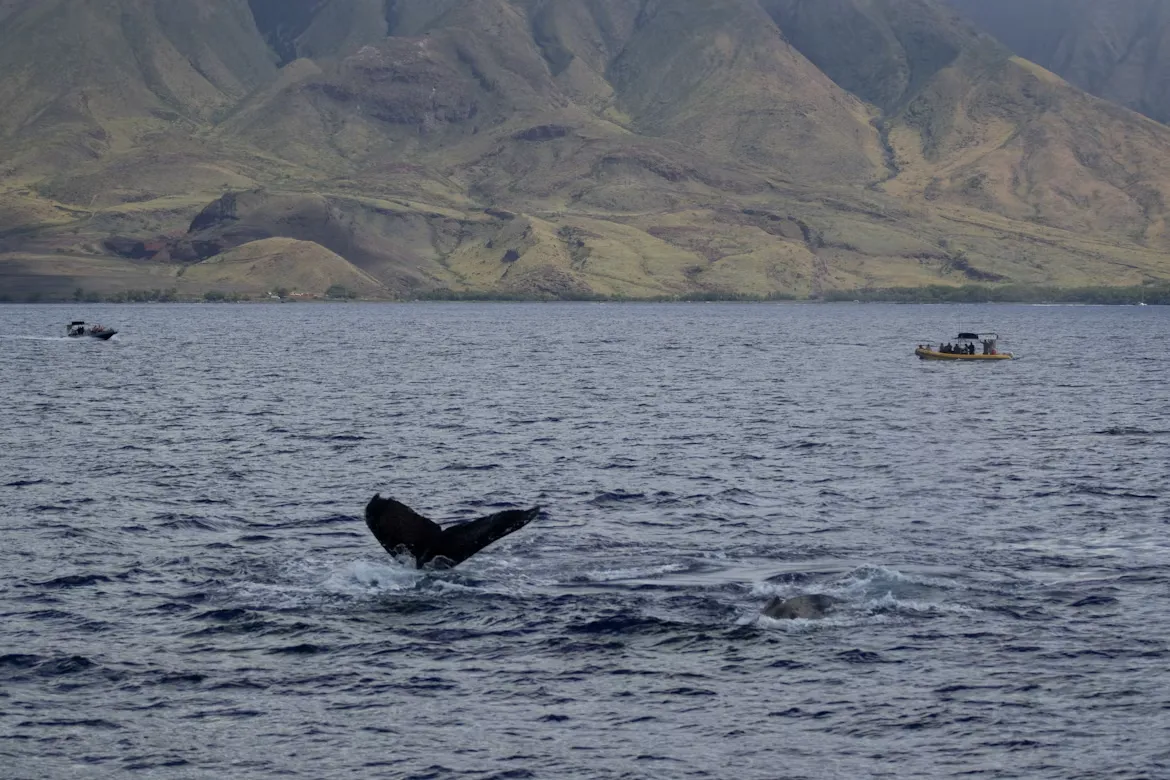
However, responsible wildlife viewing is extremely important.
Humpback whales in Hawaiian waters are protected, and ocean users cannot approach within 100 yards of a humpback whale. The rule applies to vessels as well as swimmers, kayakers, paddleboarders, and other ocean users.
Whales may occasionally choose to approach a vessel themselves. In those situations, operators must continue following applicable wildlife-viewing regulations rather than intentionally moving closer.
Every whale-watching experience is different, which is part of what makes seeing humpbacks so exciting.
One of the most famous behaviors is breaching, when much of a whale's enormous body launches above the surface before crashing back into the ocean.
Visitors might also see:
Male humpback whales are also famous for their complex songs. NOAA researchers use acoustic monitoring because humpback song becomes a major part of Maui's underwater soundscape during winter.
Whale season doesn't mean your entire vacation has to revolve around the ocean.
One of the best ways to experience Maui is to combine marine activities with adventures on land. You might spend the morning searching for humpback whales and then explore Upcountry Maui, visit the slopes of Haleakalā, hike through a tropical landscape, or go ziplining.
This creates a more complete Maui itinerary, especially for families and groups with different interests.
For an adventurous land-based experience, NorthShore Zipline in Haʻikū offers visitors an opportunity to explore a completely different side of Maui after spending time along the coast. Instead of making every vacation day a beach day, travelers can experience Maui's forests, mountain scenery, history, and outdoor adventures as well.
Whale watching should always be about observing these animals without interfering with their natural behavior.
The Hawaiian Islands Humpback Whale National Marine Sanctuary works to protect humpback whales and their Hawaiian habitat through research, education, conservation, and resource protection. Threats can include vessel collisions, entanglement, harassment, and broader environmental changes.
Visitors can help by keeping the required distance, choosing responsible tour operators, reducing marine debris, and never attempting to touch or swim toward a whale.
Respecting these animals helps ensure that future generations can continue experiencing the return of koholā to Hawaiʻi.
Searching “whale Maui” might start with the hope of seeing a humpback breach offshore, but whale season can become part of a much larger Maui adventure.
From watching koholā along the coastline to exploring Haleakalā, Upcountry Maui, tropical forests, snorkeling destinations, hiking trails, and outdoor adventures like ziplining, Maui offers far more than a single attraction.
If you're visiting between winter and early spring, keep your eyes on the ocean. That splash in the distance might be one of Maui's most famous seasonal visitors.
For current regulations, whale information, conservation resources, and responsible viewing guidance, these official resources are useful when planning your trip:
Hawaiian Islands Humpback Whale National Marine Sanctuary — Learn about humpback whales, research, conservation, and Hawaiʻi's protected whale habitat.
NOAA Humpback Whale Boating Guidelines — Review safe and responsible boating practices around whales.
NOAA Humpback Whale Regulations — Learn about required approach distances and other protections for humpback whales in Hawaiʻi.
NOAA Humpback Whale Research and Monitoring — Explore research into whale abundance, behavior, acoustic activity, and distribution.
NOAA Responsible Recreation Guidelines — Helpful information for enjoying Hawaiʻi's marine environment responsibly.
Humpback whales are generally found around Hawaiʻi from approximately November through April or May, with the greatest abundance typically occurring from January through March.
January, February, and March are generally excellent months for Maui whale watching because they fall within the peak period for humpback whale abundance. February is particularly popular for travelers planning a vacation specifically around whale watching.
Yes. During peak whale season, humpback whales can often be spotted from Maui's shoreline. Look for whale blows, breaches, tail slaps, and other surface activity. Binoculars and elevated coastal viewpoints can improve your chances of seeing them.
West and South Maui provide many opportunities for shoreline whale watching, while whale-watching boat tours depart from several locations around the island. The best location on any particular day can depend on whale activity, weather, and ocean conditions.
Humpback whales migrate to Hawaiian waters during winter to breed, give birth, and nurse their calves. The warm and relatively shallow waters surrounding the islands provide important winter habitat.
You cannot intentionally approach humpback whales for a close encounter. In Hawaiian waters, regulations prohibit approaching a humpback whale within 100 yards by any means while on or in the water.
For many visitors, yes. A whale-watching tour can provide a dedicated opportunity to look for whales while learning about humpback behavior, migration, and conservation from experienced guides. Remember that humpbacks are wild animals, so specific sightings or behaviors can never be guaranteed.
Yes. December falls within Maui's general humpback whale season, and sightings are possible. However, whale abundance typically increases later in winter, with the peak generally occurring from January through March.
Yes. Humpback whales can still be present around Maui in April, although numbers generally begin decreasing as whales migrate away from Hawaiʻi toward their northern feeding grounds.
Absolutely. Whale watching can be a memorable family activity, especially during peak season. Families can choose between shoreline viewing and boat excursions depending on children's ages, comfort on the ocean, and weather conditions.
If you would like to read and learn more about interesting things in Hawaii! Check out our blog page here on our website!
or
Image Credits:
Blog Photos:
"black whale tail" by Andrew Bain, via Unsplash
"green mountain beside body of water during daytime" By Colton Jones, via Unsplash
"black whale on blue sea during daytime" by Colton Jones, via Unsplash