

WE HAVE REOPENED! Our team has worked hard to repair, inspect, and prepare our course following Hurricane Lala.
We're ready to safely welcome you back !
BOOKINGS ARE OPEN!
Mahalo for your patience and support! 💛
Perched over 10,000 feet above sea level, Haleakalā Crater in Maui offers one of the most extraordinary stargazing experiences on Earth. This dormant volcano, located within Haleakalā National Park, is renowned for its pristine night skies, minimal light pollution, and breathtaking celestial views. Whether you're an amateur astronomer, a seasoned stargazer, or simply seeking a unique adventure, Haleakalā's summit provides an unforgettable encounter with the cosmos.
Haleakalā's summit stands at 10,023 feet, placing it above a significant portion of Earth's atmosphere. This elevation, combined with the area's dry air and isolation from urban light sources, creates optimal conditions for observing stars, planets, and deep-sky objects. The name "Haleakalā" means "House of the Sun" in Hawaiian, and according to local legend, the demigod Māui lassoed the sun from this very summit to slow its journey across the sky.
The crater itself is an erosional valley nearly 7 miles across, 2 miles wide, and 2,600 feet deep. Its unique geological features and high elevation contribute to the area's exceptional visibility, making it a prime location for both amateur and professional astronomers.
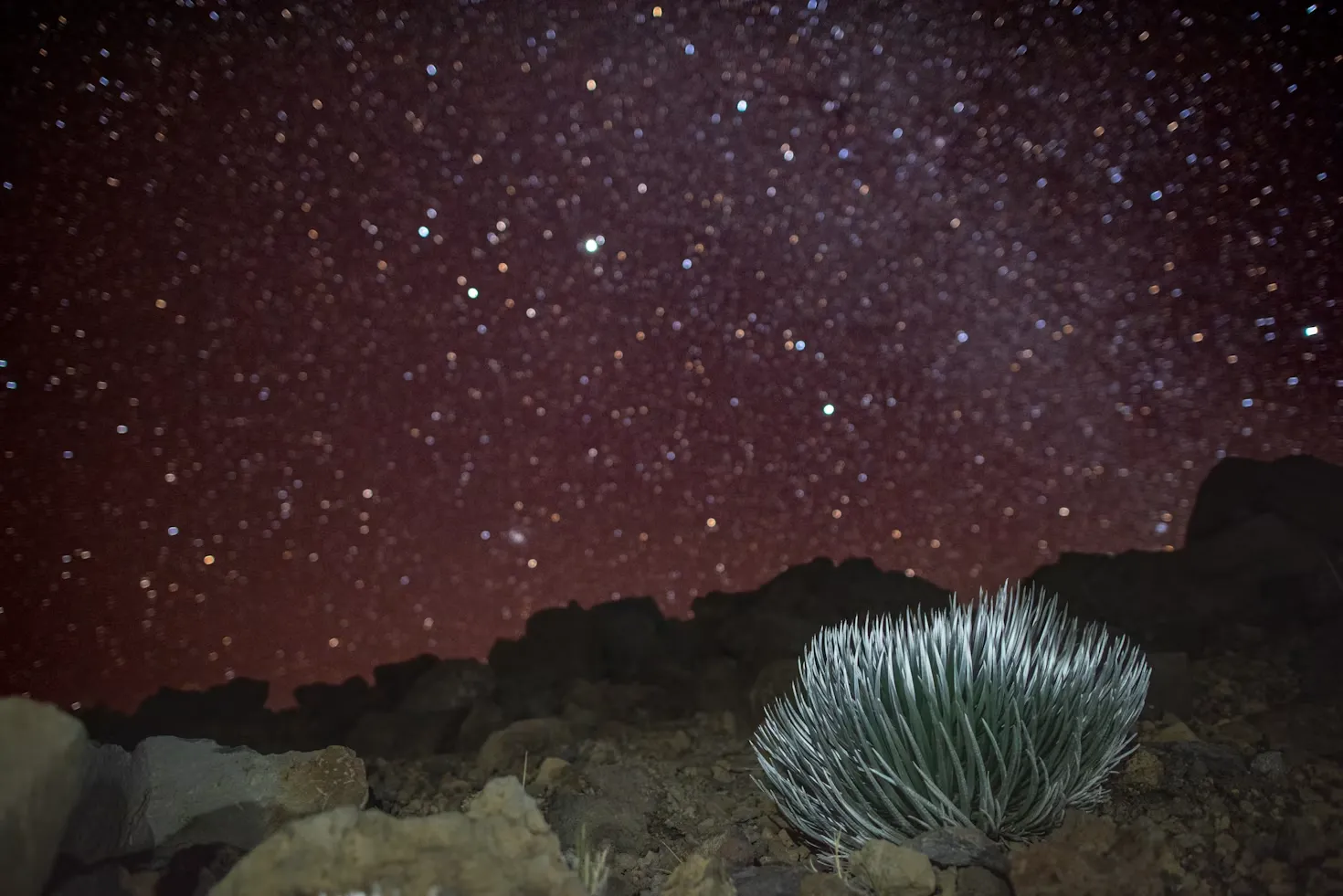
For those who prefer a self-guided experience, Haleakalā National Park welcomes visitors to stargaze from the summit. The park's high elevation and remote location offer some of the darkest skies in the United States. However, it's essential to come prepared: temperatures can drop into the 40s or lower, even during summer months. Dress in layers, including a windproof outer layer, and consider bringing gloves, a hat, and a blanket for added warmth.
A red flashlight is recommended to preserve night vision, and a reclining chair can enhance comfort during extended viewing sessions. Remember to allow your eyes at least 30 minutes to adjust to the darkness for optimal stargazing.
Please note that overnight stays within the park are only permitted in designated campgrounds, such as Hosmer Grove Campground in the summit district. Sleeping in vehicles outside of these areas is prohibited. Here is a direct link to book at Hosmer Grove if you plan to view the cosmos.
https://www.recreation.gov/camping/campgrounds/10068557
Here is a video about the sunset and stargazing atop the world!
For a more structured experience, several tour operators offer guided stargazing adventures on Haleakalā. These tours often include transportation, expert commentary, and high-powered telescopes for an in-depth exploration of the night sky.
Maui Stargazing provides an extensive tour of Haleakalā National Park, featuring a scenic sunset picnic followed by a science-based telescope adventure. Guests can observe visible planets and deep-sky objects of the Milky Way, including nebulae and star clusters, through a 12-inch aperture Dobsonian telescope. The tour includes winter jackets, fleece hats, gloves, and insulated snow pants to ensure comfort during the chilly evening hours.
https://www.mauistargazing.com/
Maui All Stars offers a sunset and stargazing tour that allows guests to observe the moon, stars, and galaxies using a large GPS telescope and laser pointer. The experience is hosted by an expert guide and includes convenient pick-up locations around the island.
https://www.hawaiiactivities.com/en/hawaii/maui/a/176011
Plan Ahead: Check the weather forecast before your trip, as conditions can change rapidly. Also, familiarize yourself with the park's regulations and obtain any necessary permits or reservations in advance.
Haleakalā holds deep spiritual significance for Native Hawaiians, who consider the summit a sacred place used for religious ceremonies and connecting with ancestors. Visitors are encouraged to approach the area with respect and mindfulness, honoring its cultural importance. Recent proposals to construct new telescopes on the summit have faced opposition from the local community, highlighting the need to balance scientific exploration with cultural preservation.
Stargazing at Haleakalā Crater is more than just a visual delight; it's a profound experience that connects you with the universe and the rich cultural tapestry of Hawaii. Whether you choose a guided tour or a self-directed adventure, the summit offers an unparalleled opportunity to witness the wonders of the night sky in a setting of natural and spiritual grandeur.
Haleakalā is considered one of the top stargazing locations in the world because of its 10,023-foot elevation, extremely low light pollution, and dry, clear air. Sitting above much of Earth’s atmosphere allows you to see stars, planets, and even the Milky Way with incredible clarity. Its remote location and geological features make Haleakalā a true stargazer’s paradise in Maui.
You do not need a reservation to stargaze at night, but you do need a reservation if you plan to enter for sunrise viewing (3:00 AM – 7:00 AM). For overnight stays, only designated campgrounds like Hosmer Grove are allowed, and these require booking through Recreation.gov.
Camping link (Hosmer Grove):
https://www.recreation.gov/camping/campgrounds/10068557
Even in summer, temperatures at the summit can drop into the 40s or lower, and winds often make it feel even colder. For safe and comfortable Haleakalā stargazing, visitors should bring layers, a winter jacket, gloves, a hat, and warm footwear. Guided tours typically provide outerwear.
You can absolutely stargaze on your own at Haleakalā—many visitors do. A self-guided experience offers quiet, peaceful views under some of the darkest skies in Hawaii.
However, guided tours provide:
Recommended tours:
Maui Stargazing – https://www.mauistargazing.com/
Maui All Stars – https://www.hawaiiactivities.com/en/hawaii/maui/a/176011
Both options are excellent depending on your comfort level and interest.
For the best experience, pack:
Allow your eyes 30 minutes to fully adjust to the dark for optimal viewing.
The best stargazing conditions occur during summer and winter, when skies tend to be clearest. Plan to arrive before sunset, watch golden hour at the summit, then stay as the sky transitions to starlight. Dark sky hours peak between 8 PM and midnight.
For planning tips:
https://www.prideofmaui.com/blog/maui/complete-guide-to-visiting-haleakala/
Yes. Haleakalā is deeply sacred in Hawaiian culture, known as the “House of the Sun.” It’s tied to the legend of Māui lassoing the sun, and Native Hawaiian communities continue to use the summit for ceremonies and spiritual connection. Visitors are encouraged to explore respectfully and understand the cultural importance of the area.
More on current cultural concerns:
https://apnews.com/article/hawaii-maui-haleakala-space-force-telescope-703add0ead6bf705707d32f177e30cfb
Yes! Under clear skies, Haleakalā offers unobstructed views of:
Guided tours use large telescopes to show deep-sky objects in extraordinary detail.
Yes—safety is essential:
Always review National Park guidelines before your visit.
Haleakalā offers one of the rarest night-sky environments on the planet. Unlike beach activities or coastal tours, stargazing at Haleakalā:
It’s a highlight for many Maui visitors and an experience that feels both cosmic and spiritual.
If you would like to read and learn more about interesting things in Hawaii! Check out our blog page here on our website!
or
Image Credits:
Hero:
"Haleakala Crater, United States" by Farid Askerov, via Unsplash
"Silversword: a plant that only grows on this volcano" by Sam Goodgame, via Unsplash
Language is more than a means of communication—it is a reflection of culture, history, and identity. Nowhere is this more evident than in Hawaii, where a unique form of English-based creole known as "Pidgin" has evolved over the past century. Officially referred to as Hawai‘i Creole English, Pidgin is a rich, dynamic language that encapsulates the multicultural heritage of the islands. Its development is deeply tied to Hawaii's complex social, economic, and cultural history, particularly during the plantation era. Today, while sometimes misunderstood, Pidgin remains a vital and expressive part of local identity.
The roots of Pidgin in Hawaii can be traced back to the mid-19th century, during a period of significant immigration and economic transformation. Following the decline of the whaling industry, Hawaii shifted toward an agricultural economy dominated by sugarcane and pineapple plantations. These plantations required a large labor force, which led to an influx of workers from China, Japan, Portugal, Korea, the Philippines, Puerto Rico, and other parts of the world.
These immigrant groups, each speaking their own languages, had to find ways to communicate with one another and with English-speaking plantation owners. This necessity gave birth to a rudimentary contact language—an early form of Pidgin—that incorporated vocabulary primarily from English, with grammatical influences from Hawaiian, Japanese, Portuguese, Cantonese, and other languages. At this stage, the language was not yet fully developed or standardized; it functioned mainly as a tool for basic communication.
Over time, as immigrant families settled and generations were born and raised in Hawaii, Pidgin evolved from a simple trade language into a fully developed creole. By the early 20th century, children growing up in multilingual communities began acquiring Pidgin as their first language. This generational shift marked the transformation from a pidgin (a simplified language used for specific purposes) into a creole (a native language with its own stable grammar and vocabulary). For example, instead of saying "He is going to the store," a Pidgin speaker might say, "He stay going store.", another example is many here in Hawaii will say "close the light", instead of "Turn off the light.
Here is a short video talking about the origins of pidgin in Hawaii:
Here is a website that features some of the most common pidgin terms used in Hawaii:
For many in Hawaii, Pidgin is more than a way of speaking—it is an expression of local identity and solidarity. It reflects shared history, values, and a sense of place. It often carries nuances and cultural references that are difficult to translate into standard English. As such, Pidgin is commonly used in informal settings, storytelling, comedy, local literature, and even political discourse to connect authentically with local audiences.
Pidgin is a linguistic treasure that tells the story of Hawaii’s multicultural roots and the resilience of its people. Born out of necessity, shaped by diversity, and sustained by community, it continues to thrive as a powerful marker of identity and cultural pride. As public understanding and appreciation grow, Pidgin stands as a testament to Hawaii’s rich linguistic tapestry—one that deserves both recognition and respect.
Explore the history, language, and cultural importance of Hawai‘i Creole English through these curated resources:
Yes—Hawaii Pidgin is a real, fully developed language, officially called Hawaiʻi Creole English. It began as a communication tool on sugar and pineapple plantations and eventually evolved into a creole spoken natively by many local residents. While rooted in English vocabulary, Pidgin has its own grammar, pronunciation, rhythm, and rules, making it a legitimate language, not “broken English.”
Pidgin emerged in the mid-1800s during the plantation era, when immigrant workers from Japan, China, Portugal, the Philippines, Korea, Puerto Rico, and other regions needed a common way to communicate. They blended English words with Hawaiian, Portuguese, Japanese, Cantonese, and other linguistic influences—creating the earliest form of Pidgin. This language helped bridge the communication gap between workers, overseers, and landowners.
Over time, children born into multilingual plantation communities began learning Pidgin as their first language. Once a generation grows up speaking a pidgin as its native tongue, it transitions into a creole—a stable, rule-based language. By the early 20th century, Hawaii’s Pidgin had become Hawaiʻi Creole English, with consistent grammar and a unique sound system.
Some popular Pidgin terms include:
Visitors can explore more Pidgin words here:
https://hawaii.com/50-hawaii-pidgin-words-and-terms-visitors-need-to-know/
And hear pronunciations here:
https://www.youtube.com/watch?v=3l23vMgg-x0
Pidgin carries the history of plantation life, multicultural cooperation, and local values. It reflects the humor, resilience, and shared experiences of generations who lived and worked together across Hawaii’s islands. Speaking Pidgin often signals local pride, cultural grounding, and an authentic connection to community. For many locals, it's a symbol of belonging.
Absolutely. Pidgin remains widely spoken in everyday conversation—especially among local families, younger generations, and multicultural communities. While English is used in schools and formal settings, Pidgin thrives in homes, workplaces, surf spots, local shops, comedy, music, and storytelling. It continues to evolve with modern slang and influences.
Because Pidgin uses many English-based words, outsiders sometimes mistake it for “slang” or “incorrect grammar.” In reality, Pidgin follows consistent grammatical rules—they’re just different from Standard American English. Linguists classify Pidgin as one of the world’s most robust English-based creoles, shaped by Hawaii’s unique cultural landscape.
To learn more about its origins, here’s a quick video:
https://youtube.com/shorts/wNW-7Gq-Lyc?si=1wcbgyn21IWB4zR1
Yes! Even learning a few phrases can show locals that you appreciate Hawaii’s cultural uniqueness. While visitors shouldn’t imitate Pidgin in a mocking or exaggerated way, understanding the basics helps you feel more connected and respectful. It also enhances your travel experience—Pidgin is a doorway into Hawaii’s multicultural history and sense of community.
While Pidgin is not typically a formal medium of instruction, it is studied academically in linguistics, cultural studies, and Hawaiian history courses. Some educators incorporate Pidgin literature, poetry, and storytelling to engage students. Pidgin has even appeared in official materials, local news stories, and public service announcements.
Pidgin is a living reminder of Hawaii’s diverse plantation roots, where immigrants from around the world worked side by side. It symbolizes unity, resilience, and the ability of diverse cultures to blend into something entirely new. Today, Pidgin continues to preserve humor, identity, music, pride, and aloha spirit in a way no other language can.
Pidgin isn’t just something people speak—it’s something they feel.
If you would like to read and learn more about interesting things in Hawaii! Check out our blog page here on our website!
or
Image Credits:
Hero:
Japanese plantation workers on a sisal plantation in Hawaiʻi, photographed circa 1910–1915. Public domain image courtesy of the Library of Congress.
California Historical Society Collection, USC Libraries Special Collections. Public Domain, via Wikimedia Commons.
Sitting along the emerald hills of Maui’s lush north shore lies Haiku, a charming upcountry village that offers a refreshing alternative to the island’s busy beach resorts. Known for its misty jungles, rolling pastures, and laid-back vibe, Haiku is a hidden gem that draws in adventurers, artists, and travelers seeking authentic connection — to nature, culture, and themselves.
Whether you’re planning a full stay in Haiku or a quick detour off the Road to Hana, this peaceful community has much to offer. Here's how to make the most of your time in Haiku, Maui.
Kick off your adventure with a visit to Twin Falls, one of the most accessible and rewarding waterfall hikes on the island. Located just past mile marker 2 on the Road to Hana, this easy-to-moderate trail weaves through bamboo forests, guava trees, and muddy jungle paths to reach a series of waterfalls and swimming holes.
Pack water shoes and a towel — and don’t be afraid to get wet! Local vendors near the trailhead often sell fresh coconuts and smoothies, perfect for a post-hike refresh.
At the heart of the village is the Haiku Marketplace, a community hub filled with local food, art, and character. Set in the historic Haiku Cannery building, the marketplace includes health-conscious eateries, a kombucha bar, artisan boutiques, a surf shop, and a well-stocked general store.
Try a locally sourced poke bowl, sip on small-batch kombucha, or grab a handmade gift to remember your trip. The vibe is casual, friendly, and authentically Maui.
No visit to Haiku is complete without a meal at Colleen’s at the Cannery, a beloved local staple located in the historic Haiku Cannery building. This laid-back café and bar serves up hearty breakfasts, fresh island-inspired lunches, and cozy dinners — all with a focus on quality ingredients and welcoming service.
Whether you’re fueling up before a waterfall hike or winding down after a day on the Road to Hana, Colleen’s offers something for everyone. Locals rave about the banana macadamia nut pancakes, wood-fired pizzas, and daily fish specials. The open-air seating, rustic charm, and local artwork make it a perfect spot to soak in the upcountry vibe.
Bonus: The espresso bar and cocktail menu are just as good as the food.
Haiku’s lush landscape is best explored with the help of local guides who know the trails and hidden gems. Eco-adventure tours offer a chance to hike off the beaten path, explore secret waterfalls, swing into jungle pools, and learn about native Hawaiian flora and history.
Whether you’re a family with kids or a solo explorer, these tours provide safe, insightful access to Haiku’s wild beauty — often with fresh fruit picked right from the trail.
For adrenaline with a view, NorthShore Zipline in Haiku delivers an unforgettable experience. Set on a historic World War II base in the lush upcountry jungle, this family-friendly zipline tour features seven lines, sky bridges, and soaring platforms with panoramic views of Maui’s north shore.
It’s the perfect mix of adventure and natural beauty — with expert guides, a safe and fun environment, and just enough thrill to keep your heart racing. Great for first-timers and seasoned zipliners alike, NorthShore Zipline is a must-do for anyone looking to add excitement to their Haiku itinerary.

Check out tour availabilities here!
Though technically just outside Haiku in nearby Paia, Ho’okipa Beach Park is an essential stop. Known as a global windsurfing mecca, it also offers jaw-dropping views of the coastline and excellent sea turtle spotting — especially in the late afternoon.
Bring a camera and take a walk down to the beach where you’re likely to see dozens of honu (Hawaiian green sea turtles) basking on the sand.
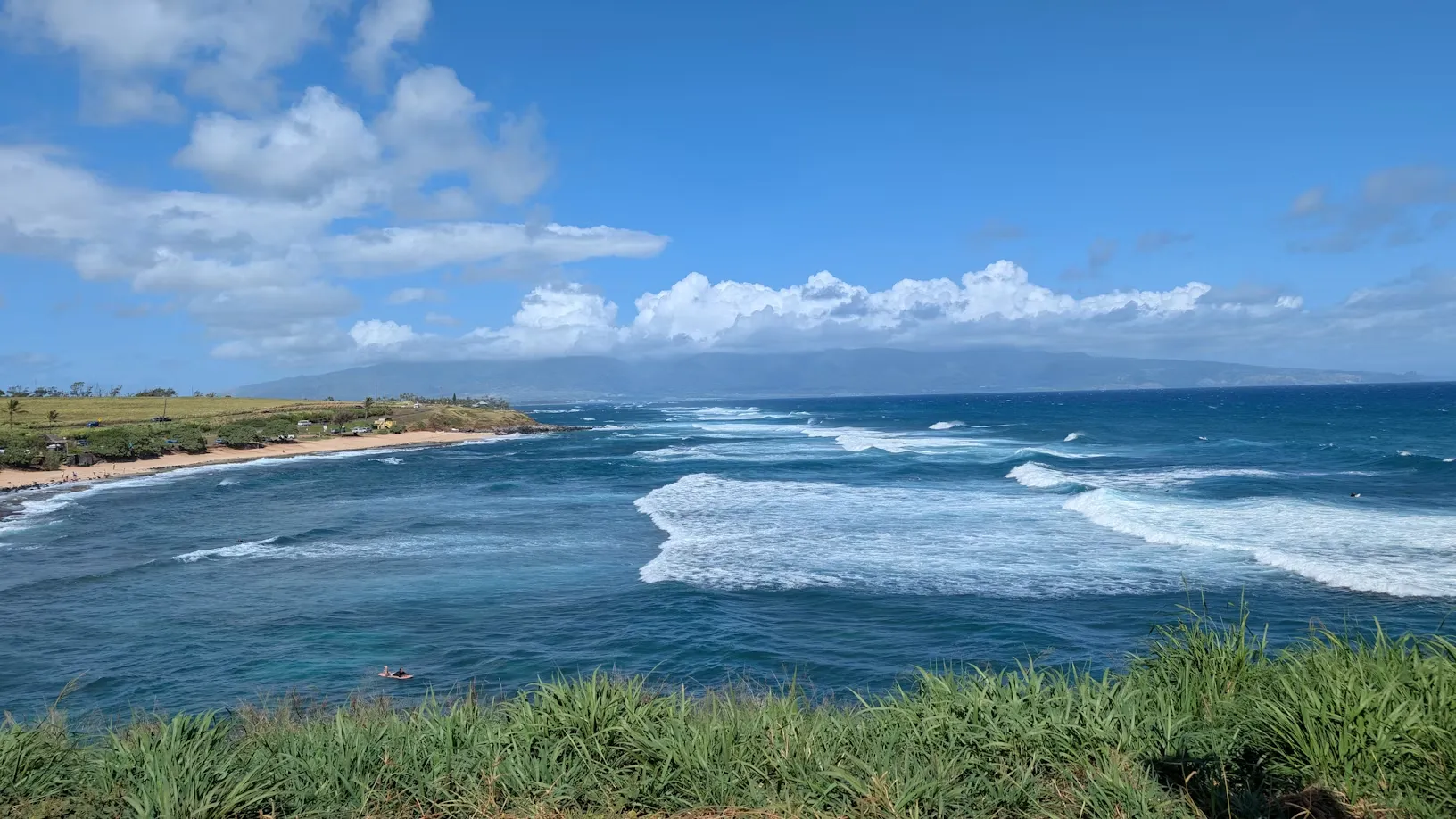
Haiku is home to a vibrant community of yogis, healers, and wellness seekers. It’s not uncommon to find yourself attending a sunrise yoga session overlooking a jungle valley, or joining a sound healing circle beneath the stars.
Many local retreat centers and eco-lodges offer single-day experiences or longer stays focused on mindfulness, nature connection, and self-care. Whether you're looking to deepen your practice or simply unwind, Haiku is a sanctuary for the soul.
Haiku serves as a perfect starting point for the legendary Road to Hana — one of the world’s most scenic drives. If you’re short on time or not ready to brave the full route, just exploring the early portion from Haiku offers lush vistas, waterfalls, botanical gardens, and coastal lookouts.
Be sure to drive carefully — the roads are narrow and winding, but the rewards are immense. Starting early from Haiku gives you a head start on the crowds.
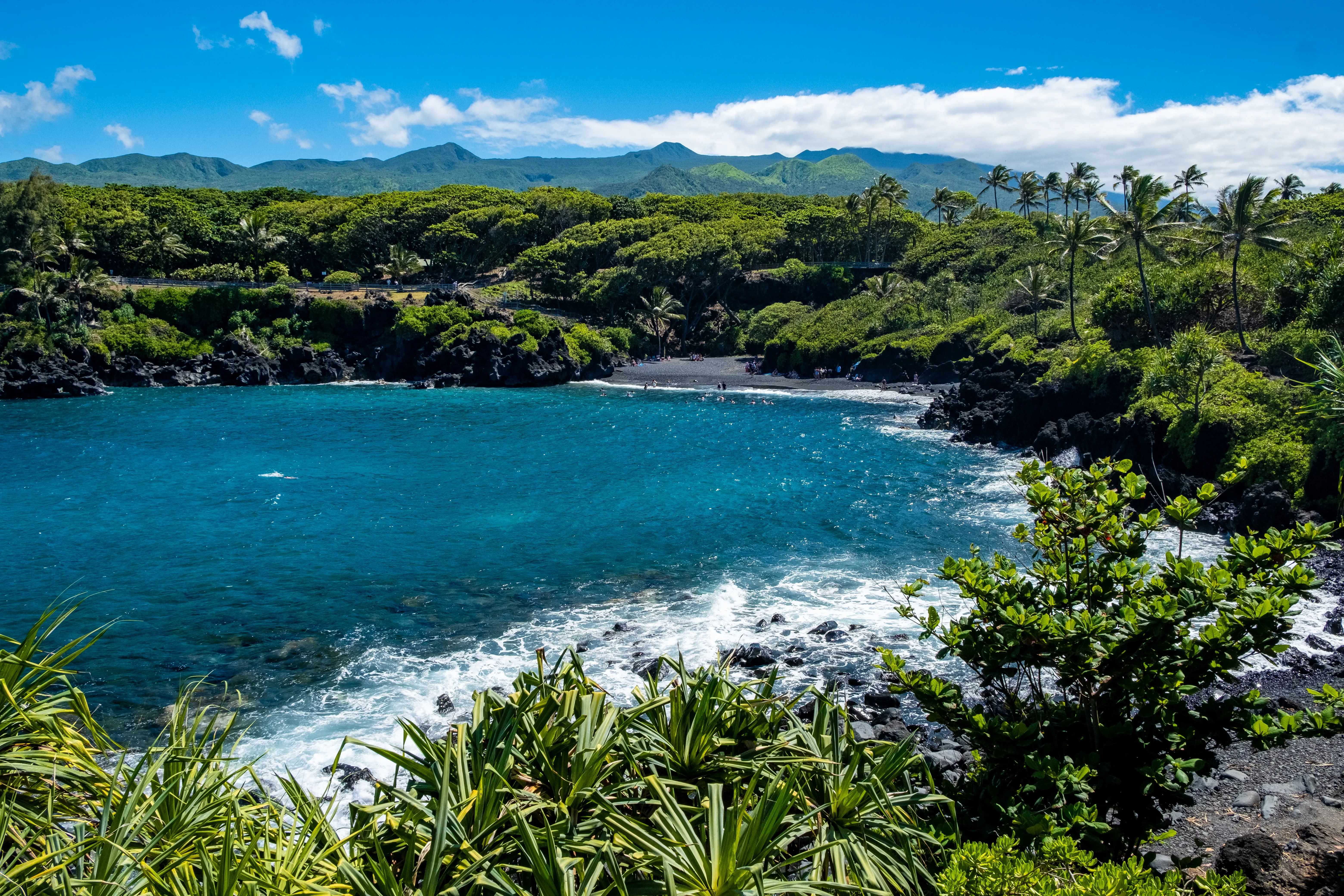
Haiku may be small, but it packs a flavorful punch. From Thai food trucks to vegan cafés and fresh fruit stands, there’s no shortage of delicious options. Try local specialties like taro chips, lilikoi (passion fruit) treats, or fresh-baked banana bread.
For an unforgettable evening, check out Nuka, a beloved Japanese restaurant known for sushi made with locally caught fish and seasonal island ingredients. Reservations recommended — this spot is a favorite among locals and visitors alike.
Haiku is more than a place — it’s a feeling. A slow-paced, rain-kissed, quietly magical corner of Maui where life flows with the rhythms of the land. Here, you’ll trade crowded beaches for bamboo trails, loud nightlife for waterfall serenades, and screen time for starlit skies.
If you’re craving a deeper, more grounded connection to Hawaii — one rooted in nature, culture, and community — Haiku awaits with open arms and endless green horizons.
Travel Tips:
If you would like to read and learn more about interesting things in Hawaii! Check out our blog page here on our website!
Haiku is known for its lush rainforests, laid-back upcountry vibes, bamboo jungles, waterfalls, and artistic community. Located on Maui’s north shore, Haiku offers a peaceful escape from the crowded beach resorts and is a popular hub for travelers exploring the Road to Hana, Twin Falls, and NorthShore Zipline. It’s the perfect destination if you’re seeking authentic, nature-connected experiences in Maui.
Absolutely — Twin Falls Maui is one of the best waterfall hikes near Haiku and a favorite stop at the start of the Road to Hana. The trail is easy to moderate and leads to multiple waterfalls, jungle pools, and bamboo forests. It’s great for families, beginners, and anyone wanting a quick but beautiful hike.
Pro tip: Wear water shoes, expect mud, and grab a fresh coconut or smoothie from the local stands at the trailhead.
The Haiku Marketplace is the heart of the village and one of the best places to eat and shop on the north shore. You’ll find:
If you want an authentic taste of Haiku’s food, creativity, and community, this is the place to go.
Two must-visit Haiku restaurants are:
✔ Colleen’s at the Cannery
A beloved local café with hearty breakfasts, wood-fired pizza, espresso drinks, and island-inspired entrées. Perfect before or after waterfall hikes.
✔ Nuka Sushi Maui
A north shore favorite known for its fresh local fish, creative rolls, and cozy Japanese ambiance.
Both offer the laid-back, neighborhood feel Haiku is famous for.
Yes! Haiku is one of the best places on Maui for jungle eco tours, offering guided waterfall hikes, rope swings, jungle pools, and educational experiences about native plants and Hawaiian culture. These tours often include access to hidden spots you wouldn’t find on your own, making them ideal for families, couples, or adventure seekers.
Definitely — NorthShore Zipline in Haiku is one of the top family-friendly adventures on Maui. Located on a historic WWII base, the tour features:
Guests love pairing a Haiku zipline day with Twin Falls or the early Road to Hana stops.
Check availability here: https://nszipline.com/
Yes — Ho‘okipa Beach Park is just minutes from Haiku and is a must-see stop for:
It’s one of the top beaches near Haiku and a favorite for both locals and visitors.
Haiku is one of Maui’s best hidden sanctuaries for yoga retreats, meditation sessions, sound healing, and eco-lodges. Many retreat centers sit on jungle ridges with ocean views, offering peaceful environments for relaxation, mindfulness, and self-care. It’s perfect for travelers wanting a restorative, nature-centered Maui experience.
Yes — Haiku is one of the best starting points for the Road to Hana. Beginning your journey here means you avoid the early crowds and can easily visit:
Haiku has a diverse and delicious food scene. Must-try items include:
Haiku is ideal for travelers who want peace, greenery, and a more authentic side of Maui. Stay here if you love:
It’s perfect for those looking to escape the busy resort areas and connect with Maui’s natural heart.
Haiku is a place where travelers are welcomed — especially those who travel with care and aloha.
or
Image Credits:
Hero:
Hana, Hawaii by A n v e s h, via Unsplash
Ho'okipa by Elvis Gomez, via Unsplash
"Explore the lush green landscapes and blue waters of Hana Bay, with its unique black sand beach and tropical flora." by Kelsey, via Pexels
Nestled along the famed Road to Hana on the eastern side of Maui, the Pipiwai Trail offers one of the most captivating hiking experiences in Hawaii. Known for its diverse scenery—including lush rainforest, a towering bamboo forest, and the awe-inspiring Waimoku Falls—this trail attracts nature lovers, adventure seekers, and photographers alike. Whether you’re seeking a serene walk through a tropical paradise or a rewarding trek to one of Maui’s most spectacular waterfalls, the Pipiwai Trail offers an unforgettable journey into the heart of Hawaiian wilderness.
The Pipiwai Trail is part of Haleakalā National Park, which encompasses the Kipahulu region along the coast and the summit area of the Haleakalā volcano. While the road to reach the trailhead is winding and narrow, the journey itself is part of the adventure, offering stunning coastal views, waterfalls, and lush scenery.
The adventure begins immediately upon stepping onto the trail, where you are greeted by the soothing sounds of rustling leaves and chirping birds. The first section of the trail winds through a tropical rainforest, with a canopy of towering trees offering intermittent shade. You’ll pass by vibrant guava trees, wild ginger, and ferns that thrive in the humid environment.
As you ascend, you’ll cross wooden footbridges over gently flowing streams, adding to the tranquil ambiance. The trail’s terrain alternates between packed dirt, wooden boardwalks, and rocky patches, making proper footwear essential.
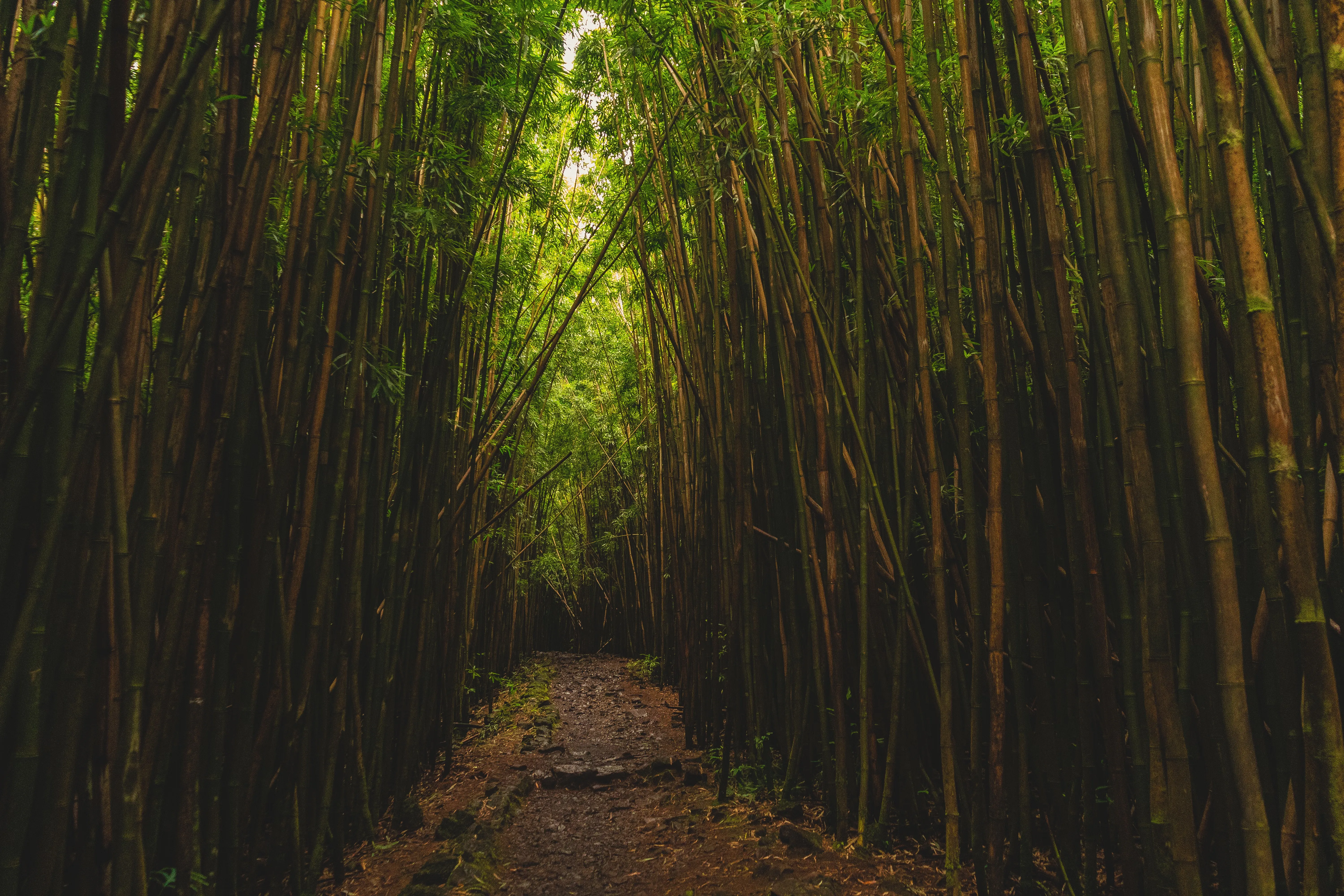
One of the most breathtaking highlights of the hike is the famous bamboo forest. About a mile into the trail, you’ll transition from the dense rainforest into an entirely different ecosystem. Towering bamboo stalks, some reaching over 60 feet high, form a striking tunnel-like corridor. The soft, filtered light creates an ethereal glow, especially during the morning hours.
As the wind passes through the grove, the bamboo stalks clatter gently, creating a calming, almost melodic sound. To protect the fragile forest floor, the park service has installed an elevated boardwalk that makes this section easy to navigate, even after rain. This stretch of the hike offers some of the most picturesque photo opportunities, with long, symmetrical lines of bamboo creating a magical atmosphere.
Roughly half a mile in, you’ll reach an overlook offering a spectacular view of Makahiku Falls, a 200-foot cascade that plunges into a hidden pool below. Though smaller than the final waterfall on the trail, Makahiku Falls is still a stunning sight. On sunny days, you may spot rainbows shimmering in the mist at the base of the falls.
This overlook provides a perfect spot to rest, hydrate, and snap some photos. However, resist the urge to venture off the trail—climbing closer to the falls or attempting to reach the pool below is dangerous and strictly prohibited.
The climax of the Pipiwai Trail is the awe-inspiring Waimoku Falls, which towers 400 feet over the lush rainforest below. The sight of this majestic waterfall cascading down a sheer lava rock wall is nothing short of breathtaking. The spray from the falls creates a refreshing mist, and the entire scene feels like something out of a dream.
The area around the falls is filled with large boulders and thick vegetation, creating a natural amphitheater. While it may be tempting to approach the waterfall or wade into the pool below, it is strongly discouraged due to the risk of falling rocks, which can be fatal. Instead, enjoy the view from a safe distance and take in the grandeur of one of Maui’s most iconic natural wonders.
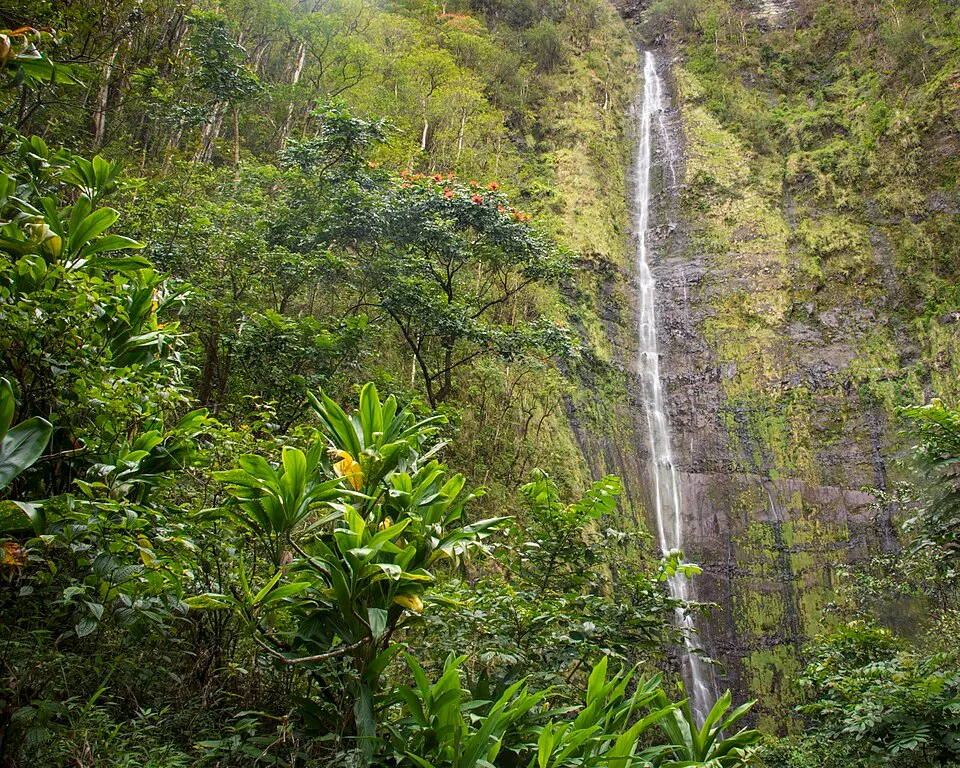
The Pipiwai Trail is open year-round, but the best time to visit is during the dry season (April to October) when the weather is more predictable and the trail conditions are drier. During the wet season (November to March), the trail can become muddy and slippery, and flash floods are more common, making stream crossings dangerous.
For the most enjoyable experience:
The Pipiwai Trail is a dream for photographers, offering diverse and stunning scenery at every turn. Some of the best photo opportunities include:
For the best lighting, aim to start your hike early in the morning or later in the afternoon, when the sun casts a golden glow through the bamboo forest.
While the Road to Hana offers plenty of scenic stops and short trails, the Pipiwai Trail is a standout experience that showcases the true beauty of Maui’s tropical landscape. From the serene rainforest paths to the awe-inspiring waterfalls, every section of this trail is a testament to Hawaii’s natural splendor.
Whether you’re chasing waterfalls, marveling at the enchanting bamboo forest, or simply enjoying the peaceful sounds of nature, the Pipiwai Trail offers a soul-stirring adventure that will leave you with lasting memories.
The Pipiwai Trail is located in Haleakalā National Park’s Kipahulu District, near Hana on Maui’s eastern side. It’s accessed along the Road to Hana, about a 10-minute drive past Oheo Gulch (Seven Sacred Pools). This area is known for lush rainforest, waterfalls, and dramatic coastal scenery, making it one of Maui’s most beautiful hiking destinations.
Most hikers complete the Pipiwai Trail in 2–3 hours, depending on pace and how often you stop for photos. The trail is 4 miles round trip, with about 800 feet of elevation gain. Plan extra time if you want to fully enjoy the rainforest, bamboo forest, and waterfalls along the way.
The Pipiwai Trail is beloved because it combines multiple ecosystems in one hike:
The trail begins with a dense rainforest, where you’ll walk through guava groves, ginger plants, ferns, and moss-covered trees. Wooden footbridges cross flowing streams, and the atmosphere feels serene and tropical. Expect muddy sections, tree roots, and occasional slippery rocks — all part of the authentic rainforest experience.
Absolutely — the bamboo forest is one of the most iconic sections of the entire trail. The towering bamboo creates a tunnel-like canopy that glows beautifully in the morning or late afternoon light. The gentle clatter of bamboo stalks in the breeze adds to the magical, Zen-like experience. Because of its popularity, it’s also one of the most photographed spots on Maui.
The hike is considered moderate, meaning it’s manageable for most visitors with decent fitness levels. You’ll encounter uneven terrain, occasional mud, and some elevation gain, but the boardwalks and maintained trail sections make it accessible. Families with older kids often enjoy this hike just as much as seasoned hikers.
Yes! About half a mile in, you’ll reach the Makahiku Falls overlook, which offers stunning views of this 200-foot cascading waterfall. It’s a perfect early stop for photos and a quick rest. Visitors should remain at designated viewpoints — attempting to access the pool or cliff areas is both dangerous and illegal.
Waimoku Falls is the grand finale — a breathtaking 400-foot waterfall, one of Maui’s most dramatic natural wonders. The sheer lava wall, lush greenery, and misty spray make this waterfall feel otherworldly. Visitors must stay a safe distance from the base, as falling rocks can be extremely dangerous. Even from afar, it’s a jaw-dropping and unforgettable sight.
The trail is open year-round, but the best time to hike is during Maui’s dry season (April–October). During wetter months, the rainforest becomes muddier, the boardwalks slick, and stream crossings more hazardous. Regardless of season, starting early in the morning helps you avoid heat, crowds, and afternoon rain showers.
For a safe and enjoyable experience, pack:
Yes — like all rainforest hikes in Maui, safety is essential. Be mindful of:
Yes — entrance to Haleakalā National Park is $30 per vehicle, valid for 3 days. This pass includes access to both the Kipahulu District (Pipiwai Trail) and the Haleakalā Summit. If you’re planning to visit both areas during your trip, this pass provides excellent value.
It’s one of the best photography hikes in Hawaii. Photographers love:
For the best lighting, start your hike early in the morning or during the golden late afternoon hours.
Many visitors consider the Pipiwai Trail the crown jewel of Road to Hana hikes. While there are countless scenic stops along the drive, this trail offers the most immersive combination of rainforest, waterfalls, bamboo forest, and cultural significance. If you only do one major hike on the Road to Hana, make it Pipiwai.
Yes — for most hikers, the Pipiwai Trail is one of their top experiences on Maui. The diversity of scenery, the peaceful bamboo forest, and the towering Waimoku Falls make the journey completely worthwhile. It’s one of those rare hikes that feels like a full adventure from start to finish.
If you would like to read and learn more about interesting things in Hawaii! Check out our blog page here on our website!
or
Image Credits:
Hero:
"Lush bamboo forest on the Pipiwai Trail, featuring a serene wooden boardwalk in Hana, Hawaii." by Satty Singh, via Pexels
"Discover a tranquil bamboo forest along the Pipiwai Trail in Maui, Hawaii." by Satty Singh, via Pexels
Photo: Thomas, via Wikimedia Commons. Licensed under Creative Commons Attribution-ShareAlike 2.0 Generic (CC BY-SA 2.0).
Along the rugged coastline of Hana, Maui, lies one of the island’s most captivating and hidden treasures: Kaihalulu Beach, more commonly known as Red Sand Beach. Famous for its striking crimson shoreline, jagged lava cliffs, and the serene, turquoise waters of the Pacific, this secluded beach offers a breathtaking escape for adventurers, photographers, and nature enthusiasts alike.
Visiting Red Sand Beach is more than just a stop on a travel itinerary—it’s an experience that engages all the senses, from the sight of its vibrant hues to the sound of the waves crashing against the volcanic rocks. Whether you’re hiking in for a scenic adventure, seeking a peaceful spot to reflect, or simply marveling at nature’s artistry, Red Sand Beach is a must-see gem on the island of Maui.
What makes Red Sand Beach truly extraordinary is its unique geological makeup. The beach’s distinctive reddish hue comes from the crumbling volcanic cinder cone that encircles the cove. The cinder cone, rich in iron oxide, erodes over time, depositing iron-rich sediment that gives the beach its deep, rust-colored sand.
The surrounding cliffs, composed of jagged lava rock, add to the beach's dramatic landscape. Their dark, rugged appearance contrasts with the vibrant red shoreline and the emerald-green foliage clinging to the rocks. The interplay of colors creates a scene that feels almost otherworldly—a place where nature’s raw beauty is on full display.
Part of the allure of Red Sand Beach lies in its secluded and somewhat challenging accessibility. Unlike Maui’s more popular beaches, reaching this hidden gem requires a short but adventurous hike.
Trail Details:
Footwear Matters: Wear sturdy shoes with good traction. Flip-flops are not recommended, as the loose, gravelly sections can be slippery.
Exercise Caution: The trail runs alongside steep cliffs, making it potentially hazardous, especially after rainfall when the path becomes muddy and slick. Walk carefully and avoid getting too close to the edge.
Travel Light: Since the hike is short, you don’t need to bring much. However, pack essentials like water, sunscreen, and a towel
Respect Private Property: The beach lies on private land, but public access is generally allowed. Be respectful of the area and follow all guidelines.
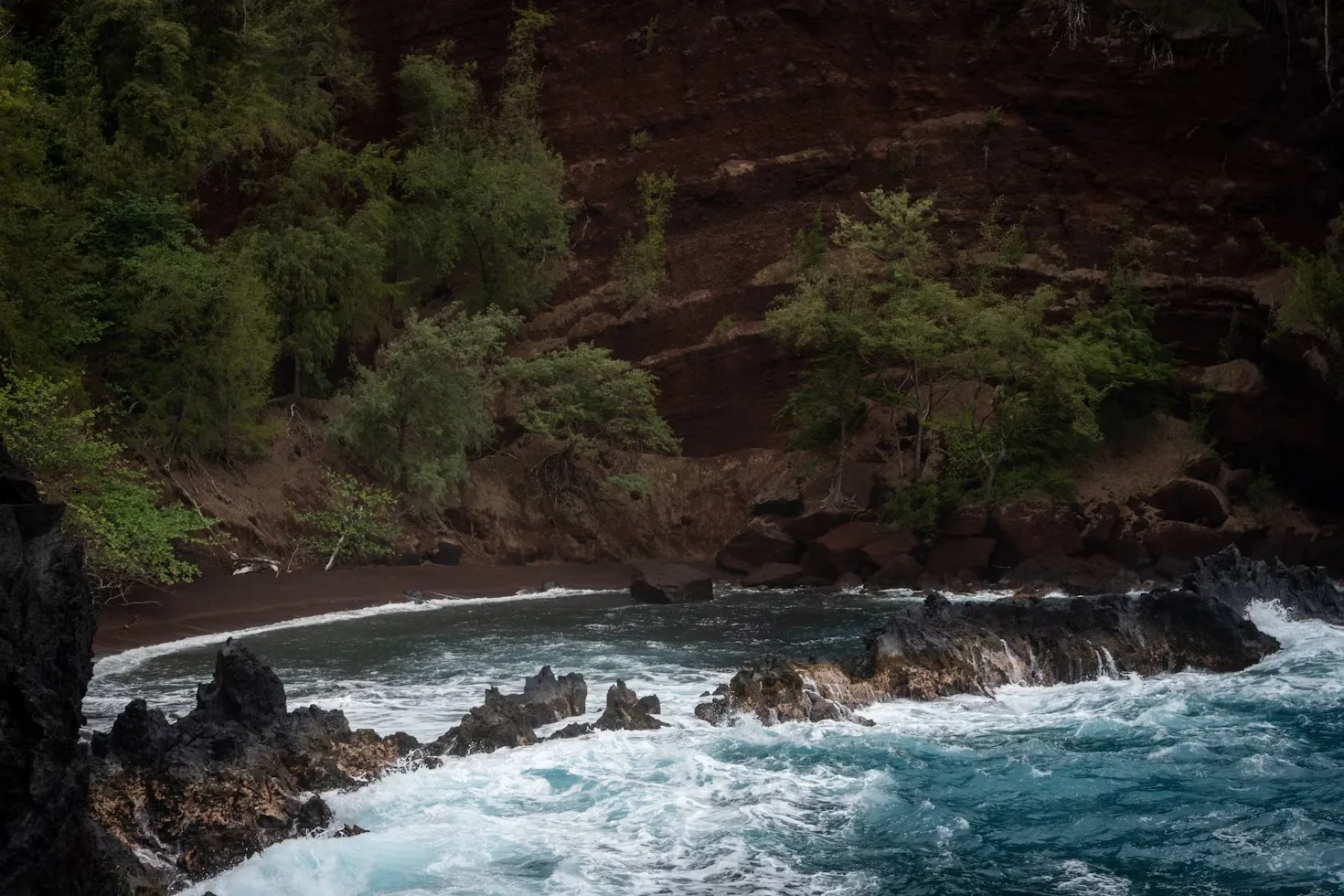
Once you arrive, you’ll be rewarded with a view that feels almost surreal. The crescent-shaped cove, embraced by steep lava rock cliffs, creates a sense of seclusion and intimacy. The beach’s vibrant red sand is soft underfoot, and the surrounding cliffs provide a natural wind barrier, making the cove feel peaceful and protected.
The offshore lava rock wall acts as a natural breakwater, creating a semi-protected swimming area with calmer waters—ideal for a relaxing dip. On calmer days, the water is clear and inviting, perfect for swimming or snorkeling.
Snorkeling Tip:
Bring your gear if you enjoy snorkeling. The reef area near the lava rock wall is home to colorful tropical fish, though visibility can vary depending on ocean conditions.
However, it’s important to note that Red Sand Beach does not have lifeguards. The water can sometimes be unpredictable, and strong currents are possible, especially beyond the protected cove. If you’re not a strong swimmer, it’s best to stay close to the shore and avoid venturing into deeper waters.
For photographers, Red Sand Beach offers endless visual inspiration. The contrast of the red sand against the blue sea and the green vegetation creates a scene that seems almost too vivid to be real.
Whether you’re capturing wide-angle shots of the entire cove or focusing on the intricate patterns in the sand, this beach offers stunning photo opportunities.
Maui’s tropical climate makes Red Sand Beach accessible year-round, but some times are better than others for a more enjoyable experience.
As with all natural wonders, it’s vital to respect and preserve the pristine environment of Red Sand Beach.
By following these guidelines, you can help keep this hidden treasure beautiful for future visitors.
Red Sand Beach in Hana, Maui, is more than just a picturesque destination—it’s a place of wonder and adventure. From the rugged hike through volcanic terrain to the vibrant, iron-rich sands and tranquil waters, the experience is nothing short of magical.
Whether you’re an avid hiker, a photographer seeking the perfect shot, or simply someone who appreciates the beauty of nature, Red Sand Beach offers an unforgettable escape. As you breathe in the salty air, feel the soft red sand beneath your feet, and gaze out at the endless Pacific, you’ll understand why this beach is one of Maui’s most treasured hidden gems.
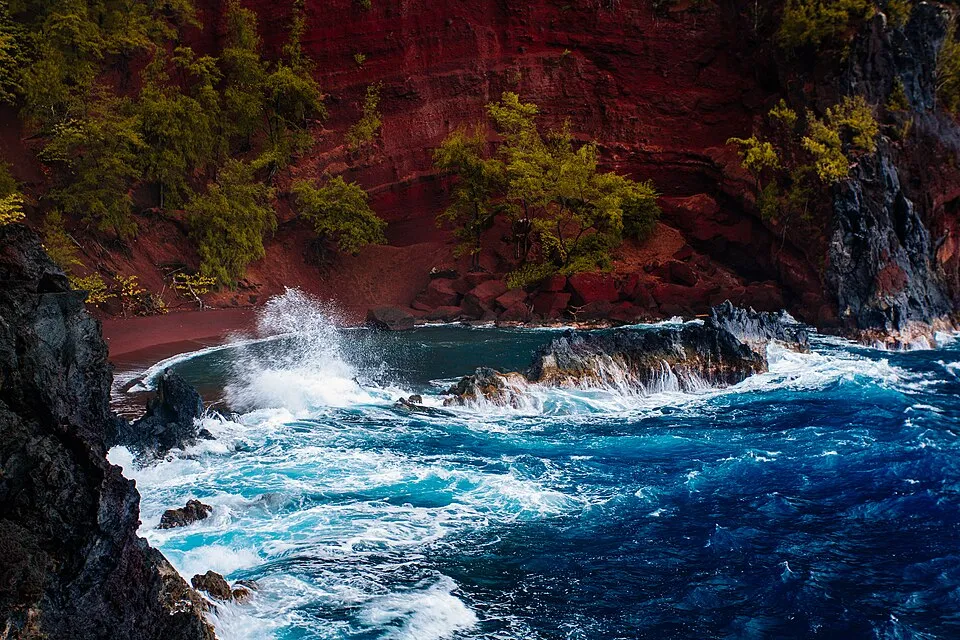
Red Sand Beach—also known as Kaihalulu Beach—is famous for its striking crimson sand, created by the erosion of a nearby volcanic cinder cone rich in iron oxide. This creates a bold contrast against the turquoise ocean and rugged black lava cliffs, making it one of Maui’s most visually stunning and geologically unique beaches.
The beach’s vibrant red color comes from the iron-rich cinder cone that surrounds the cove. As the cone erodes, the iron oxide deposits wash onto the shoreline, giving the sand its distinctive rust-red hue. This geological process is ongoing, so the red sands stay rich and colorful year after year.
The hike to Red Sand Beach is short but challenging. Though only about 0.5 miles round trip, the trail features narrow ledges, loose gravel, steep drop-offs, and slippery sections—especially after rain. It is considered moderate to difficult, depending on your comfort with uneven terrain. Wearing proper footwear is essential.
The trailhead begins near the Hana Community Center on Uakea Road. You’ll follow an unmarked coastal path toward the lava cliffs. Since it crosses private land (with public access generally tolerated), visitors should be respectful, stay on the actual trail, and avoid trespassing or disturbing nearby residents.
Red Sand Beach is safe as long as hikers exercise caution. The trail is narrow and can be hazardous, especially when wet. At the beach, swimming is possible inside the protected cove, but conditions can change quickly. There are no lifeguards, and strong currents may occur beyond the lava rock barrier. Always assess conditions before entering the water.
Yes — but only with caution. The crescent-shaped cove is partially protected by a natural lava rock breakwater, creating calmer waters ideal for a light swim or snorkel on calmer days. However, strong currents and waves are common, especially in winter. Only confident swimmers should enter the water, and visitors should stay inside the protected area.
Snorkeling can be enjoyable when the ocean is calm. The small reef near the lava rock wall hosts colorful tropical fish. However, visibility varies based on surf conditions, and the area can be hazardous when currents are strong. Bring your own gear and stay within the sheltered cove for safety.
To hike and relax safely at Red Sand Beach, bring:
The best time to visit is early morning or early afternoon, when lighting is softer and crowds are minimal. For photography, sunrise and late afternoon offer beautiful golden light that enhances the beach’s red tones. Summer months typically provide calmer ocean conditions, while winter brings larger swells.
Absolutely — Red Sand Beach is one of the most photogenic spots on Maui. Photographers love:
The beach sits on private property, but public access is generally allowed as long as visitors are respectful. This means:
Red Sand Beach is more suitable for adults and experienced hikers. Because the trail is narrow and sometimes slippery, it's not ideal for young children, elderly visitors, or anyone unsure on uneven terrain. Families looking for easier access might prefer beaches like Hamoa, Koki, or Wai‘anapanapa Black Sand Beach.
Most visitors spend 1–2 hours enjoying the hike, swimming, relaxing, and photographing the landscape. Those staying in Hana may linger longer, while Road to Hana day-trippers often budget around an hour before continuing their journey.
To protect this fragile coastal environment:
Yes — Red Sand Beach is one of Maui’s most extraordinary hidden gems, offering unmatched color, scenery, and atmosphere. Its dramatic landscape, secluded feel, and rare red shoreline make it a must-see for travelers seeking a unique and memorable Maui experience.
If you would like to read and learn more about interesting things in Hawaii! Check out our blog page here on our website!
or
Image Credits:
Hero:
"Discover the stunning sunrise over Kaihalulu Beach's unique red sands in Hana, Hawaii." by James Wheeler, via Pexels
"Stopped by the Red Sand Beach on Road to Hana in Maui, Hawaii" by Alexandra Tran, via Unsplash
Photo: Anton Repponen, via Wikimedia Commons (CC0 1.0/Public Domain Dedication).
Maui, the second-largest island in Hawaii, is known for its pristine beaches, lush rainforests, and vibrant culture. But just a few miles off its southern coast lies one of its most breathtaking natural wonders: Molokini Crater. This crescent-shaped, partially submerged volcanic caldera is a world-renowned snorkeling and diving destination, drawing visitors with its crystal-clear waters, vibrant marine life, and unique geological formations.
Molokini stands out from other snorkeling spots for several reasons:
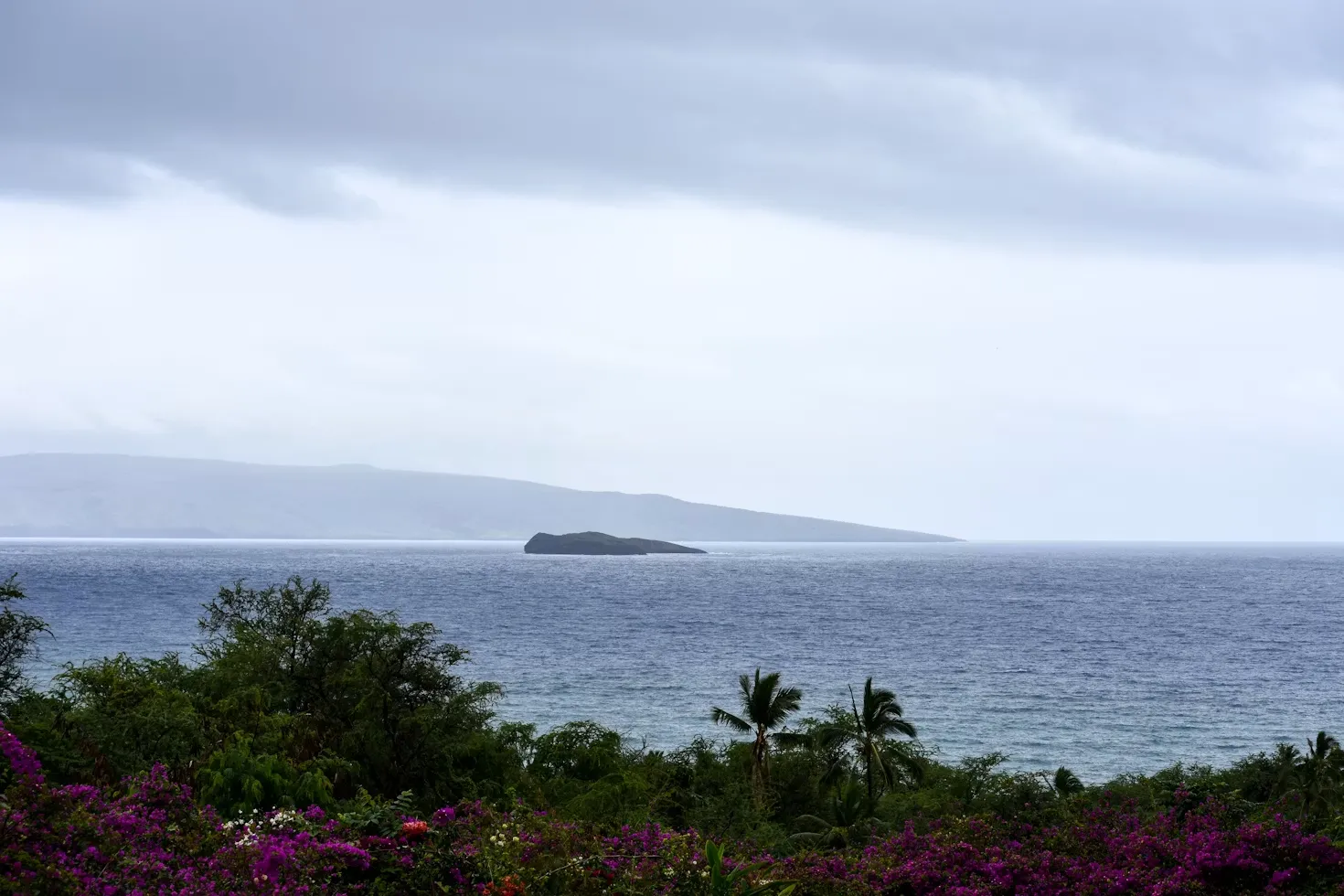
Most snorkeling tours to Molokini Crater depart from Maalaea Harbor or Kihei Boat Ramp. The boat ride takes approximately 20-45 minutes, depending on weather conditions. Tour operators typically provide:
Many tours make a second stop at Turtle Town, a nearby reef where Hawaiian green sea turtles are frequently spotted.
While snorkeling in Molokini’s pristine waters, you’ll have the chance to encounter a dazzling array of marine life, including:
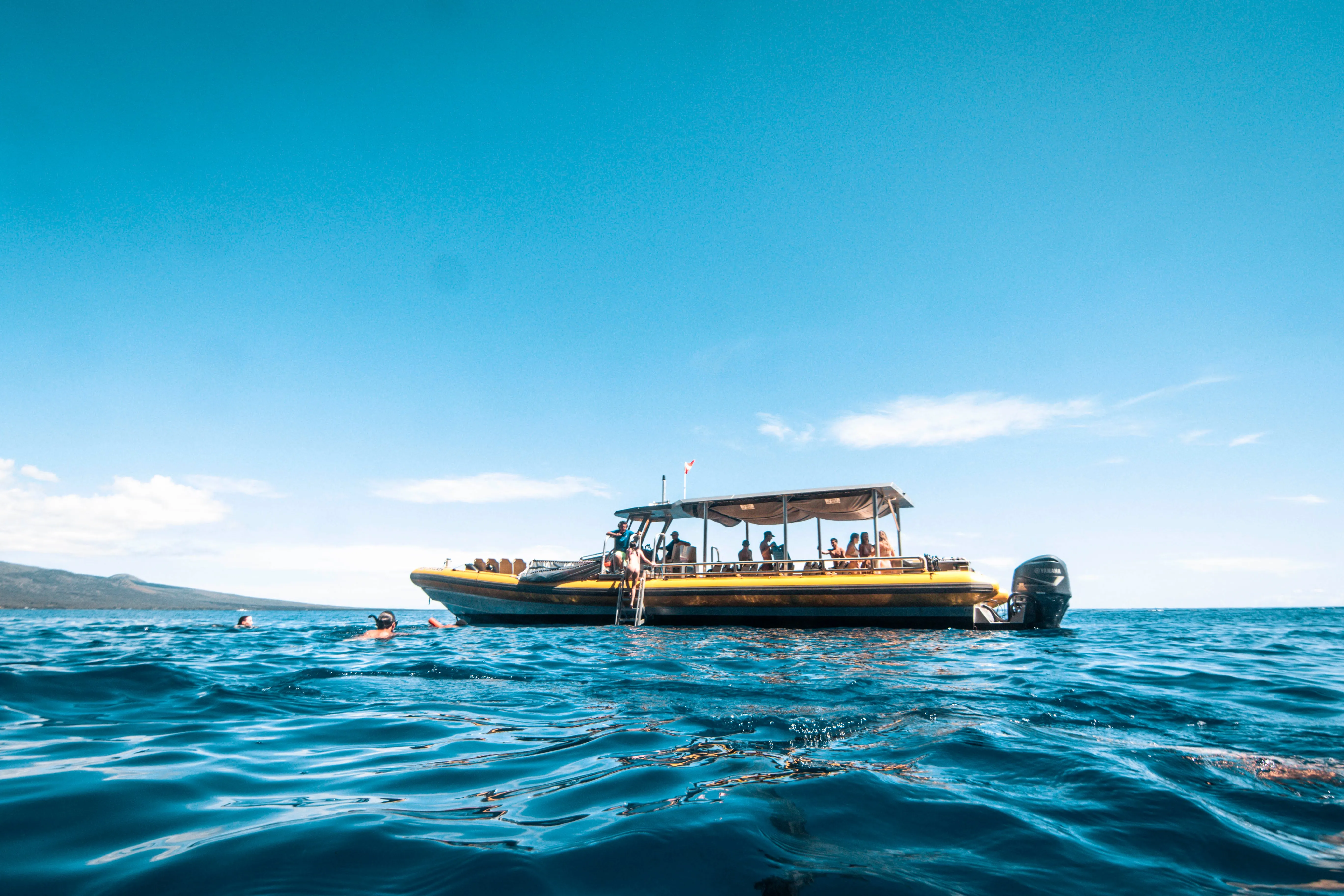
When selecting a snorkeling tour, consider:
Snorkeling at Molokini Crater is a must-do experience for anyone visiting Maui. Whether you’re a first-time snorkeler or an experienced underwater explorer, the crater’s serene waters and thriving marine life make for an unforgettable adventure. With its remarkable visibility, vibrant reefs, and peaceful ambiance, Molokini offers a rare glimpse into Hawaii’s mesmerizing underwater world.
Pro Tip: For the best experience, consider booking your tour in advance, as Molokini excursions are popular and often sell out quickly.
Here is a great link to consider the many different tour options that awaits you! :
Viator Book HERE!
Molokini Crater is famous for its unmatched water clarity, often reaching 150 feet visibility, allowing snorkelers to see vibrant coral and marine life with incredible detail. As a protected Marine Life Conservation District, its ecosystem is pristine, making Molokini snorkeling one of the top-rated underwater experiences in Hawaii.
Molokini’s waters are some of the clearest in all of Hawaii. Visibility often ranges from 100–150 feet, thanks to the crater’s bowl-like shape, minimal sediment, and offshore location. This makes it ideal for observing fish, coral formations, and underwater lava structures.
Molokini is home to over 250 species of fish, many found nowhere else on Earth. Common sightings include:
Depending on the season, you may also spot humpback whales, Hawaiian green sea turtles, moray eels, and occasionally reef sharks. Every trip offers something unique.
Most tours leave from either:
The boat ride is typically 20–45 minutes, depending on ocean conditions.
Tour operators usually provide:
Some premium tours may also include reef-safe sunscreen, photography services, or high-end snorkel equipment.
Turtle Town is a reef area near Makena known for frequent sightings of Hawaiian green sea turtles. Its calm waters and lava-formed coral reefs make it an ideal second stop after Molokini. Snorkelers often enjoy up-close (but respectful!) turtle viewing in this peaceful area.
The morning is the best time to snorkel Molokini. Early tours offer:
Afternoon winds in Maui can make ocean conditions choppier, so morning departures are strongly recommended.
Yes — Molokini is a great location for beginners. The crater’s sheltered inner curve helps reduce waves, and most operators provide flotation devices, lifeguard-level guides, and detailed instructions. The incredible visibility also makes first-time snorkeling less intimidating.
You can, but it’s not required. Most Molokini tour companies provide:
From December through April, Maui becomes a major breeding ground for humpback whales. While you won’t snorkel with whales, you may see them:
Whale season adds an unforgettable bonus to your Molokini adventure.
To enjoy your snorkel experience, pack:
Everything else is typically provided by the tour company.
When comparing tours, consider:
Reading recent reviews also helps you select a reputable operator.
Absolutely. Molokini is one of Maui’s top dive locations. Certified divers can explore deeper drop-offs, vertical walls, and more diverse marine life. The backside of Molokini offers dramatic 300-foot walls and excellent visibility.
Yes — Molokini Crater is considered one of the best snorkeling destinations in Hawaii and often ranks among the top spots in the world. The clarity, marine biodiversity, dramatic volcanic formations, and peaceful ambiance make it a bucket-list experience for anyone visiting Maui.
If you would like to read and learn more about interesting things in Hawaii! Check out our blog page here on our website!
or
Image Credits:
Hero:
"Molokini Crater, Maui, United States" by Farid Askerov, via Unsplash
"A body of water and a small island in the distance" by Luke Scarpino, via Unsplash
"A yellow motorboat with people enjoying a calm day on the ocean near Maui, Hawaii." by Jake Houglum, via Pexels
Perched along the iconic Hana Highway, Twin Falls is a captivating stop that offers a glimpse into Maui’s raw and untouched beauty. Known for its accessible trails, cascading waterfalls, and inviting swimming holes, it’s a favorite among both locals and visitors seeking a refreshing and picturesque retreat.
Twin Falls is located at Mile Marker 2 on the Hana Highway (Route 360), just a short drive from the town of Paia. The falls are part of the Ho’olawa Valley, a lush area fed by abundant rainfall, resulting in the steady flow of freshwater streams and waterfalls.
Here is a link to the Google Maps location for easy access and directions!
https://goo.gl/maps/Qa7i1HwUH492
There is a small parking area at the trailhead, often bustling with cars, especially during midday. An on-site farm stand offers locally grown fruits, smoothies, coconut candy, and the famous fresh-baked banana bread—perfect for a pre- or post-hike snack.
The trail to Twin Falls is relatively short and moderate in difficulty, making it ideal for families and casual hikers. The well-trodden path winds through a tropical landscape of towering bamboo, wild ginger, and vibrant ferns. The surrounding area has recently gone through some renovation, making the trails a lot nicer and easier to traverse. The fauna also has been cleaned and new additions were added, adding to the breathtaking scenery.
The first of three waterfalls is just a short walk from the trailhead. It’s easy to access and features a calm swimming hole surrounded by mossy rocks and overhanging vines. This spot is perfect for a quick dip or simply relaxing by the water’s edge. Then a few minute walk upward lands you at the second waterfall area, filled with a whole different vibe adding to its own personality. Continuing the adventure upward you come to one of the more striking waterfalls. Which you are able to access from both sides. Jumping in, sitting in the waterfall, or sunbathing on the rocks below... this waterfall is a local favorite for a reason. Alongside this waterfall stands a gate, and this gate leads to more wonders.
For those seeking a bit more adventure, the trail after passing the gate continues to a few more hidden waterfalls. Though slightly more challenging to reach, the reward is worth it. This cascade plunges into a deeper pool, ideal for swimming or wading beneath the rushing water + the beautiful natural Hawaii fauna makes this adventure one for the books. Be mindful to not pass the gate if its closed as in that means the water level is too high. At some point you will need to cross the little river, so be weary of the gate if it is closed.
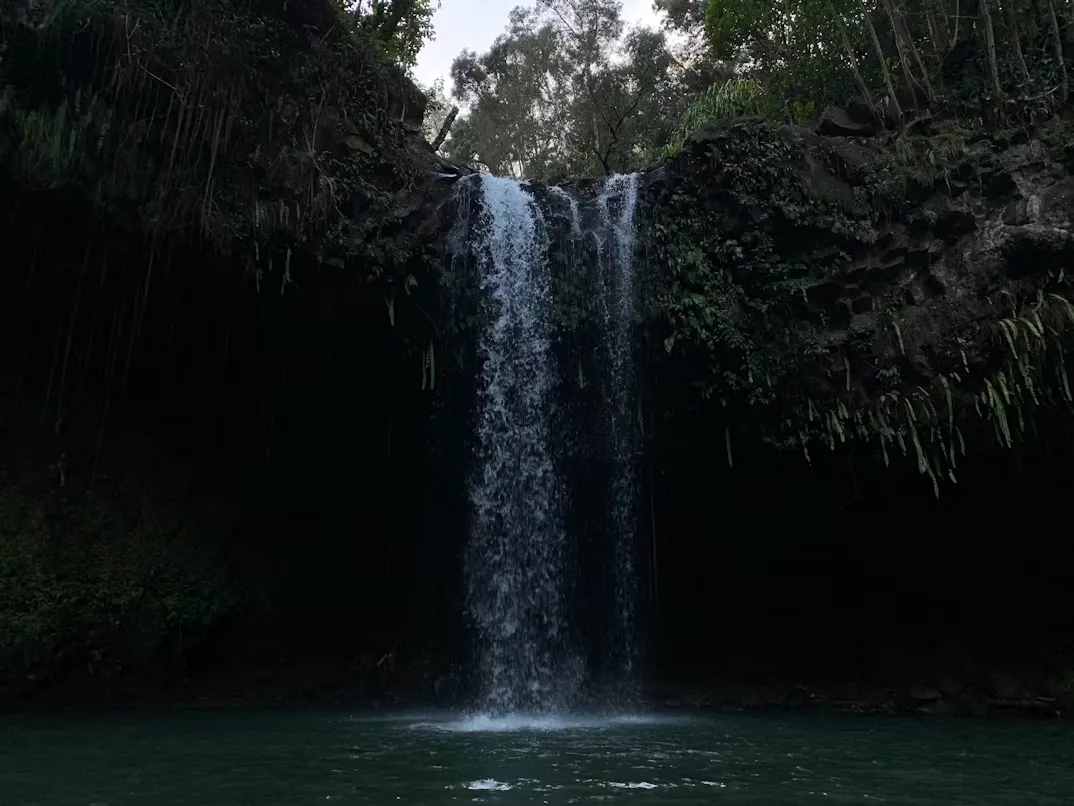
To fully enjoy your Twin Falls adventure, consider packing the following:
Whether you’re floating in the cool waters, hiking through the dense jungle, or simply sitting by the falls, Twin Falls offers a tranquil and magical escape from the bustle of daily life. Its combination of scenic beauty, accessible trails, and refreshing swimming holes makes it a must-visit destination for anyone exploring Maui’s Hana Highway.
Next time you find yourself on Maui, take a moment to slow down and savor the serenity of Twin Falls—a place where the rhythm of flowing water and the scent of tropical blooms will leave you refreshed and inspired.
Check out the official Twin Falls Website here for more information!
https://www.twinfallsmaui.net/
Yes. Twin Falls is one of the most popular waterfall stops near the beginning of the Road to Hāna and is a great choice for visitors who want to experience Maui’s tropical rainforest, freshwater pools, waterfalls, and short walking trails without committing to a long hike. Its location near Pāʻia and Haʻikū also makes it easy to include in a North Shore Maui itinerary.
Twin Falls is located at Wailele Farm at 6300 Hāna Highway in Haʻikū, near Mile Marker 2 along the Road to Hāna. From Pāʻia, visitors generally drive east along the Hāna Highway for approximately 15 to 20 minutes before reaching the designated Twin Falls parking area.
Twin Falls currently charges $10 per vehicle for parking. Parking fees help support trail maintenance, infrastructure, and management of the property. Because prices and operating policies can change, visitors should check the official Twin Falls Maui website before their trip.
No. Twin Falls does not currently accept parking reservations. Parking is available on a first-come, first-served basis, with only 55 designated parking spaces. Arriving earlier in the day can improve your chances of finding parking.
Early morning is generally one of the best times to visit Twin Falls. Arriving early can mean cooler temperatures, fewer visitors on the trails, and a better chance of finding a parking space. Twin Falls currently opens its gates at 7:10 a.m., although hours can change because of weather or staffing.
Swimming may be possible in some of the freshwater pools at Twin Falls when conditions are safe. However, stream and waterfall conditions can change rapidly following heavy rainfall. Visitors should always obey posted signs, gates, warnings, and instructions from staff and should never enter the water when conditions appear unsafe.
Twin Falls can be a good Maui activity for families because portions of the trail are relatively short and accessible. However, parents should keep children close around streams, waterfalls, slippery rocks, and uneven terrain. Trail and water conditions can also become more difficult after rain.
Many visitors can spend approximately one to two hours exploring Twin Falls, although your visit may be shorter or longer depending on how far you walk, trail conditions, swimming, crowds, and how much time you spend enjoying the waterfalls and farm stand.
Yes. Twin Falls is located near the beginning of the famous Road to Hāna and is often one of the first major waterfall stops for travelers heading east from Pāʻia. Its location makes it an easy addition to a full Road to Hāna itinerary or a standalone North Shore Maui adventure.
Absolutely. You do not have to drive all the way to Hāna to experience Twin Falls. Because it is located near Mile Marker 2, visitors can explore the waterfalls and then return toward Haʻikū, Pāʻia, Kahului, or other parts of Maui.
Wear comfortable clothing and shoes that can handle wet, muddy, or slippery conditions. Water shoes or sturdy footwear with good traction can be helpful. If you plan on swimming, bring a swimsuit and towel along with sunscreen, insect repellent, drinking water, and a change of clothes if needed.
Yes, but parking is limited. Twin Falls currently has 55 paid parking spaces available on a first-come, first-served basis. Visitors should only use the designated parking area. Parking or waiting along Hāna Highway, nearby roads, or the bridge is not permitted.
No. According to current Twin Falls visitor policies, Uber and Lyft drop-offs are not permitted, and street walk-ins are not allowed. Visitors should plan their transportation before arriving and check the official Twin Falls website for the latest access information.
Rain is common along Maui's lush North Shore, but heavy rainfall can quickly change stream and waterfall conditions. Trails may become muddy and slippery, and high water can make certain areas unsafe or inaccessible. Always follow posted warnings and never pass a closed gate or enter a restricted area.
Twin Falls is surrounded by plenty of things to do on Maui's North Shore. After visiting the waterfalls, travelers can explore nearby Haʻikū and Pāʻia, continue along the Road to Hāna, visit local farm stands, enjoy North Shore beaches, or add another outdoor adventure to their day. NorthShore Zipline in Haʻikū is also nearby for visitors looking to experience Maui's tropical scenery from above.
If you would like to read and learn more about interesting things in Hawaii! Check out our blog page here on our website!
or
Image Credits:
Hero:
"People near waterfalls during daytime" by Rina Miele, via Unsplash
"Waterfalls in the middle of the forest" by Tuva Hoyer, via Unsplash
Right along the picturesque northwest coast of Maui, Kapalua is a tropical paradise known for its luxurious resorts, world-class golf courses, and, most importantly, its stunning beaches. Whether you're looking for pristine white sand, crystal-clear waters, or excellent snorkeling opportunities, Kapalua’s beaches offer a little something for every type of beachgoer. There is too many gorgeous beaches and getaway's to choose from here in Kapalua. Here’s a look at the best beaches in Kapalua that should be on your must-visit list.
Arguably the most famous beach in the area, Kapalua Bay Beach is a crescent-shaped shoreline offering soft golden sand and calm waters. This beach is perfect for families and beginner snorkelers due to its gentle waves and abundant marine life. Snorkelers will find vibrant coral reefs teeming with tropical fish and even the occasional sea turtle. The bay is protected by two lava rock outcroppings, which help maintain its tranquil conditions year-round.
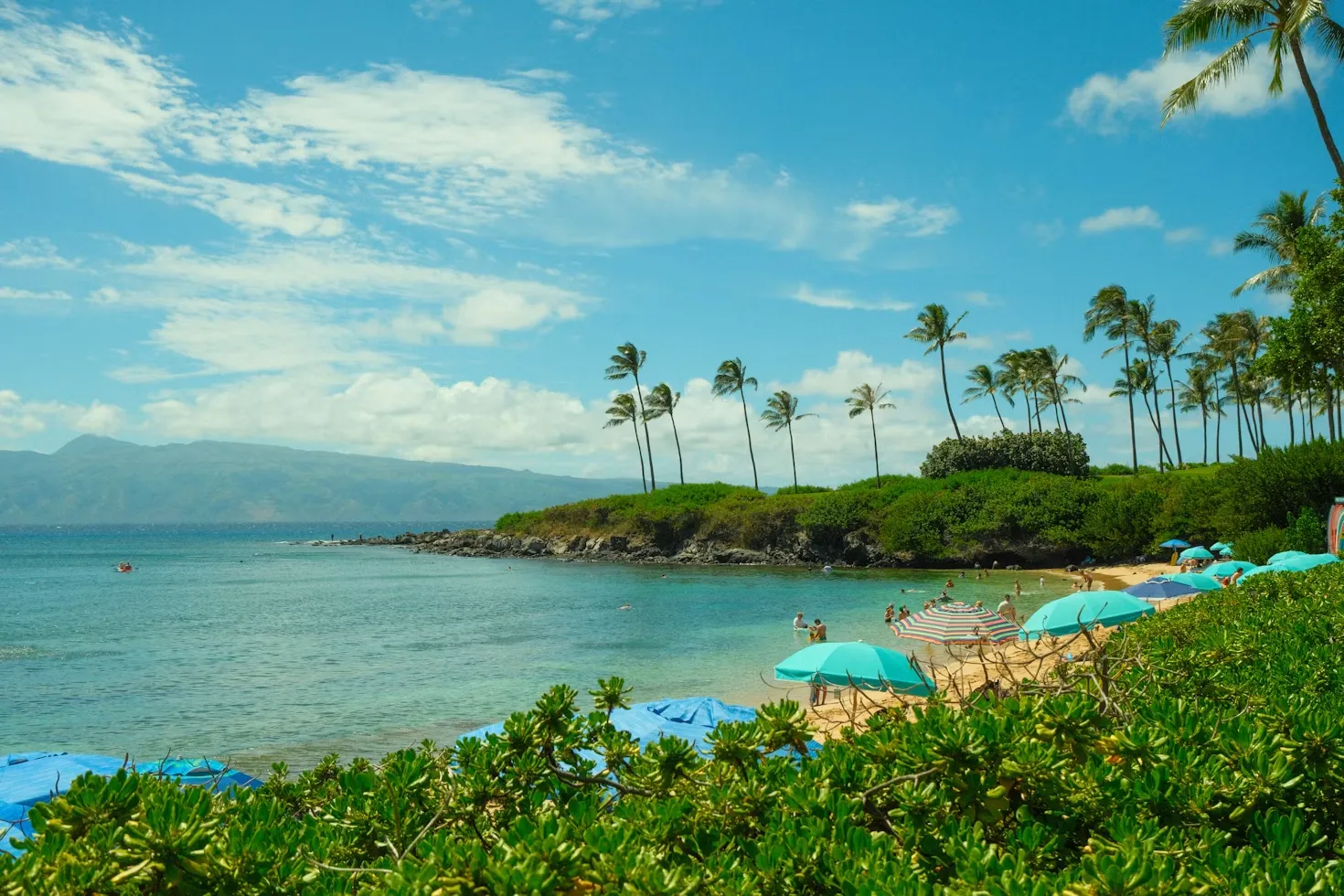
Located just north of Kapalua Bay, DT Fleming Beach Park is a favorite among both locals and visitors. This long, sandy beach is ideal for bodyboarding and surfing, especially during the winter months when the waves pick up. This world-class beach offers a more secluded and less touristy experience compared to Ka’anapali Beach. However, during high surf, conditions can become hazardous, with strong rip currents and powerful waves, making it essential to exercise caution. The perks of this beach are the convenient amenities, including picnic tables, restrooms, and lifeguards on duty, making it a great spot for a fun and safe beach day.
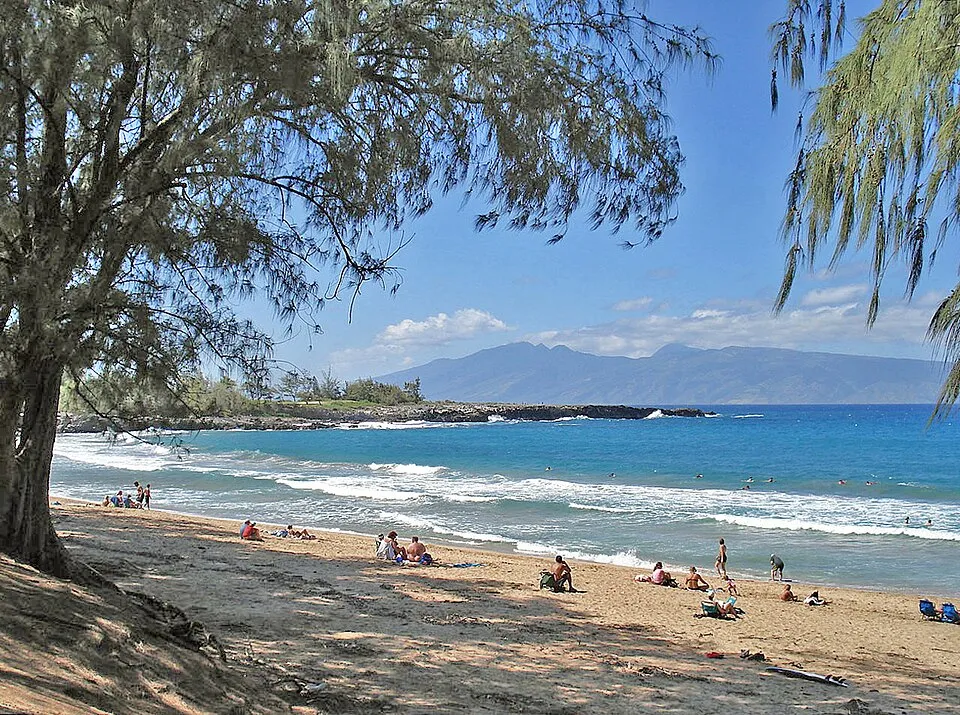
For those seeking a more secluded and peaceful setting, Oneloa Beach, also known as Ironwoods Beach, is a hidden gem. This pristine beach stretches along the rugged Kapalua coastline, offering breathtaking views and a more tranquil atmosphere. While the surf can be rough at times, it’s a fantastic spot for long walks, sunbathing, and photography. At the eastern end of the beach, where the parking lot path leads you, a shallow reef often becomes exposed along the shoreline. Many visitors mistakenly assume this rocky section extends across the entire beach and turn back too soon. Don’t make the same mistake—venture further down, and you’ll find a sandy-bottomed area perfect for wading and swimming.
A short drive from Kapalua stands Honolua Bay, a world-renowned snorkeling and diving destination. Honolua Bay is part of a marine conservation district, framed by dramatic cliffs and lush vegetation. Its rocky shoreline is the result of powerful ocean currents that have long washed away fine sand particles, leaving behind a bed of smooth volcanic rocks and coral rubble. Additionally, the bay’s calm, deep waters and the lack of strong wave action prevent the accumulation of new sand, making it a haven for snorkelers and divers rather than sunbathers.
This absence of sand plays a crucial role in maintaining the bay’s pristine underwater ecosystem. Without the shifting sands to cloud the water, visibility remains excellent, allowing for an up-close view of vibrant coral reefs and diverse marine species; however, In the winter, Honolua Bay transforms into a top-tier surfing spot, attracting experienced surfers from around the world. Honolua Bay is a testament to the raw, untouched beauty of Maui’s coastline—a must-visit for nature lovers seeking an unspoiled underwater paradise.
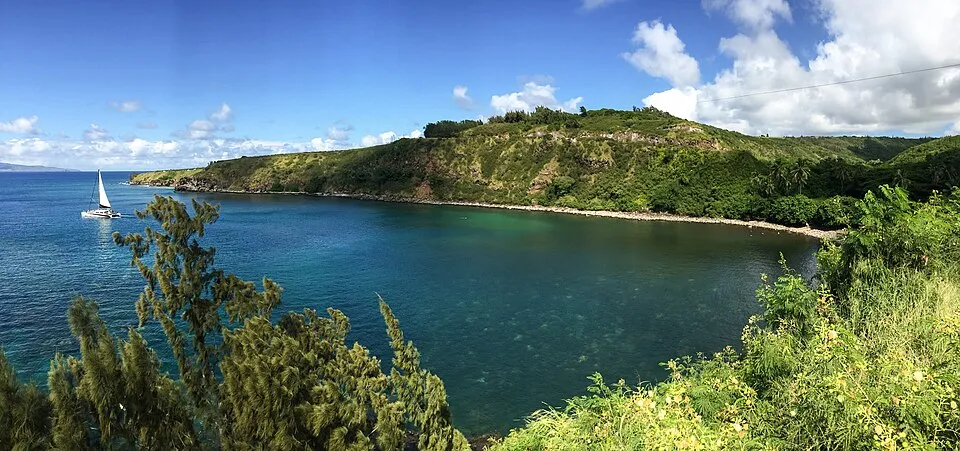
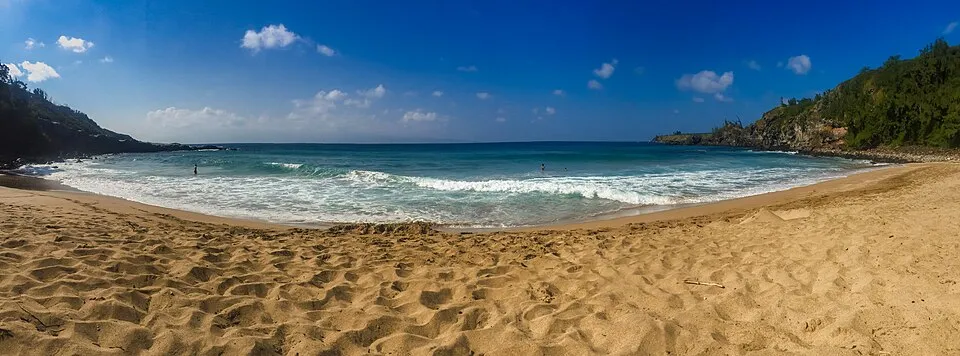
Just around the corner from Honolua Bay, Mokuleia Bay, often referred to as Slaughterhouse Beach, is another stunning option for those who love natural beauty. An amazing beach for surfers and bodyboarders in the winter time. This beach is slightly more difficult to access, requiring a short hike down a set of stairs, but it rewards visitors with soft sand, clear waters, and excellent snorkeling opportunities. Mokule‘ia Bay, part of the Honolua-Mokule‘ia Bay Marine Life Conservation District, shares its protected waters with its northern neighbor, Honolua Bay. However, unlike Honolua’s rocky shoreline, Mokule‘ia Bay offers a beautiful sandy beach for much of the year, making it an ideal spot to unwind and soak in Maui’s natural beauty. During the summer, the calm waters make it a great spot for swimming, while winter months bring powerful waves that draw experienced surfers.
Kapalua’s beaches are among the most beautiful in all of Hawaii, offering something for every kind of beach enthusiast. Whether you’re looking for relaxation, adventure, or breathtaking scenery, these beaches will not disappoint. Be sure to bring reef-safe sunscreen, respect the local marine life, and enjoy the natural wonders that make Kapalua a true paradise.
Kapalua Bay Beach is often one of the best all-around choices in Kapalua because of its beautiful crescent-shaped shoreline, snorkeling opportunities, and generally protected setting. However, the best beach depends on what you want to do. DT Fleming Beach Park is popular for a classic beach day and bodyboarding, while Oneloa Beach offers a quieter atmosphere and Honolua Bay is a favorite for snorkeling when ocean conditions are calm.
Kapalua Bay and Honolua Bay are two of the most popular snorkeling areas near Kapalua. Kapalua Bay is particularly appealing to visitors looking for convenient beach access, while Honolua Bay is known for its protected marine environment and abundant underwater life. Always check current ocean conditions before entering the water.
Kapalua Bay can be a good option for families, particularly when the ocean is calm. Its protected shape can create gentler conditions than some of the more exposed beaches along northwest Maui. Families should still check conditions before swimming and closely supervise children around the ocean.
Maui's shoreline is open to the public, although parking availability, access points, and nearby amenities vary by beach. Some areas have designated public beach access and parking, while others may require a short walk from the available parking area.
DT Fleming Beach Park has lifeguard services and is one of the better-equipped beaches in the Kapalua area for visitors looking for amenities. The park also offers restrooms, outdoor showers, picnic areas, and convenient beach access.
Swimming conditions vary throughout the year. Northwest Maui can experience significantly larger surf during the winter, while summer often brings calmer conditions to certain beaches. Never assume the water is safe based solely on the season. Check posted warnings and current conditions before entering the ocean.
Kapalua Bay is an excellent choice for visitors looking for a picturesque beach where they can swim, snorkel, and relax. Travelers looking for somewhere quieter may prefer Oneloa Beach, which tends to have a more secluded atmosphere and beautiful views of the Kapalua coastline.
Honolua Bay is primarily known for its rocky shoreline rather than a wide stretch of sand. Visitors generally come to Honolua for snorkeling, diving, surfing, and its natural scenery rather than a traditional sandy beach day. If you want to relax on the sand nearby, Kapalua Bay, DT Fleming Beach Park, or Mokuleʻia Bay may be better choices.
Yes. Honolua Bay is one of northwest Maui's best-known snorkeling locations when the ocean is calm. The bay is part of a protected Marine Life Conservation District and is known for coral reefs, tropical fish, and other marine life. During periods of high surf, particularly in winter, snorkeling conditions may become unsafe.
DT Fleming Beach Park can be great for swimming when conditions are calm, but the beach is also exposed to waves, currents, and seasonal high surf. It is a lifeguarded beach, so visitors should speak with an ocean safety officer if they are unsure about conditions before entering the water.
Oneloa Beach, also known as Ironwoods Beach, is a good choice for travelers seeking a quieter Kapalua beach experience. Its long shoreline and less-developed atmosphere make it especially appealing for walking, photography, sunbathing, and enjoying the scenery away from some of West Maui's busier beaches.
Slaughterhouse Beach is the commonly used nickname for Mokuleʻia Bay, located just north of Kapalua near Honolua Bay. Despite its unusual nickname, the area is known for its beautiful scenery, sandy shoreline, snorkeling during favorable conditions, and powerful winter surf.
Several Kapalua beaches offer beautiful sunset views because of their location along Maui's northwest coastline. Kapalua Bay, Oneloa Beach, and DT Fleming Beach Park can all provide excellent settings for watching the evening sky over the Pacific.
Hawaiian green sea turtles may sometimes be spotted while snorkeling or swimming around Maui's reefs, including areas near Kapalua. Sightings are never guaranteed. If you encounter a turtle or other marine wildlife, enjoy it from a respectful distance and avoid touching, chasing, feeding, or blocking the animal.
Yes, but winter ocean conditions require additional caution. Northwest Maui receives larger seasonal swells that can dramatically change conditions at beaches such as DT Fleming, Honolua Bay, and Mokuleʻia Bay. Some areas that are calm during summer can become powerful surf locations during winter.
Bring drinking water, sun protection, towels, comfortable footwear, snorkeling equipment if you plan to snorkel, and anything else you need for the beach. A hat and rash guard can also provide additional sun protection. Always pack out your trash and avoid touching or standing on coral.
Kapalua Bay is a great starting point for first-time visitors because it combines classic Maui scenery with opportunities for swimming, snorkeling, and relaxing on the sand. Visitors who have more time can explore several nearby beaches to experience the different landscapes found along the Kapalua coastline.
Kapalua and the surrounding West Maui coastline offer much more than beaches. Visitors can explore coastal walking trails, snorkeling areas, scenic viewpoints, restaurants, golf courses, and nearby communities such as Nāpili and Kā‘anapali. Travelers can also combine a West Maui beach day with other Maui outdoor activities during their vacation.
If you would like to read and learn more about interesting things in Hawaii! Check out our blog page here on our website!
or
Image Credits:
Hero:
"White boat on body of water during daytime" by John Bell, via Unsplash
"A beach with a bunch of umbrellas and palm trees" by Elias Almaguer, via Unsplash
Fleming Beach, Maui — Photo by KasugaHuang, via Wikimedia Commons, licensed under Creative Commons Attribution-ShareAlike 3.0 (CC BY-SA 3.0).
Honolua Bay, Maui — Photo by Dronepicr, via Wikimedia Commons, licensed under Creative Commons Attribution 3.0 (CC BY 3.0).
Photo: dronepicr, Slaughterhouse Beach (Mokulēʻia Bay), Maui, via Wikimedia Commons, CC BY 2.0.
Located right in Waikapu, Maui Tropical Plantation is a must-visit destination for those looking to experience the island’s lush landscapes, rich agricultural history, and vibrant cultural heritage. Spanning 500 acres, this beautiful plantation offers visitors an immersive look into Hawaii’s tropical agriculture while providing a serene escape into nature.
Maui Tropical Plantation is more than just a scenic retreat—it is a living, breathing testament to Hawaii’s farming traditions. Guests can embark on the popular Tropical Express Tour, a guided tram ride through the plantation’s sprawling fields. Along the way, visitors will witness a variety of tropical crops, including coffee, papaya, coconut, mango, and taro, while learning about their significance in Hawaiian culture and history.
Since its establishment in 1983, Maui Tropical Plantation has been a premier destination for visitors seeking to learn about the island’s rich agricultural traditions. Originally designed to showcase how Maui’s crops are grown, the plantation continues to offer an immersive and educational experience today.
One of the highlights of a visit is the 45-minute tram tour, where local guides lead guests through the plantation’s sprawling 1,500 acres, featuring an impressive variety of 65 crops. Among the lush fields, visitors can see and learn about pineapple, banana, papaya, starfruit, coffee, guava, coconut, macadamia nuts, taro, avocado, and even newly introduced sunflowers—a recent addition to Maui’s agricultural landscape. Seasonal variations ensure that each tour offers something unique.
The tram tour operates hourly from 10 AM to 4 PM, providing ample opportunities to explore the plantation’s beauty. Tickets can be purchased conveniently at the Plantation Store entrance or online.
https://mauitropicalplantation.com/tour-tickets
Maui Tropical Plantation provides a variety of interactive experiences that appeal to visitors of all ages. Whether you’re seeking adventure or a deeper appreciation of Hawaiian farming traditions, the plantation offers something for everyone. For thrill-seekers, the plantation’s zipline course provides an exhilarating way to take in the stunning surroundings. As you soar above the lush fields, you’ll be treated to a breathtaking bird’s-eye view of the towering palm trees, tropical crops, and vibrant floral gardens. The zipline is designed to be both exciting and family-friendly, making it a must-try experience for those looking to add a bit of adrenaline to their visit.
For visitors interested in a more grounded, hands-on approach, the plantation offers engaging demonstrations that highlight traditional Hawaiian agricultural practices. One of the most popular activities is the coconut husking demonstration, where guests can witness firsthand the skill and technique required to open a coconut using time-honored methods. These demonstrations provide an educational glimpse into Hawaiian farming heritage, connecting guests to the island’s deep-rooted agricultural traditions.
A visit to Maui Tropical Plantation wouldn’t be complete without savoring the flavors of the island at The Mill House restaurant. Known for its farm-to-table dining, The Mill House sources fresh ingredients directly from the plantation and local farmers. Guests can indulge in exquisite dishes that highlight the island’s seasonal bounty while enjoying breathtaking views of the West Maui Mountains or Mauna Kahālāwai.
Maui Tropical Plantation is committed to sustainability and preserving the island’s agricultural heritage. Through eco-friendly practices and community engagement, the plantation plays a vital role in educating visitors about the importance of sustainable farming and environmental stewardship.
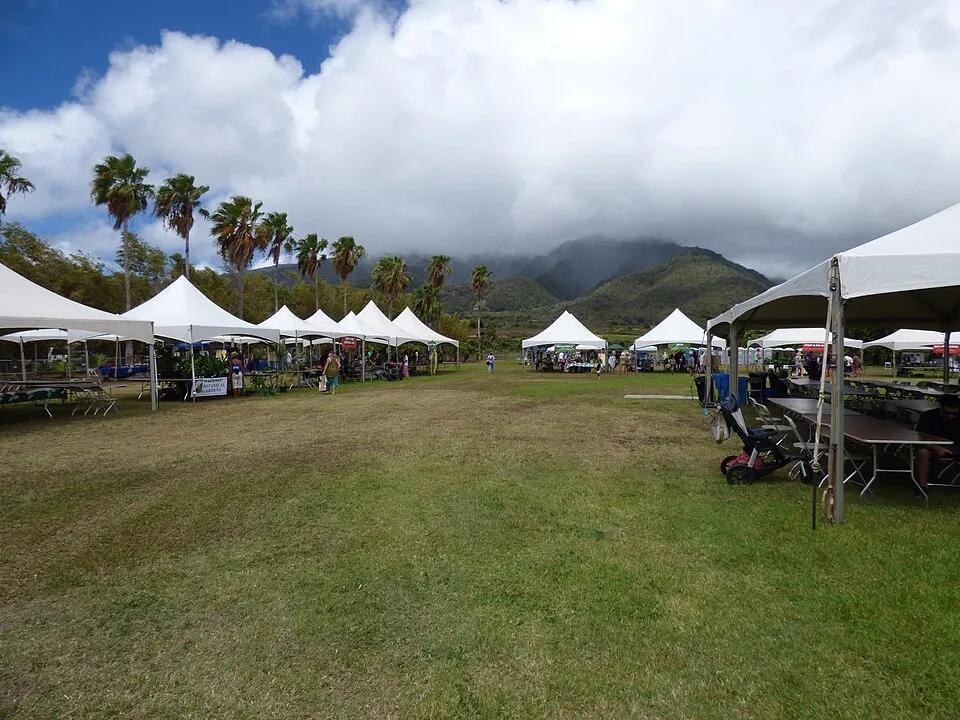
Whether you’re a first-time visitor to Maui or a returning traveler, Maui Tropical Plantation offers a unique blend of adventure, history, and relaxation. With its stunning landscapes, engaging experiences, and dedication to preserving Hawaii’s agricultural traditions, it remains a cherished destination for all who seek to explore the beauty of the island.
Discover the heart of Maui—visit Maui Tropical Plantation and experience the island’s agricultural paradise firsthand.
https://mauitropicalplantation.com/
Yes. Maui Tropical Plantation is a worthwhile stop for visitors interested in Maui's tropical plants, agriculture, local products, scenery, and history. The property offers a different experience from Maui's beaches and ocean activities and can easily be incorporated into a day exploring Central Maui.
Maui Tropical Plantation is located at 1670 Honoapiʻilani Highway in Waikapū, Maui. Its Central Maui location makes it convenient to reach from Kahului, Wailuku, Kīhei, and other popular areas of the island.
Visitors can explore portions of Maui Tropical Plantation without purchasing a Tropical Express ticket. However, activities such as the Tropical Express and zipline are paid experiences. Shopping and dining costs are also separate. Check current pricing before visiting, as rates and available activities can change.
Visitors can explore the tropical surroundings, learn about Hawaiian agriculture, shop for locally inspired products, enjoy food and drinks, and take the Tropical Express through parts of the property. Other activities, including a family-friendly zipline course, are also available.
The Tropical Express is a guided tram experience that takes visitors through areas of Maui Tropical Plantation while introducing them to tropical fruits, plants, and Maui's agricultural landscape. The approximately 40-minute experience also includes a coconut husking demonstration.
Plan on spending approximately one to three hours at Maui Tropical Plantation, depending on what you want to experience. Visitors taking the Tropical Express can combine the tour with time exploring the grounds, shopping, taking photos, or enjoying a meal. Those participating in additional activities may want to set aside more time.
Yes. Maui Tropical Plantation can be a great family-friendly Maui attraction. Children can see tropical plants and fruits growing around the property, while the Tropical Express provides an educational experience without requiring a strenuous hike. Families looking for more adventure can also explore the plantation's available outdoor activities.
Maui Tropical Plantation showcases many plants associated with Hawaiʻi's tropical environment and agricultural history. Depending on the season and areas visited, guests may see crops and plants such as coconut, banana, papaya, coffee, mango, taro, macadamia nuts, avocado, and colorful tropical flowers.
You do not necessarily need a reservation simply to visit the property, but purchasing tickets in advance for specific tours and activities is a good idea. Availability and operating schedules can vary, so visitors should check the official Maui Tropical Plantation website when planning their day.
Hours vary depending on the attraction, restaurant, or shop you plan to visit. The Tropical Express currently operates Tuesday through Sunday from 9 AM to 3 PM. Because schedules can change, check current operating hours directly with Maui Tropical Plantation before your visit.
Yes. Visitors can enjoy food and drinks without leaving the plantation. Cafe O'Lei at the Plantation serves island-inspired food with views of the surrounding Waikapū landscape, while the Country Market includes the Kumu Cafe and Farm Bar along with locally grown produce and other products.
Yes. You do not have to take the Tropical Express to enjoy the plantation's dining and shopping options. This makes Maui Tropical Plantation a convenient stop even for travelers who only want to enjoy a meal, browse local products, or spend some time exploring the property.
Yes. Maui Tropical Plantation has several shopping opportunities featuring locally grown produce, coffee, handmade goods, gifts, and products from Maui businesses and artisans. It can be a good place to look for locally inspired items while supporting Maui farmers, makers, and small businesses.
Yes. A separate zipline experience operates at Maui Tropical Plantation. The course features five side-by-side ziplines over farmland, gardens, and the plantation's lagoon and is designed as a family-friendly adventure.
Maui Tropical Plantation can still be worth considering when Maui experiences passing showers, although some activities take place outdoors. Weather can affect tours and other attractions, so check current conditions and activity availability before heading to the plantation during periods of heavier rain.
Comfortable, casual clothing and walking shoes are generally appropriate. Maui's weather can be warm and sunny, so consider bringing sunscreen, a hat, sunglasses, and water. A light rain jacket can also be useful when showers are in the forecast.
Yes. Maui Tropical Plantation is located in Waikapū in Central Maui, making it relatively convenient to Kahului and Kahului Airport compared with attractions farther away in West Maui, Upcountry, or along the Road to Hāna. This can make the plantation a useful addition to an arrival or departure day when your schedule allows.
Its Central Maui location makes Maui Tropical Plantation easy to combine with other activities around Wailuku, Waikapū, and Kahului. Visitors can explore ʻĪao Valley, discover local shops and restaurants, visit cultural and historic attractions, or continue toward other parts of Maui for beaches, hiking, sightseeing, and outdoor adventures.
No. Although Maui Tropical Plantation is a popular visitor attraction, its restaurants, markets, local products, events, and scenic setting can also appeal to Maui residents. The plantation provides a place to learn more about agriculture while supporting businesses and producers connected to the island.
If you would like to read and learn more about interesting things in Hawaii! Check out our blog page here on our website!
or
Image Credits:
Hero:
Royal Poinciana (Delonix regia) at Maui Tropical Plantation — Photo by Forest and Kim Starr, via Wikimedia Commons, licensed under Creative Commons Attribution 3.0 United States (CC BY 3.0 US).
Indigenous Crop Biodiversity Festival, Maui Tropical Plantation — Photo by Forest and Kim Starr, via Wikimedia Commons, licensed under Creative Commons Attribution 3.0 US (CC BY 3.0 US).
Tucked along Maui’s beautiful northwestern coastline, Honolua Bay is one of the island’s most recognizable destinations for snorkeling, marine life, surfing, and natural scenery. Surrounded by lush vegetation and rocky coastline, the bay feels noticeably different from the long sandy beaches found elsewhere in West Maui.
Honolua Bay is especially famous for what lies beneath the surface. Protected waters, coral reef habitat, and diverse marine life make the area an incredible place to experience Maui’s underwater environment when ocean conditions are favorable.
Whether you are planning to snorkel, photograph the scenery, watch experienced surfers during the winter, or simply explore another side of Maui, Honolua Bay deserves a place on your itinerary.
Honolua Bay is part of the Honolua–Mokulēʻia Bay Marine Life Conservation District, a protected area along Maui’s northwestern coast. The conservation district encompasses approximately 45 acres and was established in 1978 to help protect marine resources.
Unlike an ordinary beach, activities that could damage or remove marine resources are highly restricted. Fishing, taking or injuring marine life, and removing or altering coral, sand, and other geological features are prohibited within the conservation district.
These protections help make Honolua Bay an important habitat for reef fish and other marine organisms while providing visitors with an opportunity to observe Maui’s underwater environment responsibly.
When visiting, remember that the reef is something to observe rather than touch. Never stand on coral, chase marine animals, remove natural objects, or leave trash behind.
Snorkeling is one of the biggest reasons people visit Honolua Bay. Reef formations are found along both sides of the bay, while the center contains a sandy channel.
Visitors may encounter numerous species of colorful tropical reef fish while exploring the water. Hawaiian green sea turtles, or honu, may also be encountered around Maui’s reefs, although wildlife sightings are never guaranteed.
The shoreline itself is rocky, so Honolua Bay should not be confused with a traditional sandy swimming beach. Visitors interested primarily in laying out on the sand may prefer one of the nearby beaches around Kapalua or Nāpili.
Water conditions should always determine whether you snorkel. Rain and runoff can reduce visibility, particularly closer to shore, while larger ocean swells can make entering the water dangerous.
If the ocean looks rough or conditions are beyond your swimming ability, enjoy the bay from shore and save snorkeling for another day.
Honolua Bay changes dramatically when larger winter swells arrive.
Instead of calm snorkeling conditions, the bay can become a powerful surf location attracting highly experienced surfers. Watching the waves can be impressive in itself, but visitors should understand that conditions that are excellent for experienced surfers can be completely inappropriate for swimming or snorkeling.
Never enter the water simply because other people are doing so. Ocean conditions around Hawaiʻi can change quickly, and individual swimming abilities vary considerably.
During calmer periods, particularly outside major swell events, the character of Honolua Bay can be completely different.
Part of the Honolua Bay experience happens before you even reach the shoreline.
Visitors access the bay from Honoapiʻilani Highway and walk toward the water through a lush, shaded landscape. Large trees, tropical vegetation, vines, and the surrounding valley create a striking transition between the highway and the ocean.
The walk is relatively short, but appropriate footwear is still helpful, particularly when the ground is wet or muddy.
Once you reach the shoreline, expect rocks rather than a broad sandy beach. Water shoes can be useful for visitors planning to enter the water.
Honolua Bay is located along Honoapiʻilani Highway (Highway 30) on Maui’s northwestern coast, north of Kapalua.
Parking is available along the highway rather than in a large dedicated beach parking lot. Because space is limited, visitors should park carefully and pay attention to all posted parking restrictions and signs.
Do not block roadways, gates, driveways, or access points.
The relatively undeveloped nature of the area is part of Honolua Bay’s appeal, but it also means visitors should arrive prepared rather than expecting the amenities found at a developed beach park.
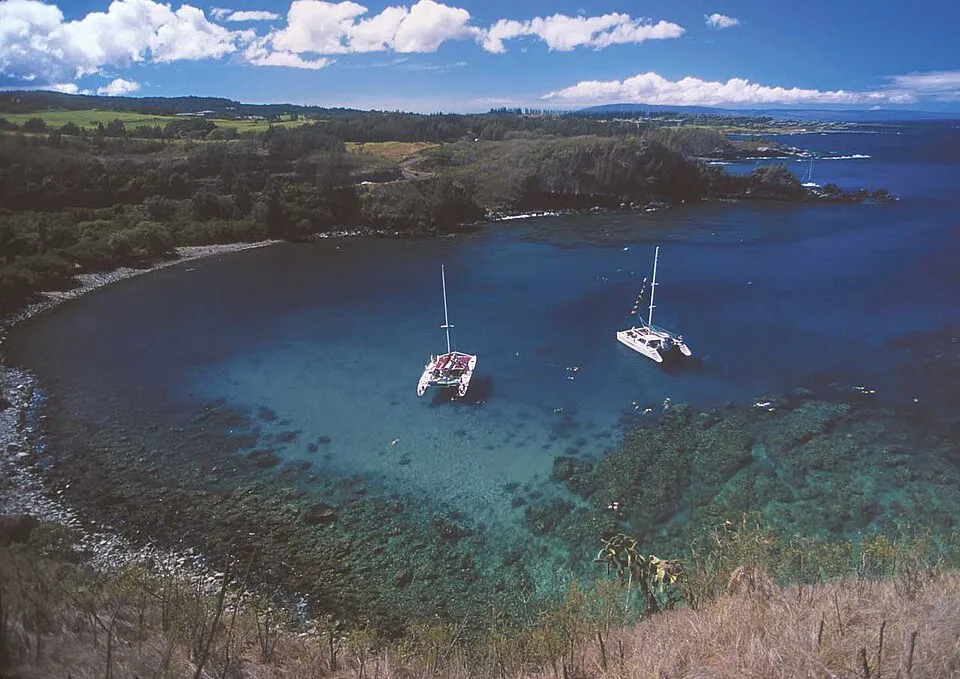
If you plan to spend a few hours at Honolua Bay, consider bringing:
Pack out everything you bring with you and help keep the shoreline and surrounding environment clean.
Honolua Bay is more than a beautiful Maui attraction. It is part of a protected marine ecosystem and an area with deep cultural and environmental importance.
One of the simplest ways visitors can help is by leaving the area exactly as they found it.
Give wildlife plenty of space. Never touch sea turtles or other marine animals. Avoid stepping on coral or disturbing the seafloor. Do not remove rocks, shells, coral, plants, or other natural materials.
Responsible visitation helps protect places like Honolua Bay for Maui residents, wildlife, and future generations.
For official information about the protected marine area and current regulations, visit the Hawaiʻi Department of Land and Natural Resources Division of Aquatic Resources page for the Honolua–Mokulēʻia Bay Marine Life Conservation District.
Visitors planning additional adventures can also explore the NorthShore Zipline Maui Blog for guides covering Maui beaches, snorkeling destinations, outdoor activities, Upcountry Maui, the Road to Hāna, and other things to do around the island.
Yes. Honolua Bay is worth visiting for travelers interested in snorkeling, marine life, surfing, photography, and Maui’s natural scenery. Its protected marine environment and lush surroundings provide a different experience from the island’s more developed sandy beaches.
Honolua Bay is one of Maui’s best-known snorkeling locations when ocean conditions are calm. Coral reef habitat is located along both sides of the bay and supports a variety of marine life. Snorkeling should only be attempted when conditions are appropriate for your experience and swimming ability.
There is no guaranteed time when Honolua Bay will be calm and clear. Ocean swell, wind, rain, and runoff can all affect visibility and safety. Check current conditions before entering the water and avoid snorkeling during large surf.
It depends on the conditions. Calm days may provide suitable snorkeling for capable swimmers, while rough surf can make the bay inappropriate even for experienced snorkelers. Honolua Bay is a natural ocean environment, so visitors should never assume conditions are safe.
No. Honolua Bay has a predominantly rocky shoreline rather than a wide sandy beach. Visitors looking primarily for swimming and relaxing on sand may prefer Kapalua Bay, Nāpili Bay, or other nearby West Maui beaches.
Hawaiian green sea turtles, or honu, can be encountered around Maui’s reefs, including the Honolua area, but sightings are never guaranteed. Always observe marine wildlife from a respectful distance and never touch, chase, feed, or harass an animal.
Honolua Bay’s protected reef ecosystem supports many species of tropical reef fish. Exactly what you see varies by location and conditions, which is part of what makes snorkeling the bay such a unique experience.
Fishing and taking marine life are prohibited within the Honolua–Mokulēʻia Bay Marine Life Conservation District. Visitors should familiarize themselves with the official conservation district boundaries and regulations before participating in fishing or gathering activities in the surrounding area.
Honolua Bay is beautiful during winter, but larger seasonal swells can transform it into a powerful surf break. When high surf is present, snorkeling and swimming may be unsafe. Winter visitors can still enjoy the scenery and watch experienced surfers from a safe location.
Parking is available along Honoapiʻilani Highway near the access trails. There is not a large traditional beach parking lot, so parking can be limited. Follow all signs and avoid blocking roads, gates, or access points.
Visitors should not expect the facilities and amenities found at developed Maui beach parks. Plan ahead before visiting and bring the supplies you need for your time at the bay.
Many visitors can spend one to three hours at Honolua Bay depending on whether they are snorkeling, exploring the shoreline, taking photographs, or simply enjoying the scenery. Your visit may be shorter if ocean conditions are unsuitable for water activities.
There is no general admission fee to access Honolua Bay from shore. Visitors should still follow all posted access, parking, conservation, and safety regulations.
Honolua Bay is just north of the Kapalua resort area along Honoapiʻilani Highway, making it easy to combine with other attractions and beaches around northwest Maui.
Yes. Honolua Bay and neighboring Mokulēʻia Bay are part of the Honolua–Mokulēʻia Bay Marine Life Conservation District. The protected area was established to conserve and replenish marine resources, and regulations restrict fishing and the removal or disturbance of marine life and geological features.
Bring drinking water, sun protection, comfortable footwear, a towel, and snorkel equipment if you plan to enter the water. Water shoes can also be helpful because of the rocky shoreline. Visitors should pack out everything they bring into the area.
Several popular northwest Maui beaches are nearby, including Mokulēʻia Bay, also commonly called Slaughterhouse Beach, Kapalua Bay, Oneloa Beach, and DT Fleming Beach Park. This makes Honolua Bay easy to include in a day exploring the Kapalua coastline.
Visitors can explore Kapalua’s beaches and coastal scenery, snorkel when conditions allow, visit nearby restaurants and shops, or continue exploring other parts of Maui. Travelers looking for another outdoor adventure can also head toward Maui’s North Shore and Upcountry areas for hiking, sightseeing, waterfalls, and ziplining.
If you would like to read and learn more about interesting things in Hawaii! Check out our blog page here on our website!
or
Image Credits:
Hero:
Photo: Dronepicr, via Wikimedia Commons. Licensed under Creative Commons Attribution 3.0 (CC BY 3.0).
Photo: Curt Smith, via Wikimedia Commons. Licensed under Creative Commons Attribution 2.0 Generic (CC BY 2.0).