
Table of Contents
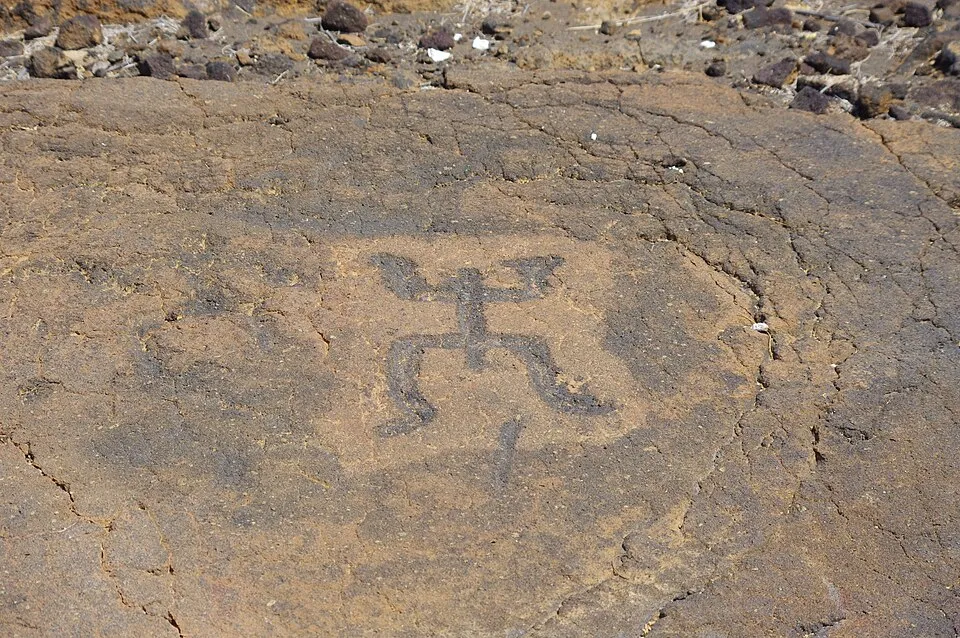
Hawaiʻi is famous for volcanic landscapes, beaches, waterfalls, and rich cultural traditions, but some of the islands' most fascinating historical features are carved directly into stone. Hawaiian petroglyphs, known as kiʻi pōhaku, can be found across the islands and provide a physical connection to generations of Native Hawaiians who lived, traveled, gathered, and practiced cultural traditions throughout the archipelago.
Petroglyphs are images or markings created by pecking, carving, or incising designs into rock. In Hawaiʻi, many were carved into relatively smooth lava surfaces. Designs can include human figures, geometric shapes, circles, dots, canoe-related imagery, and small depressions known as poho. Although researchers and cultural practitioners have learned a great deal about some petroglyph traditions, the meanings of individual carvings are not always known.
For travelers interested in Hawaiian history and culture, several locations stand out as some of the most famous petroglyph sites in Hawaii.
Puʻuloa Petroglyphs – Hawaiʻi Island
One of the most significant places to see Hawaiian petroglyphs is the Puʻuloa Petroglyph Field inside Hawaiʻi Volcanoes National Park.
Puʻuloa contains more than 23,000 recorded petroglyph images, making it the largest concentration of petroglyphs in the state. The site includes thousands of small cup-like depressions, along with circles, geometric patterns, human figures, canoe sails, and other designs.
Puʻuloa has particular cultural significance because many of the small depressions, or poho, were associated with the placement of a child's piko, or umbilical cord, as part of traditions connected with the hope for a long and prosperous life.
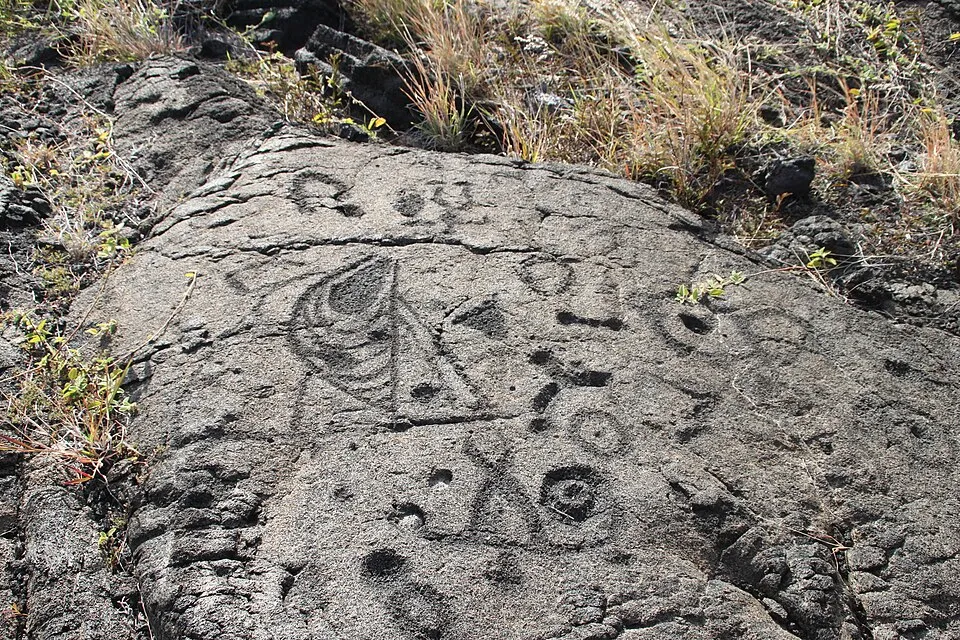
Visitors can reach the viewing area from Chain of Craters Road. The National Park Service describes the hike as approximately 1.4 miles round trip, generally requiring about one to one-and-a-half hours. A boardwalk allows visitors to observe part of the petroglyph field while helping protect the fragile lava surface.
Because Puʻuloa is both an archaeological resource and a sacred Hawaiian cultural landscape, visitors should remain on designated trails and the boardwalk.
Puakō Petroglyph Archaeological Preserve – Hawaiʻi Island
The Kohala Coast of Hawaiʻi Island contains another important concentration of petroglyphs.
The Puakō Petroglyph Archaeological Preserve, near Holoholokai Beach Park and the Mauna Lani area, contains hundreds of petroglyphs etched into the lava landscape. Visitors may encounter representations of people and other geometric or symbolic designs.
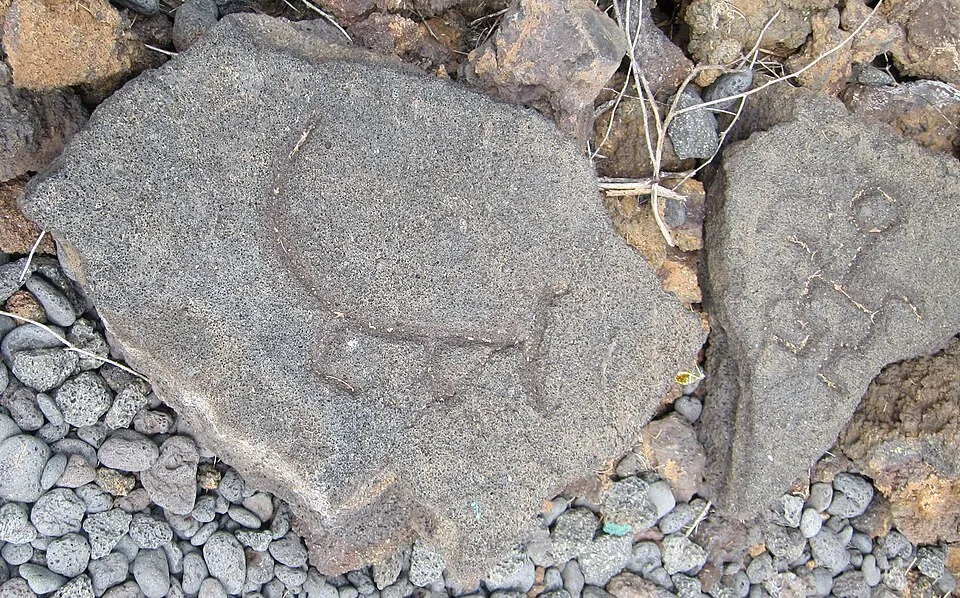
Puakō is especially interesting because the petroglyphs exist within a broader historic Hawaiian landscape. The Kohala Coast contains portions of the Ala Kahakai National Historic Trail, an approximately 175-mile trail corridor connecting numerous culturally important locations around Hawaiʻi Island.
For travelers staying along the Kohala Coast, Puakō can provide an accessible opportunity to learn about Hawaiian history beyond the area's resorts and beaches.
ʻAnaehoʻomalu Petroglyph Field – Waikoloa, Hawaiʻi Island
Another well-known petroglyph location can be found near Waikoloa and ʻAnaehoʻomalu Bay.
The ʻAnaehoʻomalu Petroglyph Field contains preserved Hawaiian rock carvings within the lava fields of the Waikoloa resort area. Like Puakō, the site helps illustrate how historic Hawaiian trails and settlements once crossed landscapes that today contain hotels, roads, and modern developments.
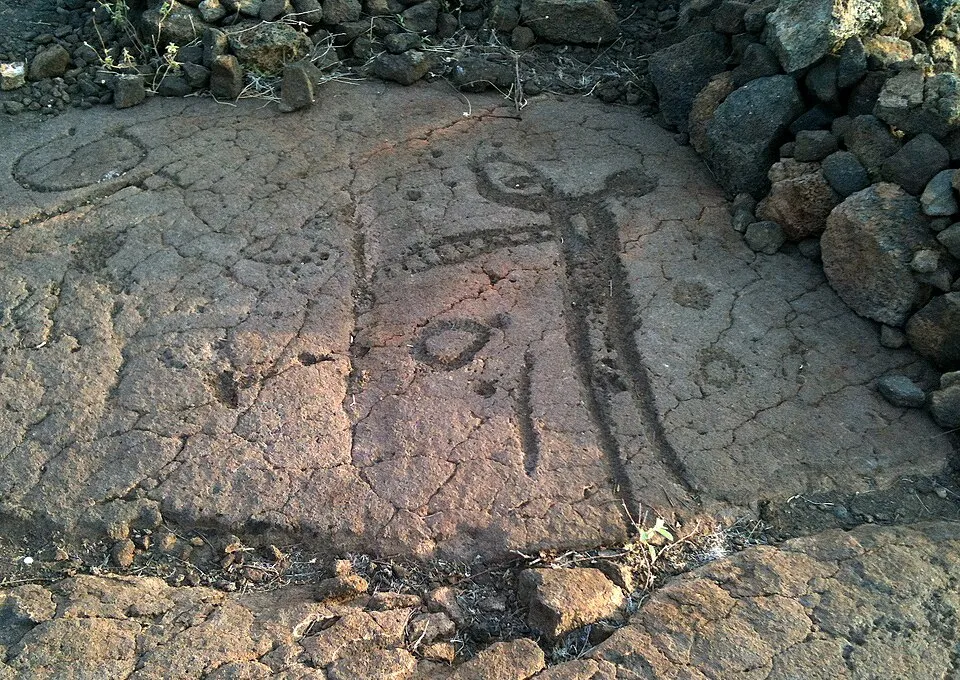
The Hawaiʻi Tourism Authority highlights both Puakō and ʻAnaehoʻomalu among notable places to view petroglyphs on Hawaiʻi Island.
Visitors should follow established paths rather than walking across petroglyph-covered lava. Even seemingly solid volcanic rock can be surprisingly fragile, and repeated foot traffic can permanently damage archaeological features.
Kaloko-Honokōhau National Historical Park – Hawaiʻi Island
Just north of Kailua-Kona, Kaloko-Honokōhau National Historical Park protects far more than petroglyphs.
Throughout the park, visitors can explore a Hawaiian cultural landscape containing archaeological sites, historic trails, fishponds, house platforms, heiau and other features associated with traditional Hawaiian life. Petroglyphs are scattered within this larger cultural environment.
This makes Kaloko-Honokōhau particularly valuable for travelers who want to understand petroglyphs as part of a living cultural landscape rather than simply viewing individual rock carvings.
Instead of being isolated pieces of ancient artwork, Hawaiian petroglyphs can be understood alongside the trails, communities, fishing areas, religious sites, and gathering places used by generations of people.
Olowalu Petroglyphs – Maui
Hawaiʻi Island may contain the state's largest concentrations of petroglyphs, but Maui also has an important site at Olowalu.
The Olowalu petroglyphs, also associated with Puʻu Kilea, are carved into a basalt cliff in Olowalu Valley on West Maui. Hawaiʻi's Department of Land and Natural Resources has described roughly 100 petroglyphs spread across the cliff face, calling them some of the finest examples of Hawaiian petroglyphs.
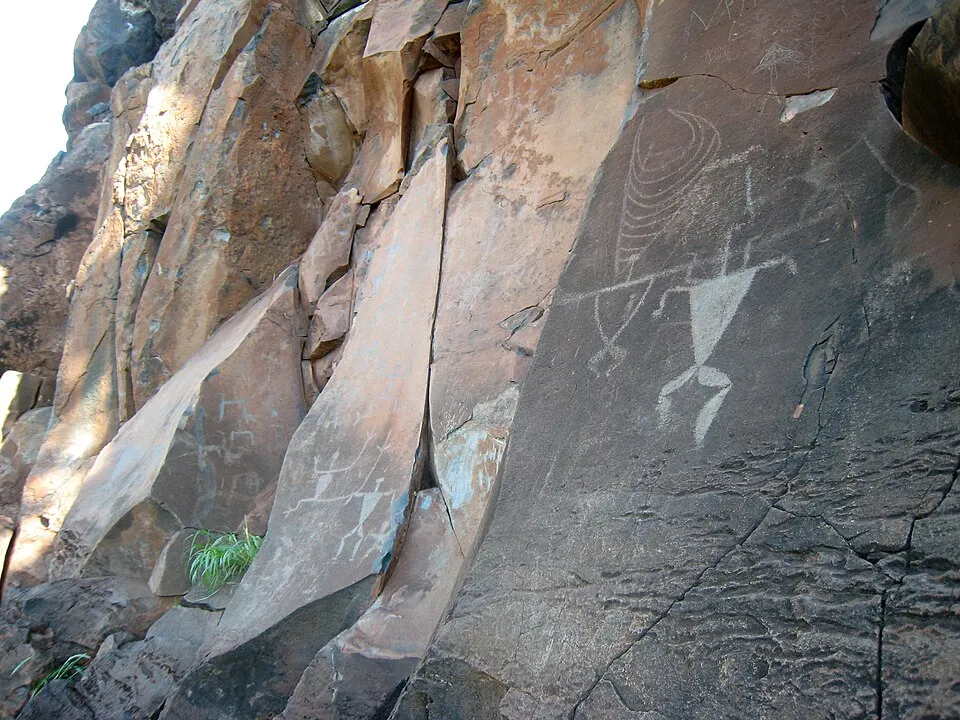
Historical and cultural documentation of Olowalu describes images that include people, animals, and sailing canoes. The surrounding area was historically significant as a travel corridor connecting communities and important destinations on Maui.
The site has unfortunately also experienced vandalism, demonstrating why protecting Hawaiian archaeological resources is so important.
Visitors should never attempt to trace, chalk, paint, touch, climb onto, or otherwise alter a petroglyph.
What Do Hawaiian Petroglyphs Mean?
There is no single interpretation that applies to every Hawaiian petroglyph.
Some carvings may have documented people, families, journeys, significant events, or cultural practices. Other meanings have been lost or remain uncertain. At Puʻuloa, however, the enormous concentration of poho provides particularly strong evidence of traditions associated with children and family genealogy.
The National Park Service emphasizes the deep ancestral connections represented at Puʻuloa, where petroglyphs are connected with genealogy and family customs.
Rather than viewing kiʻi pōhaku simply as ancient drawings, visitors should recognize them as cultural resources connected to Native Hawaiian history and identity.
How to Visit Petroglyph Sites Respectfully
Petroglyphs have survived for centuries, but they can be permanently damaged surprisingly quickly. Walking directly over carvings can gradually wear them away, while touching, rubbing, chalking, or attempting to reproduce them can damage the rock surface.
At Puʻuloa, the National Park Service specifically instructs visitors to remain on the boardwalk because walking across the lava can fragment the delicate petroglyph surface.
When visiting any Hawaiian archaeological or cultural site, stay on designated trails, obey posted restrictions, leave rocks and artifacts exactly where they are, and photograph cultural features without touching them.
These locations are more than sightseeing attractions—they are part of Hawaiʻi's cultural heritage.
Exploring Hawaiian Culture Beyond Petroglyphs
Petroglyph sites are only one way to explore the history of the Hawaiian Islands. Travelers can also visit historic trails, fishponds, preserved village sites, museums, cultural centers, and other archaeological areas.
On Maui, exploring cultural places such as Olowalu can also be combined with outdoor adventures that showcase the island's dramatically different environments. From West Maui's valleys to Upcountry and the slopes of Haleakalā, experiencing the landscape helps visitors develop a greater appreciation for the relationship between Hawaiian history, culture, and the natural environment.
The best Hawaiʻi experiences often come from looking beyond the beach and learning about the generations of people who shaped—and were shaped by—these islands.
Helpful Links
- Puʻuloa Petroglyphs – National Park Service
- Puʻuloa Petroglyph Trail Information – National Park Service
- Hawaiʻi Volcanoes National Park
- Kaloko-Honokōhau National Historical Park
- Petroglyphs on Hawaiʻi Island – GoHawaii
- Ala Kahakai National Historic Trail
- Hawaiʻi Department of Land and Natural Resources
Frequently Asked Questions About Petroglyph Sites in Hawaii
Where are the most famous petroglyph sites in Hawaii?
Some of the best-known petroglyph sites in Hawaii include Puʻuloa Petroglyphs in Hawaiʻi Volcanoes National Park, Puakō Petroglyph Archaeological Preserve, the ʻAnaehoʻomalu Petroglyph Field, Kaloko-Honokōhau National Historical Park, and the Olowalu petroglyphs on Maui.
What is the largest petroglyph site in Hawaii?
Puʻuloa in Hawaiʻi Volcanoes National Park is the largest petroglyph field in the state, containing more than 23,000 recorded petroglyph images.
Are there petroglyphs on Maui?
Yes. One of Maui's best-known petroglyph locations is at Olowalu, where Hawaiian petroglyphs are carved into the basalt cliff at Puʻu Kilea. The site includes human figures and other imagery associated with the area's long history.
What island has the most Hawaiian petroglyphs?
Hawaiʻi Island contains several of the state's most extensive and accessible petroglyph fields, including Puʻuloa, Puakō, ʻAnaehoʻomalu, and archaeological features within Kaloko-Honokōhau National Historical Park.
What does a Hawaiian petroglyph mean?
The meaning varies depending on the carving and location. Petroglyphs may represent people, journeys, families, significant events, cultural practices, or symbolic imagery. Some meanings are no longer known. At Puʻuloa, thousands of small depressions are associated with the traditional placement of a newborn child's piko.
Can you touch petroglyphs in Hawaii?
Visitors should not touch, walk on, trace, chalk, carve, or alter Hawaiian petroglyphs. Oils from hands, physical abrasion, and repeated foot traffic can damage archaeological surfaces. Always follow marked trails and viewing platforms.
Is the Puʻuloa Petroglyph Trail difficult?
The National Park Service rates the approximately 1.4-mile round-trip trail as moderate. The route crosses uneven lava terrain and can be exposed to sun, rain, heat, and wind, so visitors should bring water and appropriate footwear.
Can you photograph Hawaiian petroglyphs?
Photography is generally permitted at publicly accessible petroglyph viewing areas unless signs indicate otherwise. Visitors should photograph the carvings from designated trails or viewing areas without touching or disturbing the site.
Why are Hawaiian petroglyphs important?
Hawaiian petroglyphs provide an enduring connection to Native Hawaiian history, genealogy, travel, traditions, and relationships with the land. Preserving these sites ensures that future generations can continue to study, understand, and respect Hawaiʻi's cultural heritage.
If you would like to read and learn more about interesting things in Hawaii! Check out our blog page here on our website!
or
Image Credits:
Puakō Petroglyphs, Hawaiʻi — Photo by Ken and Nyetta. Licensed under the Creative Commons Attribution 2.0 Generic (CC BY 2.0). Source: Wikimedia Commons.
Petroglyphs at Puʻuloa, Hawaiʻi Volcanoes National Park — National Park Service (NPS) photo. Public domain. Source: Wikimedia Commons.
Petroglyphs in Puakō Petroglyph Archaeological District, Hawaiʻi — Photo by Wmpearl. Dedicated to the public domain under CC0 1.0. Source: Wikimedia Commons.
Waikoloa Petroglyphs, Hawaiʻi — Photo by Jean Synodinos. Licensed under the Creative Commons Attribution 2.0 Generic (CC BY 2.0). Source: Wikimedia Commons.
Olowalu Petroglyphs, Maui — Photo by JoshBerglund19. Licensed under the Creative Commons Attribution 2.0 Generic (CC BY 2.0). Source: Wikimedia Commons.