
Table of Contents
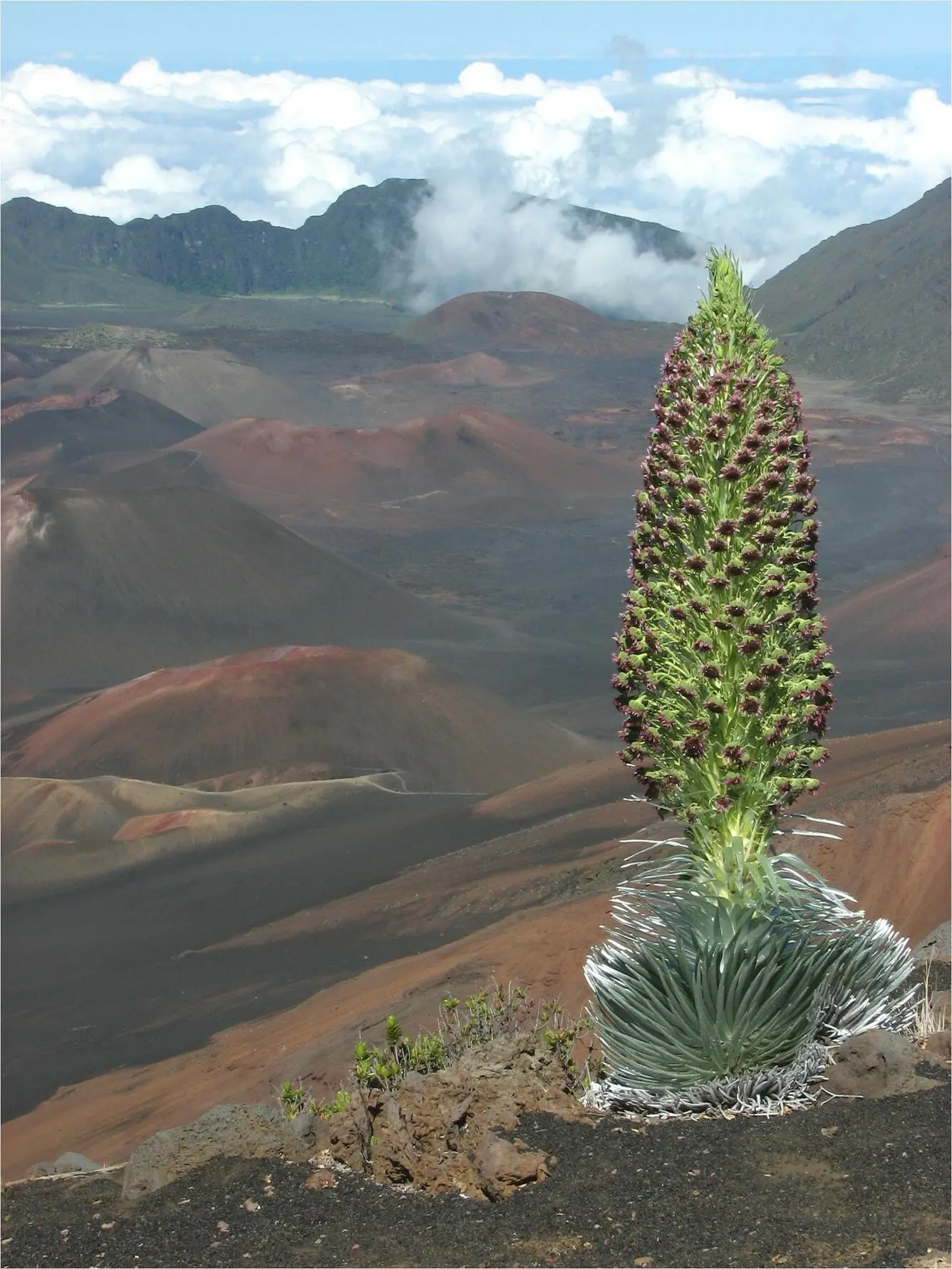
High on the slopes of Haleakalā—Maui’s massive dormant volcano—lies one of the rarest plants on Earth: the Haleakalā Silversword. This striking, otherworldly species grows naturally nowhere else in the world. Its shimmering silver leaves, dramatic spherical bloom, and survival in one of the harshest environments in Hawai‘i make it a botanical marvel and a treasured symbol of the islands’ natural heritage.
For travelers fascinated by Hawaiian ecology, rare plants, or the unique high-altitude landscapes of Haleakalā National Park, learning about the Haleakalā Silversword provides a deeper appreciation of Maui’s biodiversity and the importance of conservation.
What Is the Haleakalā Silversword?
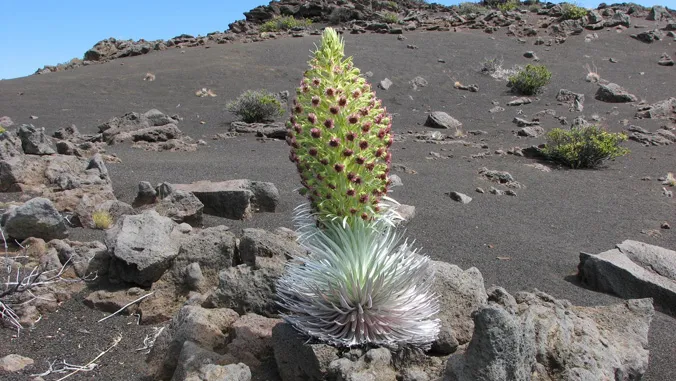
The Haleakalā Silversword (Argyroxiphium sandwicense subsp. macrocephalum) is a federally protected, extremely rare plant found exclusively on the summit region of Haleakalā. Its most recognizable features include:
- Narrow, sharp leaves coated with fine silver hairs
- A low-growing spherical shape during most of its life
- A tall flowering stalk that can reach 6+ feet
- Adaptations for cold, wind, and intense sunlight
The silver hairs serve a critical purpose: they reflect sunlight, reduce moisture loss, and protect the plant from freezing temperatures at night. At 9,000–10,000 feet above sea level, the summit of Haleakalā experiences intense UV exposure, dramatic winds, and temperature swings that can drop below freezing. Few plants survive here—but the Silversword has evolved to thrive.
Endemic to Haleakalā—Found Nowhere Else on Earth
When we say the Haleakalā Silversword is endemic, it means:
- It originated in this location
- It evolved here over thousands of years
- It is found naturally only on Haleakalā and nowhere else in the Hawaiian Islands or the world
This extreme geographic isolation makes it a true scientific and cultural treasure. The Silversword’s closest relatives include the Mauna Kea Silversword and various Dubautia species, all part of the “silversword alliance”—a remarkable example of adaptive radiation similar to Darwin’s finches.
But unlike many Hawaiian plants that occur across several islands, the Haleakalā Silversword is highly localized. Its entire natural population lives within a narrow zone inside Haleakalā National Park, making it incredibly vulnerable to:
- Climate change
- Habitat damage
- Invasive animals
- Human foot traffic
Thanks to conservation efforts, its numbers have increased dramatically from near-extinction, but it remains a threatened species.
The Silversword’s Once-in-a-Lifetime Bloom
One of the most fascinating facts about the Haleakalā Silversword is that it blooms only once in its lifetime, usually between 30 and 90 years of age.
When ready, it sends up a tall flower stalk, covered in hundreds of purplish-maroon blossoms. After releasing seeds, the plant dies—completing an incredible life cycle adapted to the extreme alpine desert.
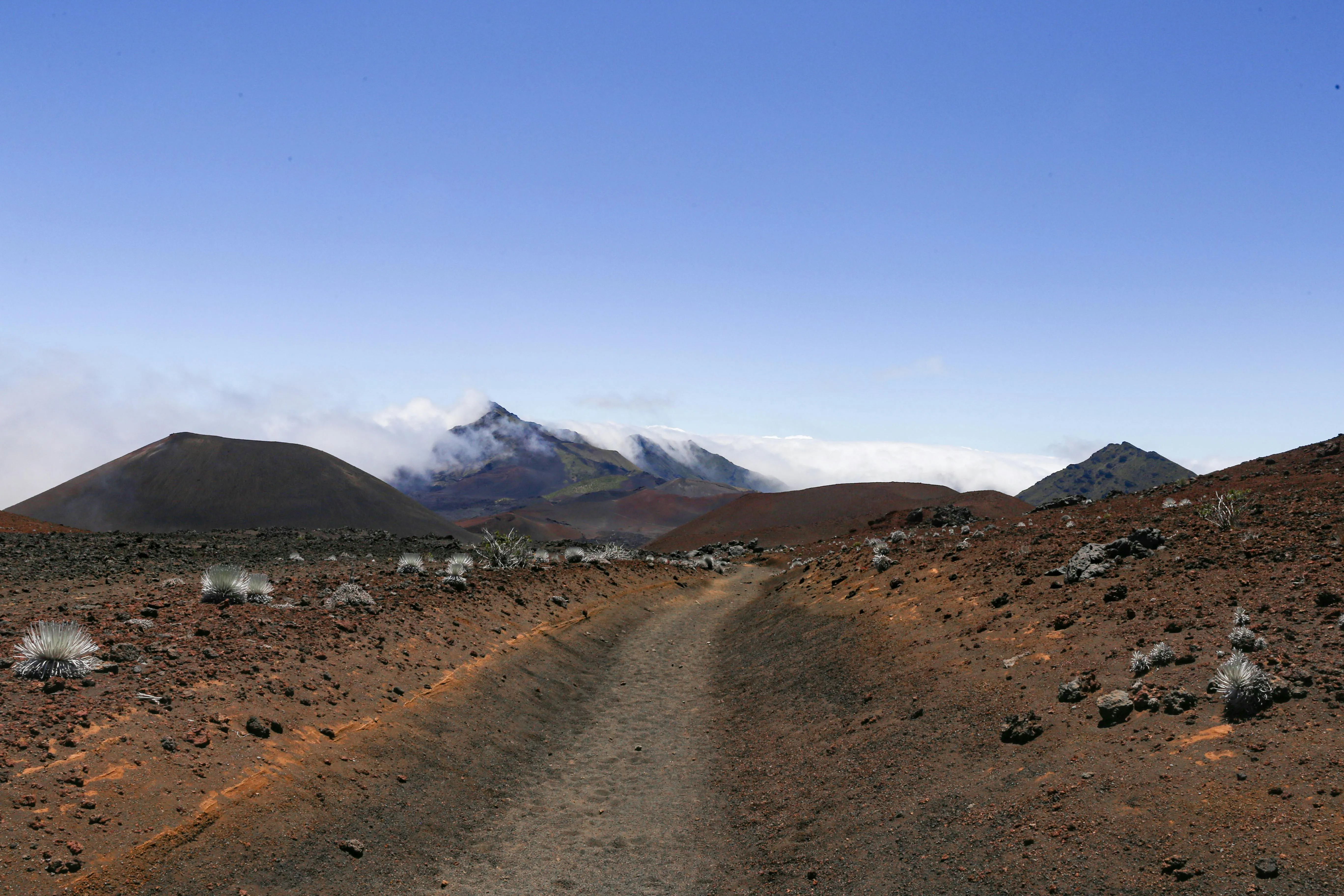
Visitors who witness a Silversword bloom often describe it as a once-in-a-lifetime experience. Still, blooming is unpredictable, and the majority of Silverswords you will see at the summit are younger, spherical rosettes close to the ground.
Why the Haleakalā Silversword Became Endangered
By the 1920s, the species was nearly wiped out due to:
- Grazing by cattle, goats, and invasive deer
- Souvenir picking by tourists
- Trail and road construction
- Habitat disruption
Restoration efforts began in the mid-1900s and expanded significantly after Haleakalā became a national park. Park rangers fenced off habitats, eradicated grazing animals, and launched propagation programs. Today, the population is recovering, but climate change remains a major threat. Warmer temperatures at the summit directly impact pollination success and seedling survival.
Where to See the Haleakalā Silversword
You can find the Haleakalā Silversword in the upper regions of Haleakalā National Park, primarily:
- Around the Haleakalā Visitor Center
- Near the summit overlooks
- Along the Sliding Sands (Keonehe‘ehe‘e) Trail
- Inside cinder cones and rocky alpine zones
When visiting, remember:
- Stay on marked trails
- Never touch or disturb the plants
- Respect fencing and restoration zones
Even a single footstep off the trail can damage fragile soil crusts that the Silversword depends on.
Helpful Links
- Haleakalā National Park (NPS): https://www.nps.gov/hale/index.htm
- Silversword Information – University of Hawai‘i: http://www.botany.hawaii.edu
- Center for Biological Diversity – Hawaiian Species: https://www.biologicaldiversity.org
Frequently Asked Questions
1. Why is the Haleakalā Silversword so rare?
Because it grows naturally only on the summit of one volcano—Haleakalā—it has an extremely limited range. Habitat loss, invasive species, and climate changes contribute to its rarity.
2. What does “endemic” mean when referring to the Haleakalā Silversword?
It means the plant exists only in one specific geographic location. The Haleakalā Silversword evolved on Haleakalā and occurs nowhere else on Earth.
3. How long does a Haleakalā Silversword live?
Most plants live between 30 and 90 years before blooming once and then dying. The bloom is part of a natural life cycle.
4. Can I see a Silversword bloom during my visit?
Blooming is unpredictable and varies each year. You may or may not see one in bloom—it’s considered extremely lucky to witness.
5. Is the Haleakalā Silversword endangered?
It is classified as Threatened under the Endangered Species Act. Conservation efforts have improved its population, but climate change remains a serious concern.
6. Where is the best place to see the Haleakalā Silversword?
Inside Haleakalā National Park, especially near the summit and along the Sliding Sands Trail. Always stay on designated paths.
7. Why are visitors told not to touch the Silversword?
Touching the leaves damages the protective silver hairs. Even minor harm can expose the plant to dehydration and temperature stress.
8. Can the Silversword grow elsewhere in Hawai‘i?
Not naturally. It requires the unique cold, dry, high-altitude conditions of Haleakalā to survive.
If you would like to read and learn more about interesting things in Hawaii! Check out our blog page here on our website!
or