
Table of Contents
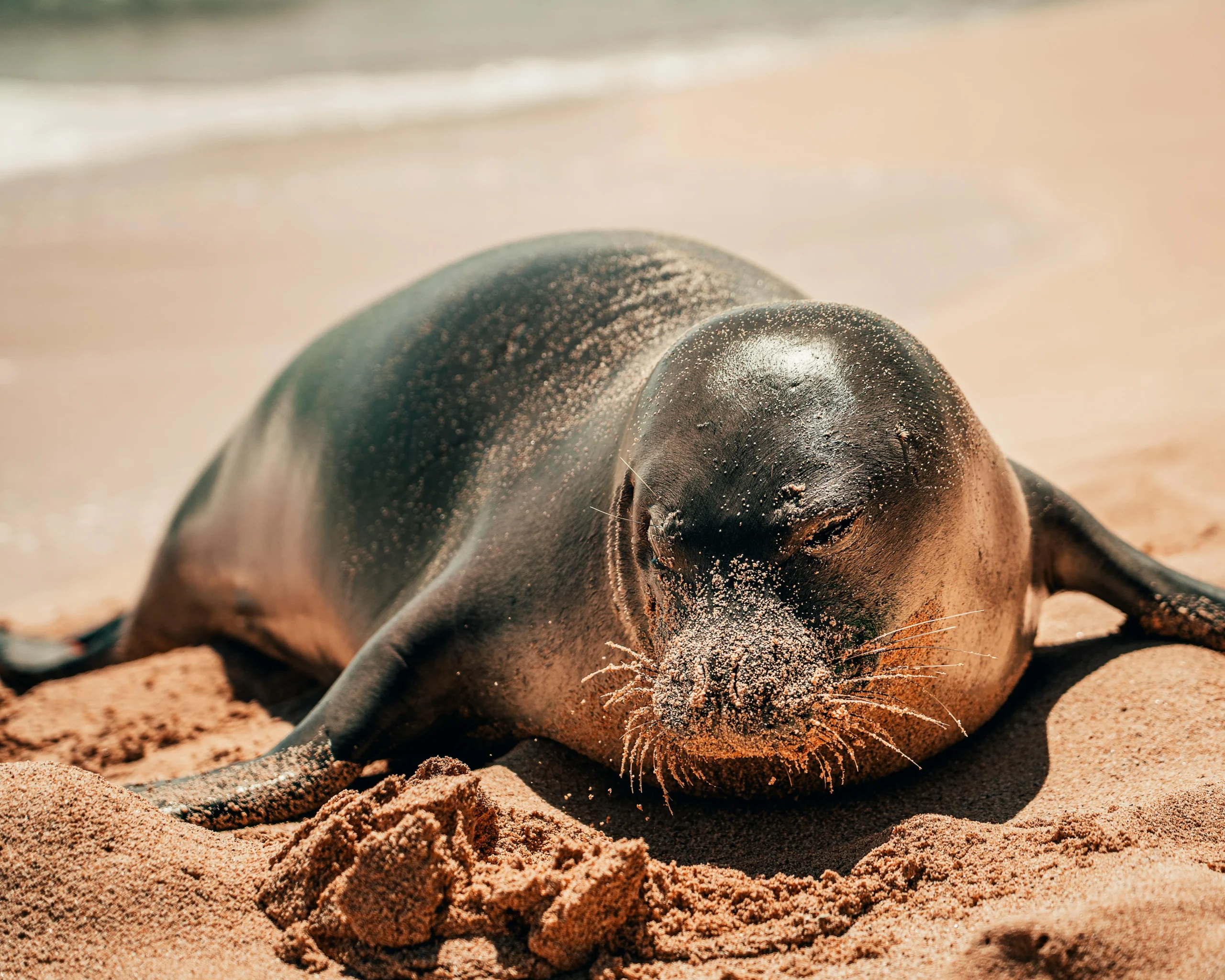
The Hawaiian monk seal is one of the rarest marine mammals on Earth—and one of Hawai‘i’s most treasured natural wonders. As one of the only seal species found in tropical waters, the Hawaiian monk seal holds a unique place in the islands’ ecological and cultural heritage. Today, this endangered species is a symbol of both resilience and the importance of protecting Hawai‘i’s native wildlife.
With fewer than 1,600 individuals remaining, the Hawaiian monk seal is an extraordinary example of how a species can evolve, survive, and adapt in the isolated environment of the Hawaiian archipelago. Its story is deeply intertwined with the islands themselves, and understanding this remarkable creature offers a glimpse into Hawai‘i’s fragile and irreplaceable natural world.
A Species Found Nowhere Else: What Makes the Hawaiian Monk Seal Endemic?
When a species is endemic, it means it exists naturally in only one geographic location—and for the Hawaiian monk seal, that location is the Hawaiian Islands. Scientists believe monk seals have lived in Hawai‘i for millions of years, evolving in isolation much like the islands’ famed honeycreeper birds and silversword plants.
Unlike other seal species that inhabit colder climates, the Hawaiian monk seal adapted to survive in warm, tropical waters. These adaptations include:
- A streamlined body and short, sleek fur suited for swimming in warm seas
- Diving ability reaching depths of 1,800+ feet to forage for eels, octopus, and fish
- A preference for sandy beaches and remote shorelines, especially in the Northwestern Hawaiian Islands
Their evolutionary journey is a testament to the power of isolation and the ecological uniqueness of Hawai‘i.
Where You Can See the Hawaiian Monk Seal
While the largest populations live in the remote Northwestern Hawaiian Islands, monk seals are increasingly seen around the main Hawaiian Islands—including O‘ahu, Maui, Kaua‘i, and the Big Island.
On Maui, monk seals are occasionally spotted resting on beaches or foraging near reefs. Some favored areas include:
- Makena and ʻĀhihi-Kīnaʻu Natural Area Reserve
- Kihei and Wailea beaches
- West Maui reef systems
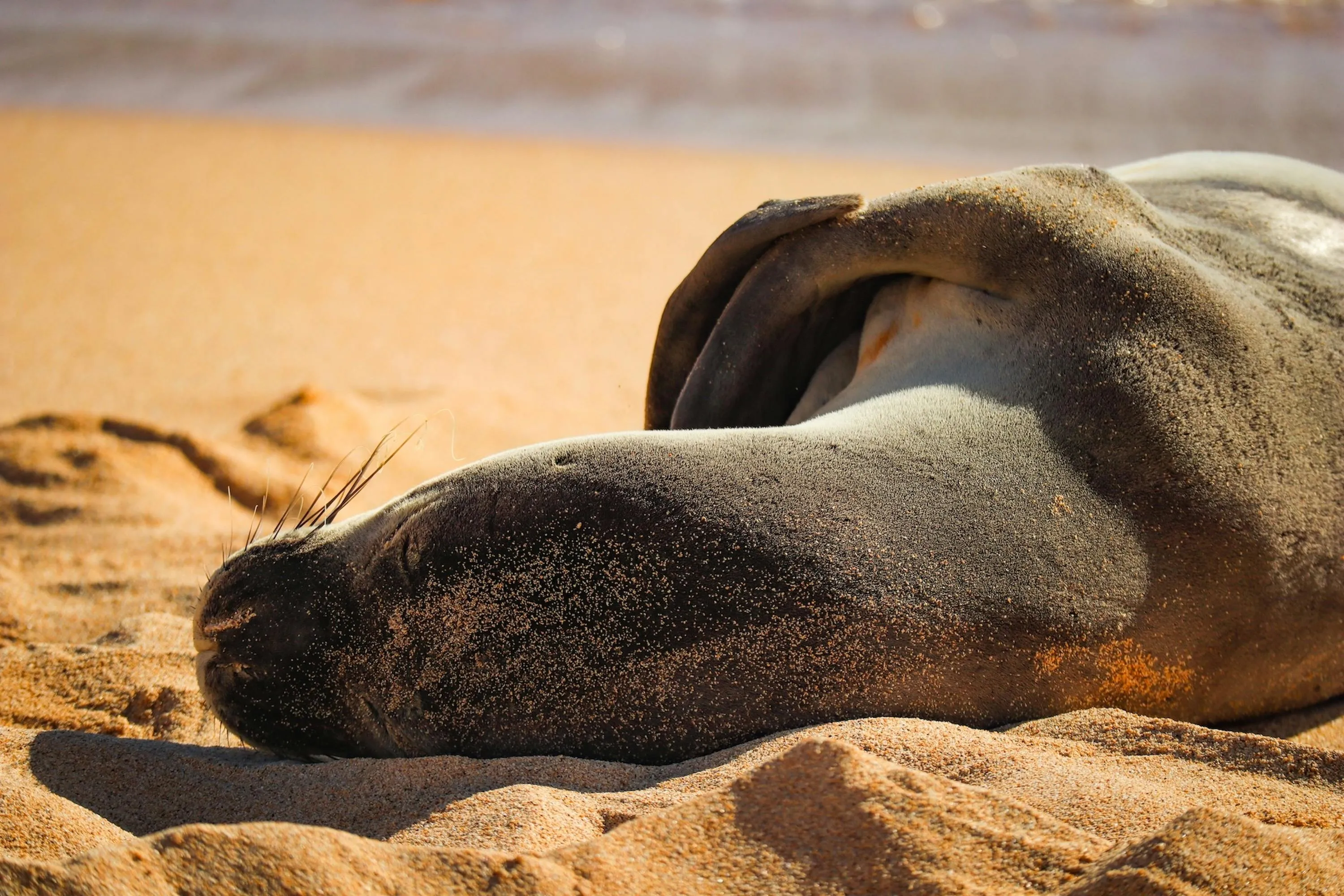
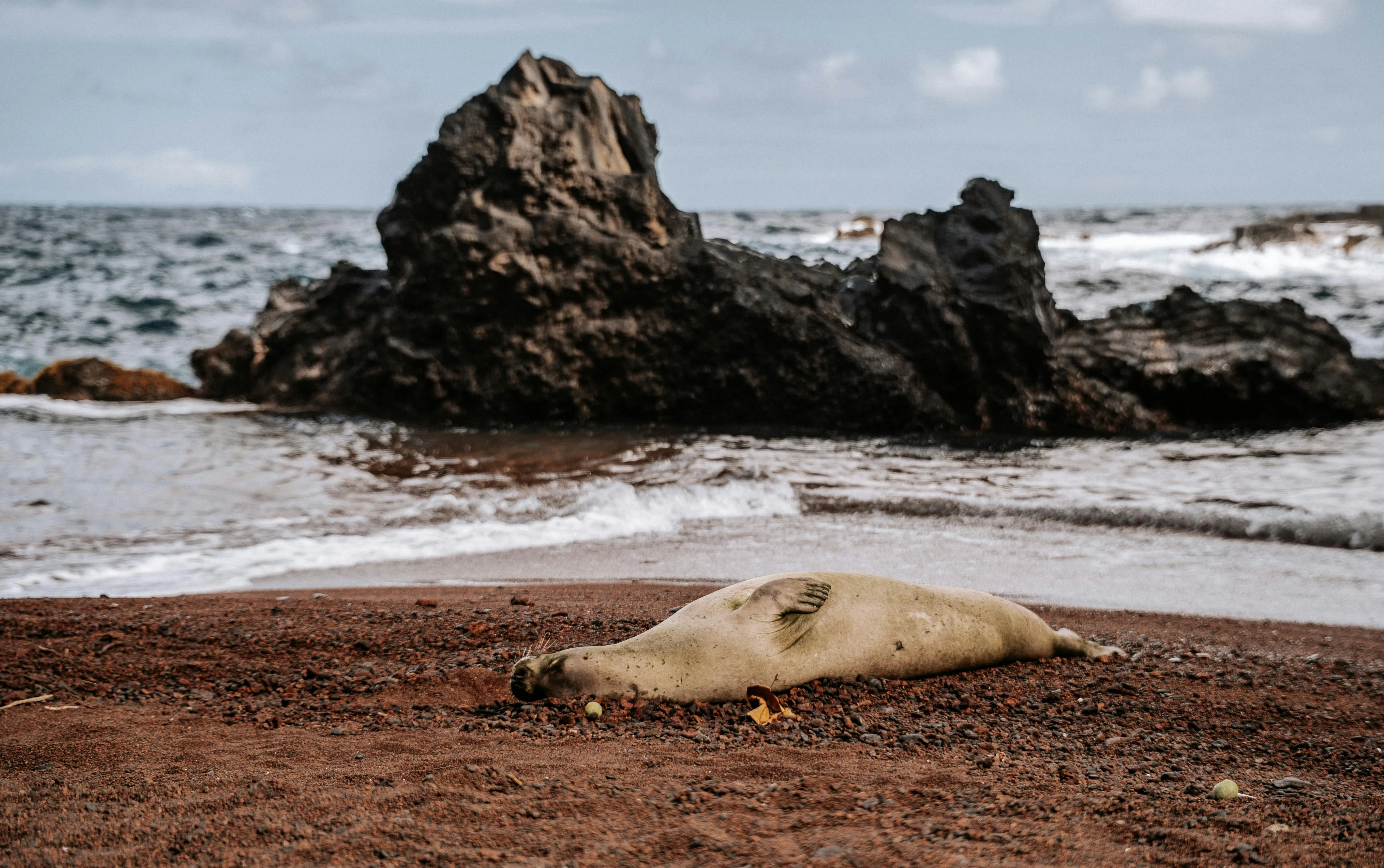
Visitors may see them hauled out on the sand, often sleeping for hours as they digest food or restore energy. Because these animals are easily stressed, protective zones are often placed around resting seals to keep them safe.
Conservation: Protecting an Endangered Hawaiian Icon
The Hawaiian monk seal is critically endangered due to several threats:
1. Human Disturbance
Approaching a monk seal too closely can cause stress, interrupt sleep, or separate mothers from pups. Local volunteers and conservation groups work daily to ensure seals have safe resting space.
2. Entanglement and Marine Debris
Fishing lines, nets, and plastic can injure or drown seals, especially juveniles.
3. Habitat Loss and Climate Change
Rising sea levels and more frequent storms erode Hawaiian beaches—important resting and pupping areas.
4. Predation
Galapagos sharks often target monk seal pups, especially in the Northwestern Hawaiian Islands.
Despite these challenges, ongoing conservation programs are making an impact. NOAA’s Hawaiian Monk Seal Research Program, along with local organizations, actively monitors populations, removes debris, rescues injured seals, and educates the public. In recent years, the population has shown signs of gradual recovery thanks to these efforts.
Cultural Significance of the Hawaiian Monk Seal
In Hawaiian culture, all life is connected through genealogy and stewardship. Native Hawaiian traditions view monk seals—known as ʻīlio-holo-i-ka-uaua, meaning “dog that runs in rough water”—as part of the islands’ natural family. Ancient Hawaiians respected the seal as a fellow inhabitant of the ocean world, and today many cultural practitioners advocate for its protection as a living symbol of Hawai‘i’s natural heritage.
How Visitors Can Help Protect the Hawaiian Monk Seal
Every traveler to Hawai‘i can play a role in protecting this rare species. Here’s how:
- Stay at least 50 feet away from resting seals (150 feet for mothers with pups).
- Never touch or feed wildlife.
- Avoid disturbing seals with loud noises, drones, or flash photography.
- Dispose of trash properly to keep beaches and oceans clean.
- Report sightings to local conservation hotlines to aid research efforts.
A respectful distance ensures seals can rest, breed, and survive without unnecessary stress.
Helpful Links
- NOAA Hawaiian Monk Seal Program: https://www.fisheries.noaa.gov/species/hawaiian-monk-seal
- Hawai‘i Marine Animal Response (HMAR): https://h-mar.org/
- National Marine Sanctuary Foundation: https://marinesanctuary.org/
Frequently Asked Questions About the Hawaiian Monk Seal
1. Why is the Hawaiian monk seal considered endemic?
Because it evolved and lives naturally only in the Hawaiian Islands. No other place on Earth is home to this species, making it one of Hawai‘i’s rarest native animals.
2. How many Hawaiian monk seals are left?
There are roughly 1,500–1,600 individuals remaining. Thanks to conservation programs, the population has begun to stabilize.
3. Where is the best place to see a Hawaiian monk seal?
Seals are most common in the Northwestern Hawaiian Islands, but visitors to Maui, O‘ahu, and Kaua‘i frequently spot them resting on beaches or swimming nearshore.
4. Are Hawaiian monk seals dangerous?
They are generally calm and avoid humans, but they are powerful wild animals. Keeping a safe distance protects both you and the seal.
5. Why do monk seals come onto the beach?
They haul out to rest, digest food, warm up, and sometimes give birth. This behavior is normal and essential to their survival.
6. How can tourists help protect the Hawaiian monk seal?
Keep distance, respect marked zones, avoid feeding wildlife, keep beaches clean, and report sightings to conservation groups.
If you would like to read and learn more about interesting things in Hawaii! Check out our blog page here on our website!
or