
Table of Contents
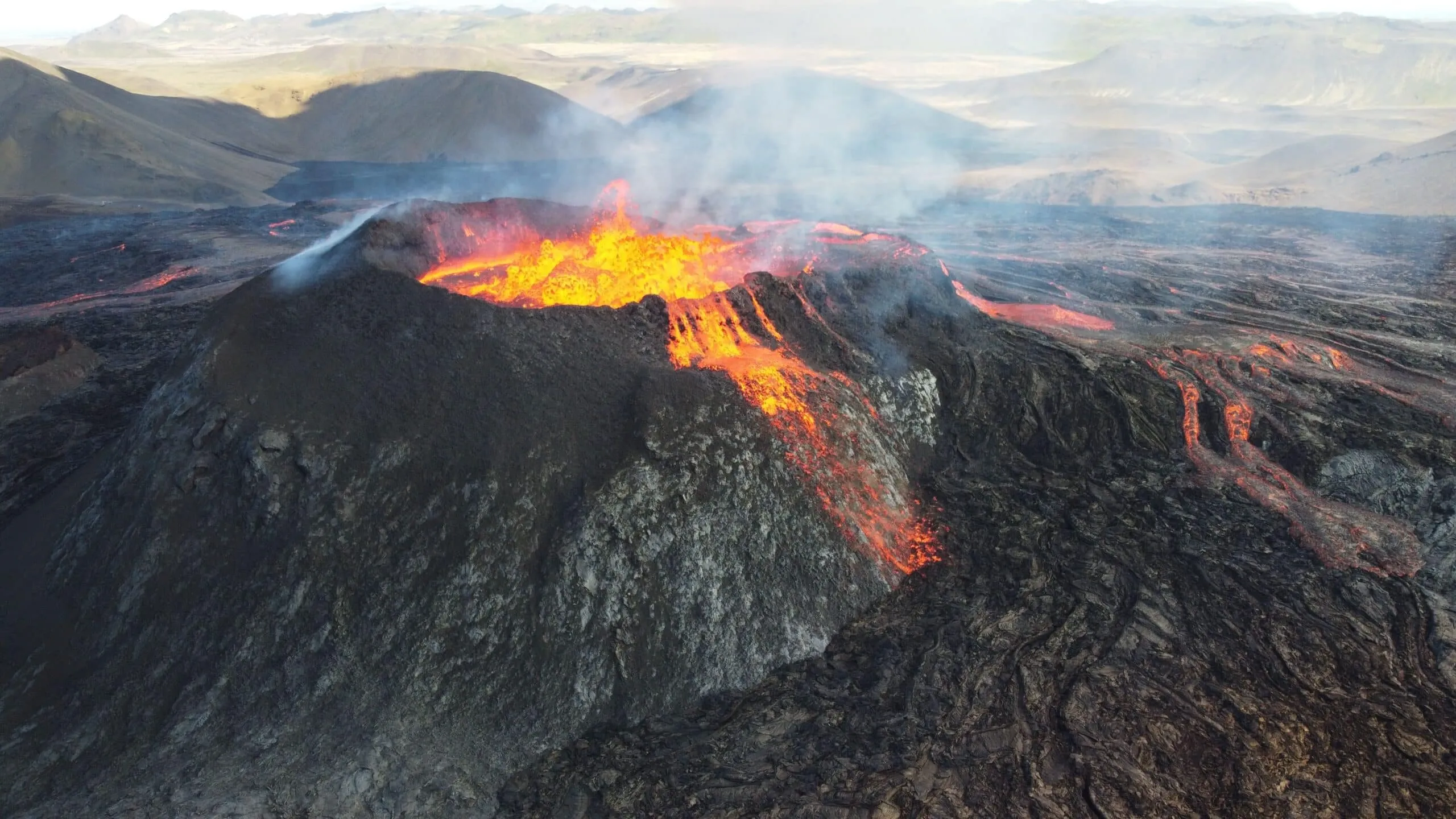
When people think of the tallest mountain on Earth, Mount Everest immediately comes to mind. Its snow-capped peak, towering 29,032 feet (8,849 meters) above sea level, has long symbolized the ultimate challenge for climbers and adventurers. Yet while Everest holds the title of the highest point above sea level, it is not technically the tallest mountain on Earth. That distinction belongs to Hawaii’s mighty volcanoes — particularly Mauna Kea and Mauna Loa — whose hidden bases lie deep beneath the Pacific Ocean.
These Hawaiian giants reveal that the planet’s most colossal peaks aren’t always the ones we see on maps, but the ones that rise unseen from the ocean floor.
The Hidden Heights Beneath the Pacific
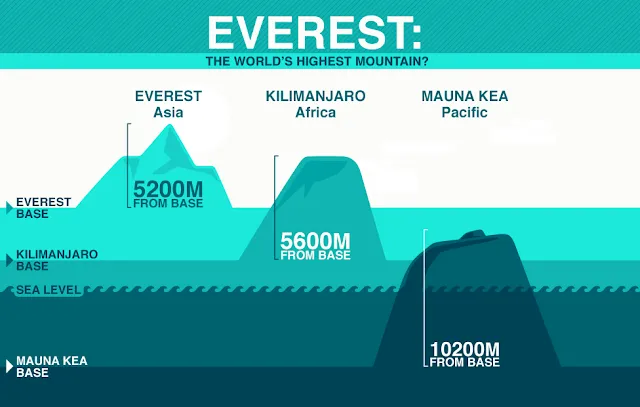
Mount Everest sits atop the Himalayas, the result of powerful continental collisions. Its base starts at roughly 17,000 feet (5,200 meters) above sea level on the Tibetan Plateau. Impressive, yes — but Everest’s measurement doesn’t include anything below sea level, since it rises from high ground rather than from the Earth’s crust beneath an ocean basin.
Hawaii’s volcanoes, in contrast, begin on the deep ocean floor — about 19,700 feet (6,000 meters) below the surface of the Pacific. From that submerged foundation, Mauna Kea rises more than 33,500 feet (10,210 meters) from base to summit, making it taller than Mount Everest by nearly a full mile.
Let’s compare the numbers:
- Mount Everest: 29,032 ft (8,849 m) above sea level
- Mauna Kea: 33,500 ft (10,210 m) from base to summit
- Mauna Loa: 32,800 ft (10,000 m) from base to summit
When measured from base to tip, Mauna Kea is the tallest mountain on Earth, even though only about 40% of it is visible above water.
Mauna Kea: The True Giant of the World
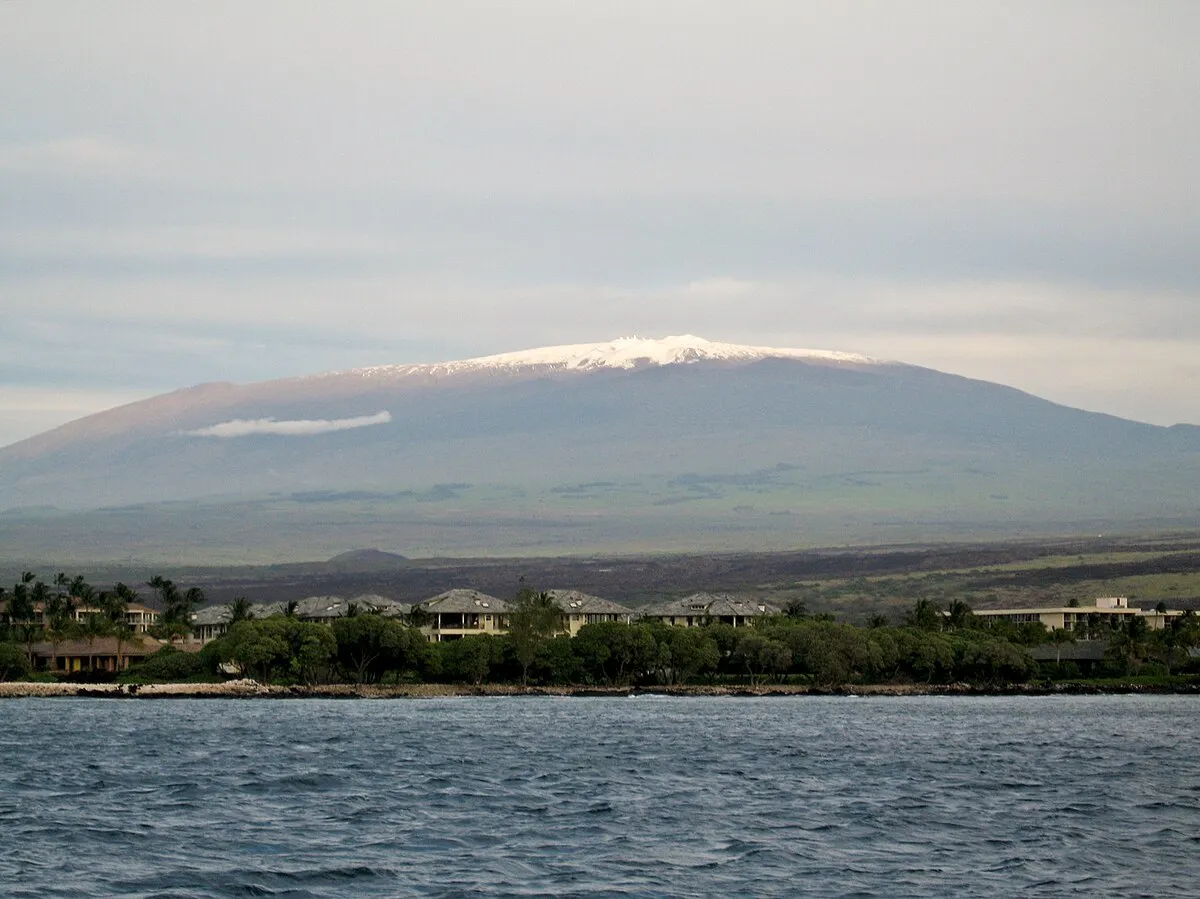
Rising quietly from the Big Island of Hawaii, Mauna Kea may look unassuming compared to the jagged peaks of the Himalayas. But beneath the waves lies an immense volcanic structure — a mountain built by hundreds of thousands of years of lava flows, layer upon layer of cooled basalt that forms the classic shield shape of Hawaiian volcanoes.
Standing 13,803 feet (4,207 meters) above sea level, Mauna Kea’s visible portion is often capped with snow during winter months, making it one of the few places in Hawaii where you can ski. From its submerged base on the ocean floor to its summit, however, it stretches over six miles high, far surpassing Mount Everest in total height.
Today, Mauna Kea is dormant — its last eruption occurred about 4,500 years ago. Its summit now hosts some of the world’s most advanced astronomical observatories, including the W. M. Keck Observatory and Subaru Telescope, where scientists study galaxies billions of light-years away.
The combination of elevation, stable atmosphere, and minimal light pollution makes Mauna Kea one of the clearest viewing points on the planet — a mountain that connects Earth and sky in more ways than one.
Mauna Loa: The World’s Largest Volcano
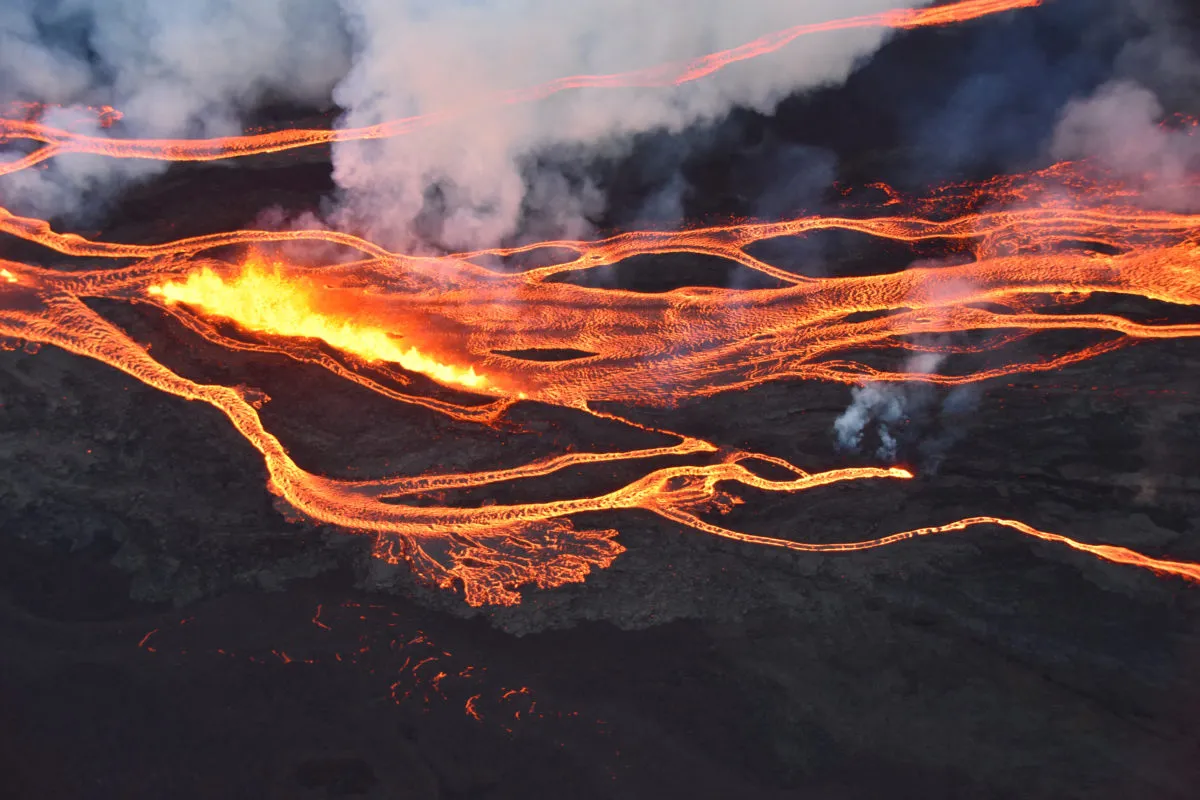
While Mauna Kea earns the title of tallest, Mauna Loa is the largest volcano on Earth by volume. It covers more than 5,200 square kilometers (2,035 square miles), accounting for nearly half of Hawaii’s Big Island. Its summit stands 13,681 feet (4,170 meters) above sea level, and it rises roughly 32,800 feet (10,000 meters) from its seafloor base.
Mauna Loa is still active, with its most recent eruption occurring in November 2022, creating awe-inspiring lava flows visible from miles away. Scientists closely monitor Mauna Loa through the Hawaiian Volcano Observatory (HVO), as its eruptions can shape landscapes and ecosystems across the island.
Interestingly, Mauna Loa’s immense weight has caused the oceanic crust beneath it to sink several kilometers into the mantle. If this subsidence were corrected, Mauna Loa’s true height would be even greater — another reminder of nature’s incredible forces at work beneath Hawaii.
Redefining What “Tallest” Really Means
So why does Mount Everest remain the household name for “tallest mountain”? It all comes down to measurement standards. Everest is the highest point above sea level, but when considering total height from base to summit, Hawaii’s volcanoes claim the crown.
There are three main ways scientists define a mountain’s height:
- Above sea level: Mount Everest wins.
- Base to summit (total vertical height): Mauna Kea wins.
- From Earth’s center: Chimborazo in Ecuador technically wins due to Earth’s equatorial bulge.
By the second measure — base to summit — Hawaii’s volcanoes are the true champions, demonstrating that much of Earth’s beauty lies beneath the waves, unseen and often unappreciated.
A Living Chain of Fire
Hawaii’s towering volcanoes exist because of a geologic hotspot — a plume of molten magma rising from deep within Earth’s mantle. As the Pacific Plate slowly drifts northwestward, the hotspot remains fixed, forming a chain of volcanic islands and seamounts known as the Hawaiian-Emperor Seamount Chain.
This underwater mountain range extends over 3,600 miles (5,800 kilometers) across the Pacific, tracing the plate’s movement over millions of years. New volcanoes continue to form over the hotspot, including Lōʻihi Seamount, which is currently growing beneath the ocean southeast of the Big Island. In tens of thousands of years, Lōʻihi will emerge above the surface — the next Hawaiian island in the making.
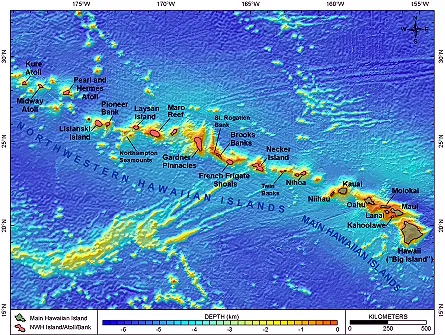
While Mount Everest reigns as the world’s highest peak above sea level, Hawaii’s Mauna Kea and Mauna Loa are the true giants of our planet. From their hidden oceanic roots to their volcanic summits touching the clouds, these natural marvels stand as reminders that the greatest heights aren’t always visible to the naked eye.
Hawaii’s volcanoes not only redefine what it means to be tall but also showcase the incredible power and beauty of Earth’s geology — where land, sea, and sky meet in one breathtaking island chain.
Learn More
- US Geological Survey – Hawaiian Volcano Observatory
- NOAA Ocean Exploration: Hawaiian Volcanoes
- Mauna Kea Observatories
- Hawai‘i Volcanoes National Park
- National Geographic: Mauna Kea – The Tallest Mountain on Earth
Frequently Asked Questions
1. Why isn’t Mount Everest actually the tallest mountain on Earth?
Mount Everest is the highest point above sea level at 29,032 feet, but it’s not the tallest mountain when measured from base to summit. Hawaii’s Mauna Kea rises over 33,500 feet from the ocean floor to its peak — nearly a mile taller than Everest when you include the part hidden beneath the Pacific Ocean.
2. How do Hawaii’s volcanoes rise from the ocean floor?
Unlike Everest, which begins on high land in the Himalayas, Hawaii’s volcanoes start deep beneath the Pacific — about 19,700 feet below sea level. From that submerged base, Mauna Kea and Mauna Loa climb thousands of feet above the surface, revealing that the planet’s greatest mountains lie mostly unseen beneath the waves.
3. What makes Mauna Kea the tallest mountain on Earth?
Mauna Kea’s total height — 33,500 feet from its oceanic base to its summit — makes it the tallest mountain on Earth. Though only 13,803 feet are visible above sea level, its submerged foundation adds enormous depth. Today, it’s home to world-renowned observatories that take advantage of its clear, high-altitude skies to study distant galaxies.
4. How is Mauna Loa different from Mauna Kea?
While Mauna Kea is the tallest mountain, Mauna Loa is the largest volcano on Earth by volume. It covers nearly half of Hawaii’s Big Island and rises about 32,800 feet from base to summit. Mauna Loa remains active — its most recent eruption in 2022 sent glowing lava flows across the island, reminding everyone that Hawaii’s volcanic forces are still alive and powerful.
5. Why does it matter how we measure “tallest”?
“Tallest” can mean different things depending on the measurement:
- Above sea level: Mount Everest is highest.
- Base to summit: Mauna Kea wins.
- From Earth’s center: Ecuador’s Chimborazo peaks slightly farther out due to Earth’s bulge at the equator.
When measured by total vertical height, Mauna Kea and Mauna Loa redefine what it truly means to be the tallest.
6. How were Hawaii’s volcanoes formed?
Hawaii’s towering peaks were born from a hotspot — a fixed plume of magma rising through Earth’s mantle. As the Pacific Plate drifts northwest, new volcanoes form over this hotspot, creating the 3,600-mile-long Hawaiian-Emperor Seamount Chain. The youngest volcano, Lōʻihi Seamount, is still growing underwater and will one day emerge as the next Hawaiian island
7. What do Hawaii’s volcanoes teach us about Earth’s power?
Mauna Kea and Mauna Loa reveal how Earth’s most impressive mountains aren’t always those visible above the surface. Their immense size, ancient lava layers, and ongoing volcanic activity showcase the deep connection between land, sea, and sky — and remind us that much of our planet’s beauty lies hidden beneath the ocean.
If you would like to read and learn more about interesting things in Hawaii! Check out our blog page here on our website!
or