
Table of Contents
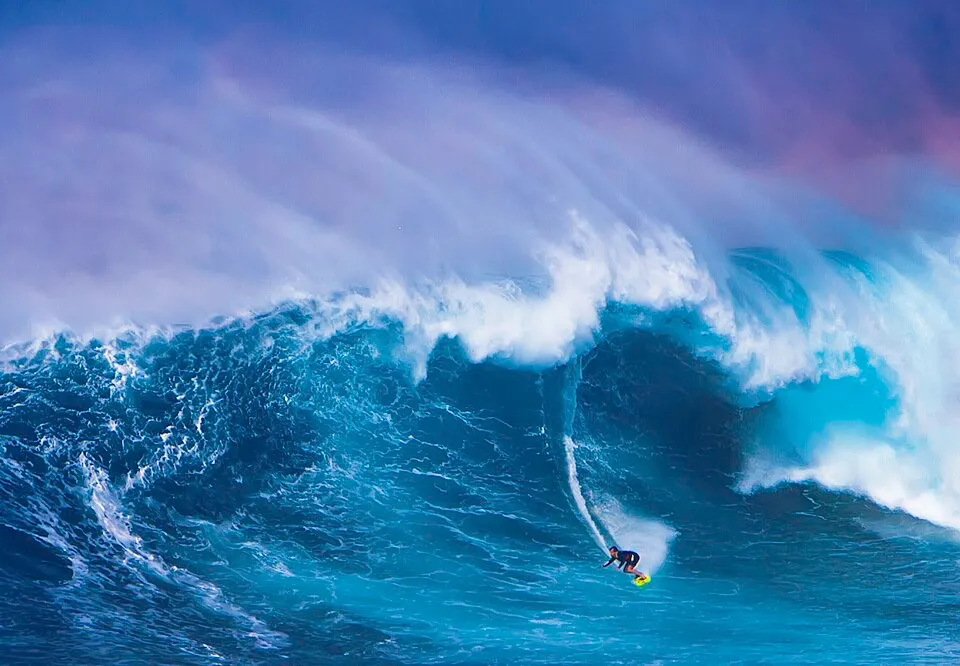
The legendary northshore break called Pe’ahi, or known for its more notorious name Jaws, is Maui’s most iconic and powerful surf break, renowned for its incredibly massive waves and exhilarating conditions. Consistently recognized at the prestigious Big Wave Awards, Jaws has earned the title of the most winning break more times than any other location. Jaws or Pe’ahi can be located in the beginning of the iconic Road to Hana. During the winter time and when the waves are firing, elite surfers from all around the globe are just given a few days notice to head out and converge on this legendary spot, while spectators gather in awe to witness the spectacle of natures raw power.
While the name “Jaws” is the most widely recognized name for this iconic surf break, locals knew it as the name “Pe’ahi” which has gained popularity in recent years, particularly with surfers seeking to honor and connect with the local Hawaiian Culture. “Pe’ahi” refers to the much larger ahupua’a (land division) in the area. Hawaiian Kupuna Leslie Kuloloio shares that the traditional Hawaiian name for this spot is “Ke Kai ‘o Waitakulu”, which translates into “The Teary Eye”. This particular name reflects on the deep cultural significance of the location, offering a richer perspective on the surf breaks history and meaning.
Discovery of a Mighty Wave
Around the early 1990s, surfers would then make some of their first attempts to ride Jaws during Maui’s winter swells. Winter is around the time where the pacific will deliver its most intense waves and powerful swells. During this time it was nearly impossible to ride or paddling into these waves as the widely known “tow-in surfing” method wasnt utilized yet; however, the popularization of this “tow-in technique”, allowed surfers the chance to face waves of this magnitude which was never before seen. David Kalama, Laird Hamilton, and Darick Doener would become pioneering figures in this evolution into big wave surfing, and were known for famously riding some of the first monster waves at Jaws. This would then help to solidify the legendary status and world-wide appeal of big-wave surfing.
The Rise of Big-Wave Surfing: Jaws
By the late 1990s and early 2000s, Peʻahi (Jaws) had firmly cemented its status as the epicenter of big-wave surfing. Known for its towering heights, remarkable speed, and glassy barrels, Jaws presented a new level of challenge for surfers. Its steep, barreling waves broke with such precision and power that it quickly distinguished itself from other famous big-wave spots like Waimea Bay on Oahu or Mavericks in California. Unlike these other locations, where waves can be more unpredictable, Jaws' consistent, powerful breaks pushed the limits of what was possible in the sport, drawing surfers eager to test their skill and bravery on one of the most extreme waves on Earth.
Historically, one of the key factors that enabled surfers to tackle Jaws' massive waves was the introduction of tow-in surfing. This technique involves surfers being towed into the wave by a Jet Ski, allowing them to reach the necessary speed and angle to catch waves that would otherwise be impossible to paddle into. In the early days of big-wave surfing at Jaws, tow-in was essential for safely navigating the giant swells. Without this method, many of the waves at Peʻahi would have been out of reach for even the most experienced surfers.
However, in recent years, the evolution of surfboard technology and techniques has led to a shift in how surfers approach Jaws. A new generation of athletes is now attempting to paddle into these colossal waves on their own, eschewing the tow-in method in favor of relying on their raw skill and strength. This shift is a testament to the growing capabilities of modern surfboards, which are designed to handle the massive forces of waves like those at Jaws. Lighter, more maneuverable boards, along with improved wetsuits and safety gear, have enabled surfers to take on this once tow-in-exclusive break using traditional paddle techniques.
This shift not only speaks to the rapid advancements in surf technology but also reflects a broader evolution in the culture of big-wave surfing. As surfers push the boundaries of what’s possible at Peʻahi, Jaws remains a proving ground where both technology and technique continue to evolve, and where the spirit of adventure and challenge is always front and center. The continued progress at Jaws serves as a reminder that big-wave surfing, much like the waves themselves, is constantly in motion—always changing, always challenging, and always inspiring those who are brave enough to take it on.
Competitions and Global Attention
In 2016, the World Surf League introduced the Peʻahi Challenge, a major big-wave competition that cemented Jaws as the ultimate proving ground for surfers. The event brought together the world’s top surfers to face Peʻahi’s massive waves in a competitive setting, showcasing the raw power and precision required to ride one of the most challenging surf breaks on Earth. Not only did the competition elevate Jaws’ iconic status, but it also highlighted the exceptional skill and bravery needed to conquer its towering barrels.
Despite its allure, Jaws remains an extremely dangerous wave, known for its colossal wipeouts and broken boards. Surfers must exercise precision and mental fortitude to navigate its powerful swells, making it a high-risk endeavor even for seasoned professionals. Over the years, advancements in safety gear—such as enhanced vests, helmets, and the use of tow-in jet skis—have made it possible for surfers to take on these massive waves with more protection. Still, Jaws continues to push the limits of big-wave surfing, testing both the physical and psychological resilience of those who dare to ride its waters.
Environmental and Cultural Significance
Peʻahi (Jaws) is not only a world-renowned surf destination, but it also holds profound cultural and environmental significance. Located on Maui’s rugged north shore, Jaws is deeply intertwined with Hawaiian traditions, where the ocean, or Kai, is revered. For many surfers, riding the waves at Jaws is a spiritual connection to the sea—honoring both its immense power and the respect it commands within Hawaiian culture.
However, as Jaws attracts more attention from surfers and tourists, environmental concerns have risen. The popularity of the spot brings with it the need for sustainable practices to protect the coastal ecosystems. Preserving the marine life and natural beauty of the area is crucial, as increased traffic threatens to disrupt the delicate balance of this pristine environment.
The history of Jaws is also integral to the evolution of big-wave surfing. Once a near-mythical break, it has become an iconic symbol in extreme sports. Technological advancements, such as tow-in surfing, jet skis, and improved safety gear, have made it possible to ride waves of unprecedented size and power. Yet, Jaws remains a place that challenges even the most experienced surfers, testing both their physical and mental limits.
As a natural wonder and a test of human endurance, Jaws continues to inspire surfers from around the globe. Its awe-inspiring waves not only push the boundaries of big-wave surfing but also serve as a reminder of the importance of respecting and protecting the ocean that makes such feats possible. Whether admired from the shore or conquered by the bravest athletes, Jaws stands as a testament to the spirit of adventure and the enduring bond between surfers and the sea.
Helpful Links
- Surfline – Peʻahi (Jaws) Surf Report & Forecast — Check current and forecasted surf conditions at Peʻahi.
- GoHawaii – Surfing on Maui — Learn more about Maui’s famous surf breaks and surfing culture.
- Maui County Ocean Safety — Official ocean safety information and guidance for Maui.
- NorthShore Zipline Maui Blog — Explore more guides to Maui’s North Shore, surfing, beaches, history, and outdoor adventures.
Frequently Asked Questions About Jaws (Peʻahi) Maui
What is Jaws in Maui?
Jaws is the nickname commonly used for Peʻahi, Maui’s legendary big-wave surf break on the island’s North Shore. During powerful winter swells, Peʻahi can produce enormous, fast-moving waves that attract some of the world’s most accomplished big-wave surfers.
Where is Jaws located in Maui?
Jaws is located at Peʻahi along Maui’s rugged North Shore, east of Hoʻokipa and near Haʻikū. The surf break lies offshore below coastal bluffs and is associated with the beginning portion of the Hāna Highway region.
Why is Peʻahi called Jaws?
The nickname “Jaws” became associated with the surf break because of how dramatically conditions can change when a major swell arrives. What may appear relatively quiet can transform into an extremely powerful big-wave environment.
Is Jaws and Peʻahi the same place?
Jaws refers to the famous big-wave surf break at Peʻahi. Peʻahi is the Hawaiian place name associated with the surrounding area, while “Jaws” became the internationally recognized nickname for the surf break.
How big do the waves at Jaws get?
During major North Pacific swells, Jaws can produce exceptionally large waves with faces reaching several stories high. Wave size varies considerably depending on swell height, period, direction, wind, and other ocean conditions.
Why do the waves at Jaws get so big?
Peʻahi is a deep-water reef break that responds to powerful North Pacific swells. When large, long-period swell energy reaches the underwater reef, the changing water depth forces that energy upward, creating the enormous waves that have made Jaws famous.
When is the best time of year to see Jaws breaking?
Winter is the primary big-wave season at Jaws. Powerful North Pacific storms can send large north and northwest swells toward Maui, particularly from roughly November through March. However, Jaws does not produce enormous waves every day during winter.
Does Jaws have huge waves every day?
No. Jaws requires a significant swell with the right direction and other favorable conditions. On many days, Peʻahi looks completely different from the massive waves shown in famous photographs and surfing videos.
How do you know when Jaws is going to break?
Surfers and spectators monitor surf forecasts, swell height, swell period, swell direction, wind, and offshore buoy information. Major Jaws events can sometimes be anticipated several days ahead as powerful North Pacific storms develop.
Can beginners surf Jaws?
No. Jaws is an extreme big-wave surf break appropriate only for highly experienced big-wave surfers with specialized training, equipment, and safety support. Even professional surfers treat Peʻahi with tremendous caution because of its wave size, speed, reef, and powerful currents.
Who are some famous surfers who have surfed Jaws?
Peʻahi has been associated with many influential big-wave surfers. Early tow-in pioneers such as Laird Hamilton, Darrick Doerner, Buzzy Kerbox, and Dave Kalama helped establish the break’s reputation, while later generations of elite surfers continued pushing the limits of what could be ridden there.
What is tow-in surfing?
Tow-in surfing uses a personal watercraft to pull a surfer into a large wave at higher speed than the surfer could typically achieve by paddling. The technique became closely associated with Jaws because it allowed surfers to catch waves once considered too large or fast to enter using traditional paddling methods.
Was tow-in surfing invented at Jaws?
Jaws played an enormously important role in the development and popularization of modern tow-in surfing. During the 1990s, a group of Maui watermen experimented with personal watercraft, foot straps, specialized boards, and other techniques that allowed them to tackle increasingly large waves at Peʻahi.
Do surfers still get towed into Jaws?
Yes, tow-in surfing remains part of big-wave surfing at Peʻahi, particularly under extreme conditions. However, advances in surfboards, training, safety equipment, and big-wave technique have also allowed elite surfers to paddle into waves at Jaws that were once considered impossible to catch without assistance.
Why is Jaws so important to surfing history?
Jaws helped redefine what surfers believed was possible on extremely large waves. The experimentation that occurred at Peʻahi contributed to advances in tow-in surfing, surfboard design, water safety, rescue techniques, and eventually modern paddle-in big-wave surfing.
What makes Jaws different from other big-wave surf spots?
Peʻahi is famous for combining enormous size with remarkable speed and wave shape. Its ability to produce huge, powerful waves with rideable faces and barrels has helped establish it as one of the most recognizable big-wave surfing locations in the world.
Is Jaws one of the biggest waves in the world?
Jaws is widely regarded as one of the world’s premier big-wave surf breaks. Other famous giant-wave locations include Nazaré in Portugal, Mavericks in California, and Waimea Bay on Oʻahu, but Peʻahi remains particularly famous for the combination of size, speed, shape, and surfability of its waves.
Can you watch surfers at Jaws from land?
When Jaws is breaking, spectators sometimes watch the action from the elevated bluffs around Peʻahi. However, the surrounding terrain is rugged and undeveloped, and access conditions can be difficult. Visitors should respect private property, posted restrictions, road conditions, and cliff hazards.
Is it safe to watch Jaws in person?
Watching from land can still involve hazards. The Peʻahi coastline includes steep cliffs, rough terrain, exposure to sun and wind, and potentially difficult road conditions. Spectators should stay well away from cliff edges and obey all signs, barriers, and access restrictions.
Can you swim at Jaws?
Jaws should not be treated as a recreational swimming area, especially when a significant swell is present. The break is known for extremely powerful waves and currents. Visitors looking to swim should choose an appropriate beach and check current ocean conditions.
How fast do surfers go at Jaws?
Big-wave surfers at Peʻahi can reach very high speeds because of the steep faces and tremendous energy of the waves. Exact speeds vary depending on wave size, the surfer’s line, equipment, and conditions.
What kind of surfboards are used at Jaws?
Big-wave surfers use specialized equipment designed for speed, stability, and control. Paddle-in surfers may use long big-wave boards commonly called “guns,” while tow-in surfing has historically used smaller specialized boards equipped with foot straps.
Why do surfers wear inflatable vests at Jaws?
Big-wave surfers may use specialized inflatable safety vests to help them return toward the surface following a severe wipeout. These systems are only one component of a much larger safety approach that can include helmets, personal watercraft, rescue teams, extensive training, and communication between surfers.
Is Jaws part of the Road to Hāna?
Peʻahi is located along Maui’s North Shore near the early portion of the Hāna Highway corridor. However, Jaws is not a developed Road to Hāna attraction with a conventional parking lot, visitor center, or easily accessible roadside viewpoint.
Is Jaws worth seeing if you visit Maui in winter?
If a major swell arrives during your trip, seeing Jaws can be an extraordinary experience. Peʻahi showcases the raw power of Maui’s winter surf and the abilities of elite big-wave surfers. However, because the wave requires specific conditions, visitors should never assume Jaws will be breaking simply because they are visiting during winter.
What other famous surf spots are near Jaws?
Maui’s North Shore contains several internationally known surf locations. Hoʻokipa Beach is famous for surfing and windsurfing, while farther west, Honolua Bay can produce excellent surf during winter swells. Together, these locations have helped establish Maui as an important destination in global surfing culture.
What else can you do near Jaws on Maui’s North Shore?
Visitors exploring Maui’s North Shore can experience Pāʻia, Hoʻokipa, Haʻikū, local restaurants, beaches, scenic drives, waterfalls, and outdoor adventures. The area is also home to NorthShore Zipline in Haʻikū, making it easy to combine North Shore sightseeing with another Maui adventure.
If you would like to read and learn more about interesting things in Hawaii! Check out our blog page here on our website!
or
Image Credits:
Hero:
Photo: Margaret Hallahan, via Wikimedia Commons. Licensed under Creative Commons Attribution-ShareAlike 4.0 International (CC BY-SA 4.0).