
Table of Contents
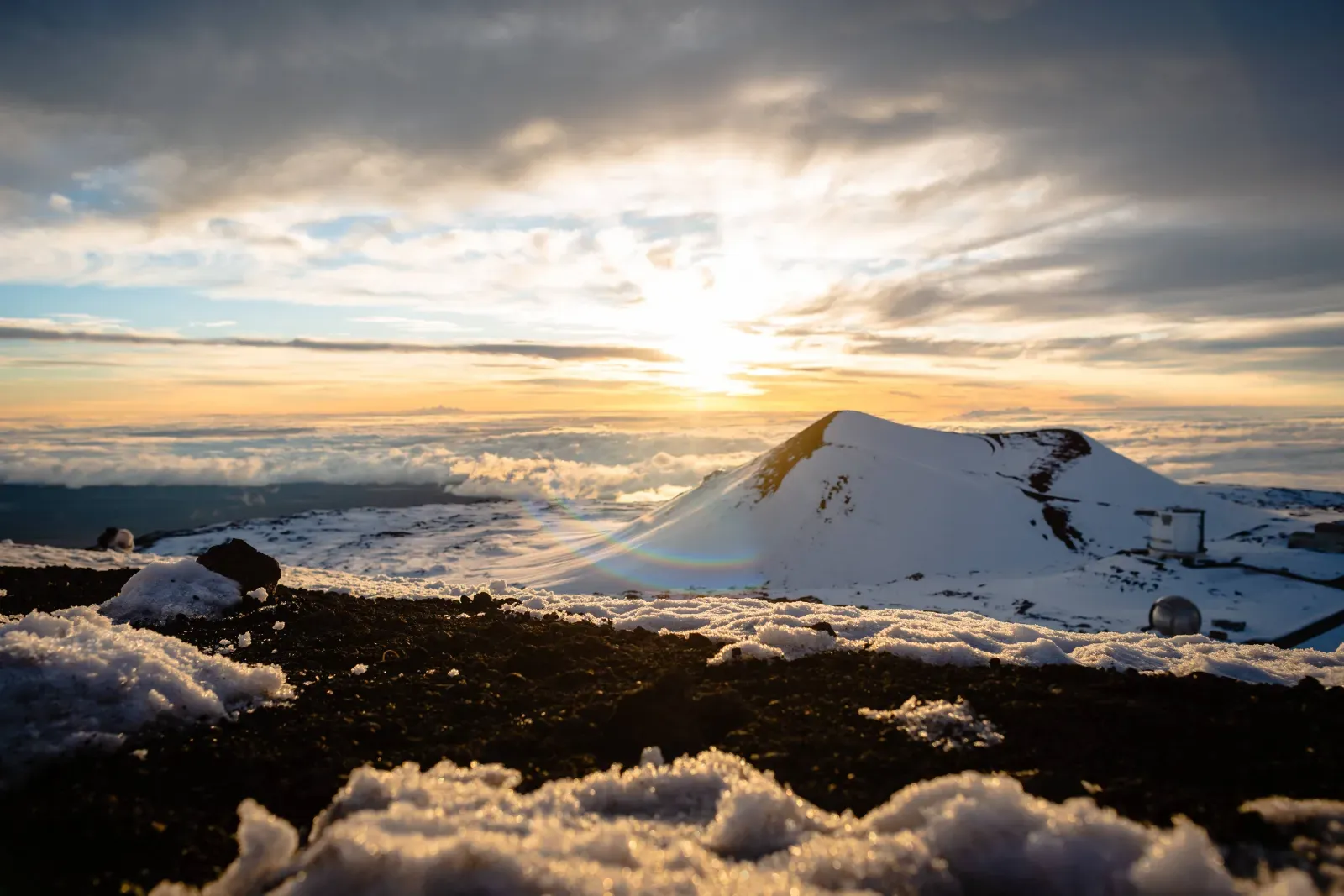
When people imagine Hawaii, they think of palm trees, warm trade winds, turquoise water, and lava-formed coastlines. Very few expect to see snow. Yet every winter, snow on Mauna Kea transforms the summit of Hawaii’s tallest mountain into a surreal alpine landscape rising above tropical beaches. This rare and striking phenomenon is one of the most fascinating natural contrasts on Earth—and a powerful reminder of Hawaii’s geographic and climatic extremes.
Located on the Big Island, Mauna Kea stands 13,803 feet above sea level, making it the highest point in the Hawaiian Islands. Because of its immense elevation, Mauna Kea regularly experiences winter conditions that rival mountain ranges on the mainland, despite sitting in the middle of the Pacific Ocean.
Why Does Snow Fall on Mauna Kea?
The reason snow on Mauna Kea occurs lies almost entirely in elevation and atmospheric physics. As air rises, it cools. Temperatures drop roughly 3.5°F for every 1,000 feet gained in altitude. While coastal Hawaii may sit comfortably in the 70s or 80s, the summit of Mauna Kea can dip well below freezing during winter storms.
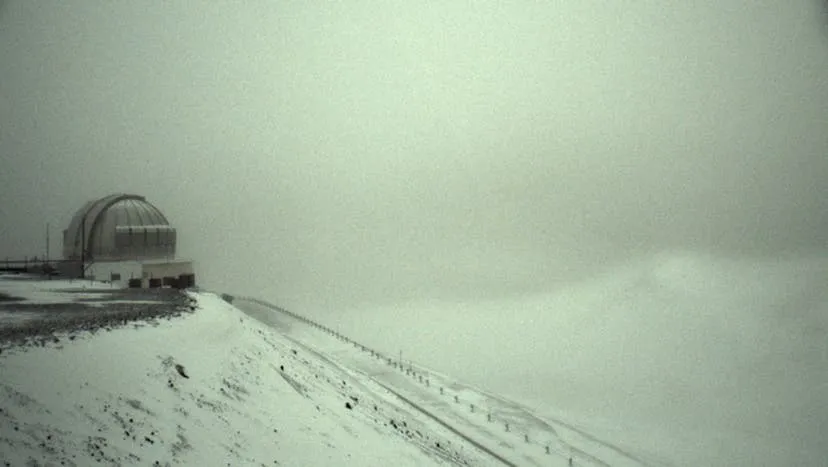
Between December and March, cold fronts from the North Pacific occasionally reach the Big Island. When enough moisture and cold air coincide, precipitation falls as snow rather than rain at the summit. These snowstorms can blanket the upper slopes, turning a volcanic landscape into a snow-covered plateau—sometimes deep enough to temporarily close summit access roads.
How Often Does It Snow on Mauna Kea?
Snowfall on Mauna Kea is not a daily or even weekly occurrence, but it is a consistent seasonal event. Most years see multiple snowfalls, ranging from light dustings to heavy storms. Some winters bring dramatic accumulations that linger for days or even weeks, depending on sun exposure and temperatures.
While snow is most common in mid-winter, it has been recorded as early as October and as late as May. The variability adds to the mystique of snow on Mauna Kea, making each event feel rare and special, even though it happens regularly by climatological standards.
Cultural Significance of Snow on Mauna Kea
For Native Hawaiians, Mauna Kea is not just a mountain—it is a sacred place, deeply tied to genealogy, cosmology, and spiritual practice. Snow, known in Hawaiian as hauʻoliʻoli or hau kea, appears in ancient chants and legends describing the summit as a realm of the gods.
Historically, snow from Mauna Kea was gathered and transported to aliʻi (chiefs) as a symbol of prestige and sacred power. The presence of snow reinforced the mountain’s status as a bridge between the heavens and the earth. Today, the appearance of snow continues to hold cultural meaning, reminding residents and visitors alike that Mauna Kea is a place deserving of reverence and respect.
Snow, Science, and the Summit Observatories
Another reason snow on Mauna Kea captures global attention is the presence of world-class astronomical observatories at the summit. Mauna Kea’s high elevation, dry air, and minimal light pollution make it one of the best stargazing locations on Earth.
Snowfall occasionally interrupts operations, coating telescopes and access roads, but it also highlights the extreme environment in which these scientific instruments operate. Images of snow-covered observatories against a backdrop of blue Hawaiian sky often go viral, surprising viewers who never associated Hawaii with winter weather.
Visiting Mauna Kea During Snow Season
Witnessing snow on Mauna Kea can be unforgettable, but it requires careful planning and respect for safety. Winter conditions can make the summit hazardous, with icy roads, low visibility, and rapidly changing weather. Access to the summit is frequently restricted during snowstorms, and four-wheel drive vehicles are required even in clear conditions.
Many visitors choose to stop at the Mauna Kea Visitor Information Station, located at 9,200 feet, where snow is sometimes visible higher up without the risks of summit travel. Whether you reach the summit or not, seeing snow on Mauna Kea from below is still a remarkable experience—especially when the coastline remains warm and sunny.
A Natural Contrast Found Nowhere Else
What makes snow on Mauna Kea so captivating is the contrast it creates. Few places on Earth allow you to swim in the ocean, hike through lava fields, and see snow-covered peaks all in a single day. This striking diversity is part of what makes the Big Island unique, and Mauna Kea stands at the center of that experience.
The mountain’s snow serves as a reminder that Hawaii is far more than beaches—it is a land of extremes, shaped by volcanic forces, atmospheric dynamics, and deep cultural history.
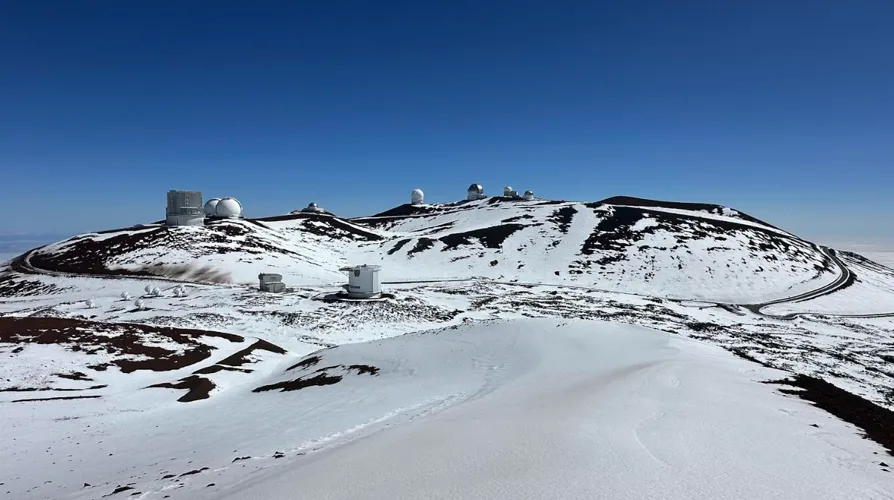
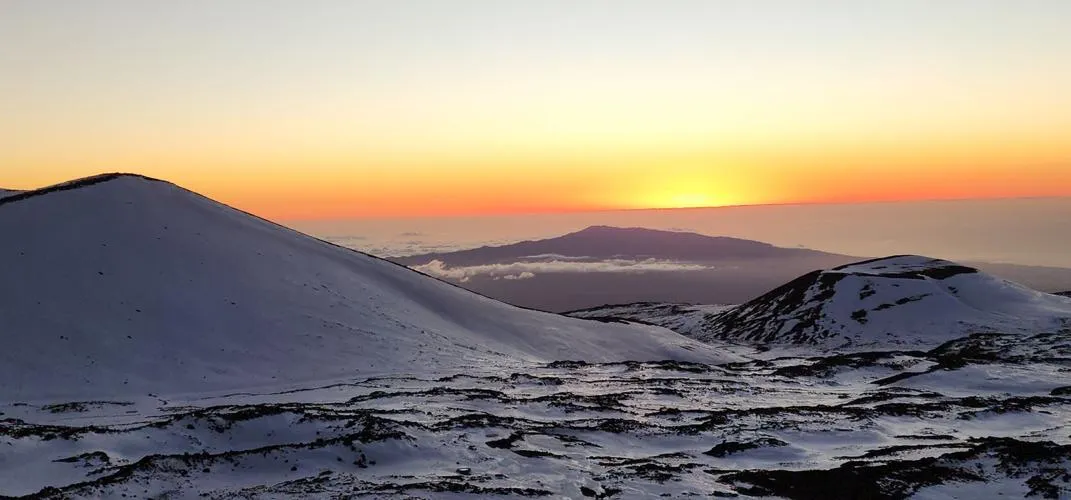
Snow on Mauna Kea is one of Hawaii’s most extraordinary natural phenomena—a fleeting yet powerful example of how elevation, climate, and culture converge atop the tallest mountain in the islands.
Helpful Links About Mauna Kea and Snow
- https://hilo.hawaii.edu/maunakea/
- https://www.weather.gov/hfo/
- https://www.usgs.gov/volcanoes/mauna-kea
- https://www.nps.gov/havo
Frequently Asked Questions About Snow on Mauna Kea
Does it really snow on Mauna Kea every year?
Yes. Snow on Mauna Kea occurs almost every year during the winter months, although the amount and duration vary depending on weather patterns.
What months can you see snow on Mauna Kea?
Snow is most common from December through March, but it has been recorded as early as October and as late as May in colder years.
Is Mauna Kea the only place in Hawaii that gets snow?
Mauna Kea receives the most snow, but nearby Mauna Loa can also experience snowfall at high elevations during strong winter storms.
Can visitors drive to see snow on Mauna Kea?
Sometimes. Summit access may be closed during snow or icy conditions. Visitors should always check road conditions and heed safety warnings before attempting the drive.
How cold does it get when there is snow on Mauna Kea?
Temperatures at the summit can drop well below freezing, especially at night, creating icy and potentially dangerous conditions.
Why is snow on Mauna Kea so surprising?
Because Hawaii is associated with tropical climates, many people are unaware that its tallest mountains rise high enough to support snow and winter weather.
If you would like to read and learn more about interesting things in Hawaii! Check out our blog page here on our website!
or