
Table of Contents
Hawaiʻi is often celebrated for its beaches, volcanoes, and lush rainforests, but the islands are also home to one of the most fascinating bird communities in the world. Due to their isolation in the middle of the Pacific, Hawaiʻi’s birds evolved in unique ways, creating species found nowhere else on Earth. From jewel-toned honeycreepers to soaring seabirds, the avifauna of Hawaiʻi is as diverse as it is fragile.
This blog explores the rich world of Hawaiian birds—their history, ecological role, cultural importance, and the ongoing efforts to protect them.
A Legacy of Evolution
Roughly five million years ago, a single finch-like bird made its way to the Hawaiian Islands. Over millennia, this ancestor gave rise to an astonishing radiation of species known today as the Hawaiian honeycreepers. With beaks adapted to specific foods—from nectar to seeds to insects—these birds became a striking example of adaptive evolution. Their plumage is equally remarkable, ranging from bright reds and yellows to subtle greens and browns.
Unfortunately, many of these species are now extinct, and many of the survivors are critically endangered. Yet those that remain provide a living window into evolution’s creativity.
Notable Native Birds
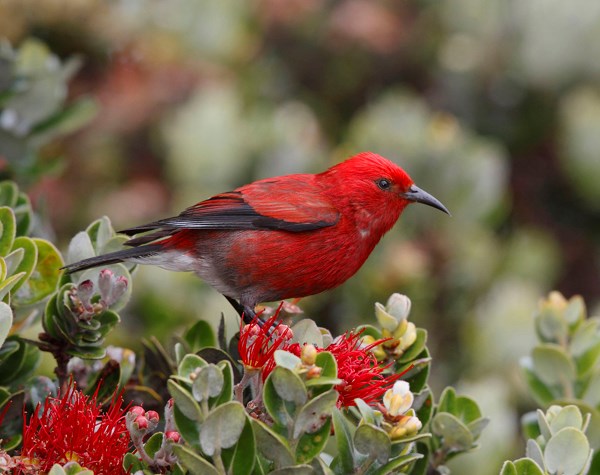
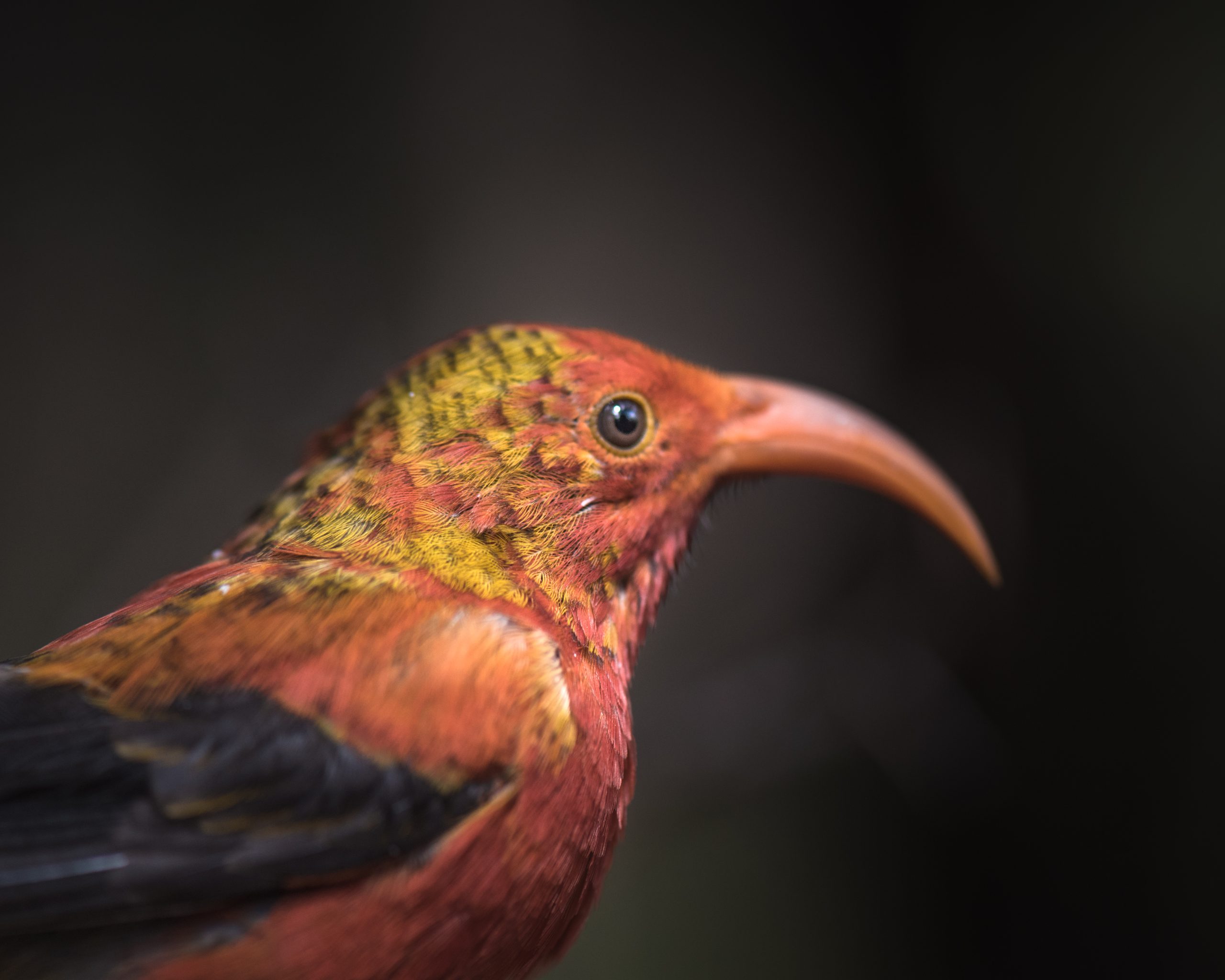
ʻIʻiwi (Drepanis coccinea)
The ʻiʻiwi is perhaps the most recognizable of Hawaiʻi’s native birds. With scarlet feathers, black wings, and a gracefully curved bill, it feeds primarily on the nectar of native ʻōhiʻa lehua blossoms. Once widespread across all islands, the ʻiʻiwi is now mostly found at higher elevations, where mosquitoes that carry avian malaria are less common.
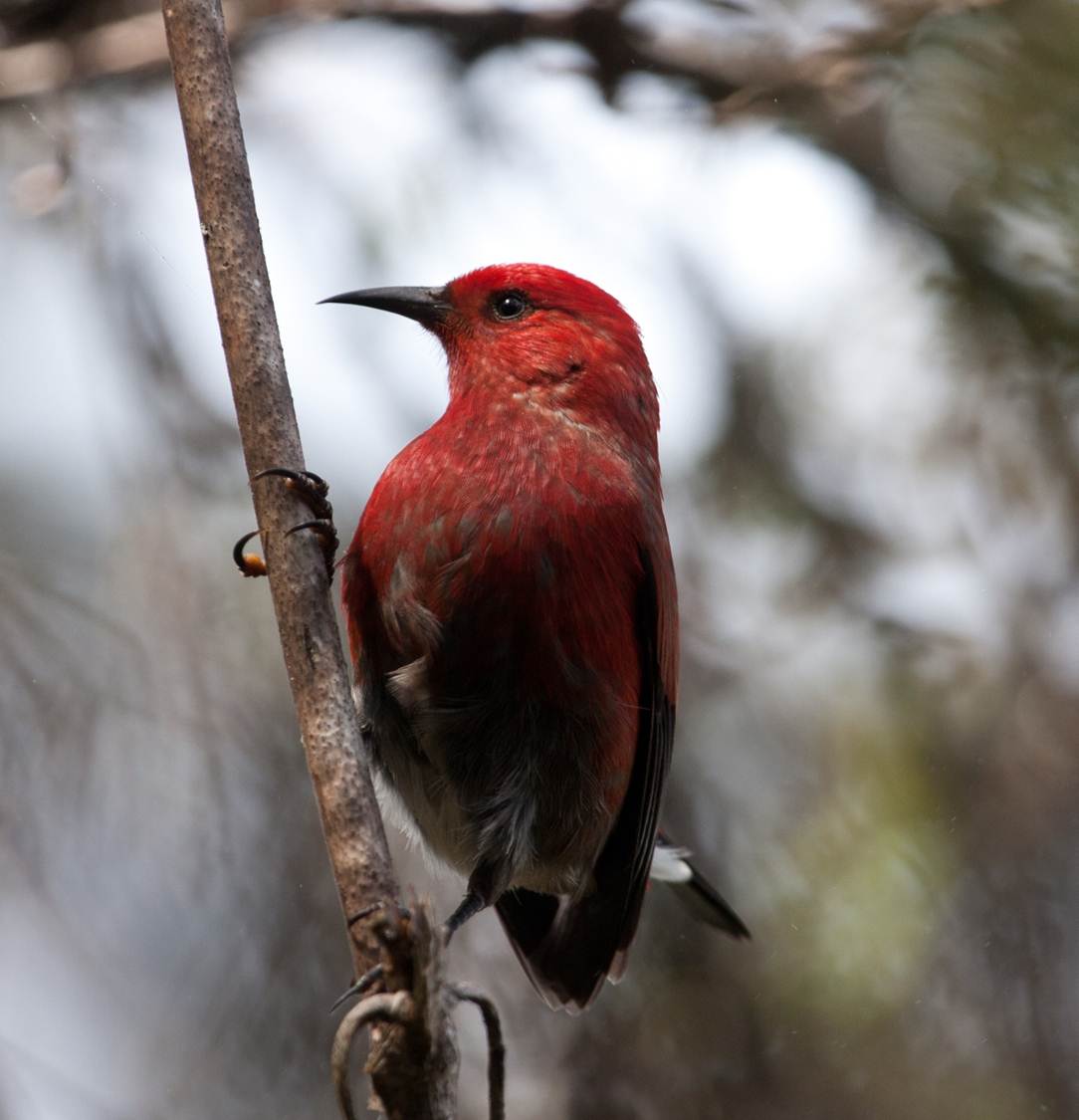
ʻApapane (Himatione sanguinea)
Another nectar-feeding honeycreeper, the ʻapapane thrives in ʻōhiʻa forests and is known for its loud, complex song. Though still relatively common, it plays an important ecological role as a pollinator.
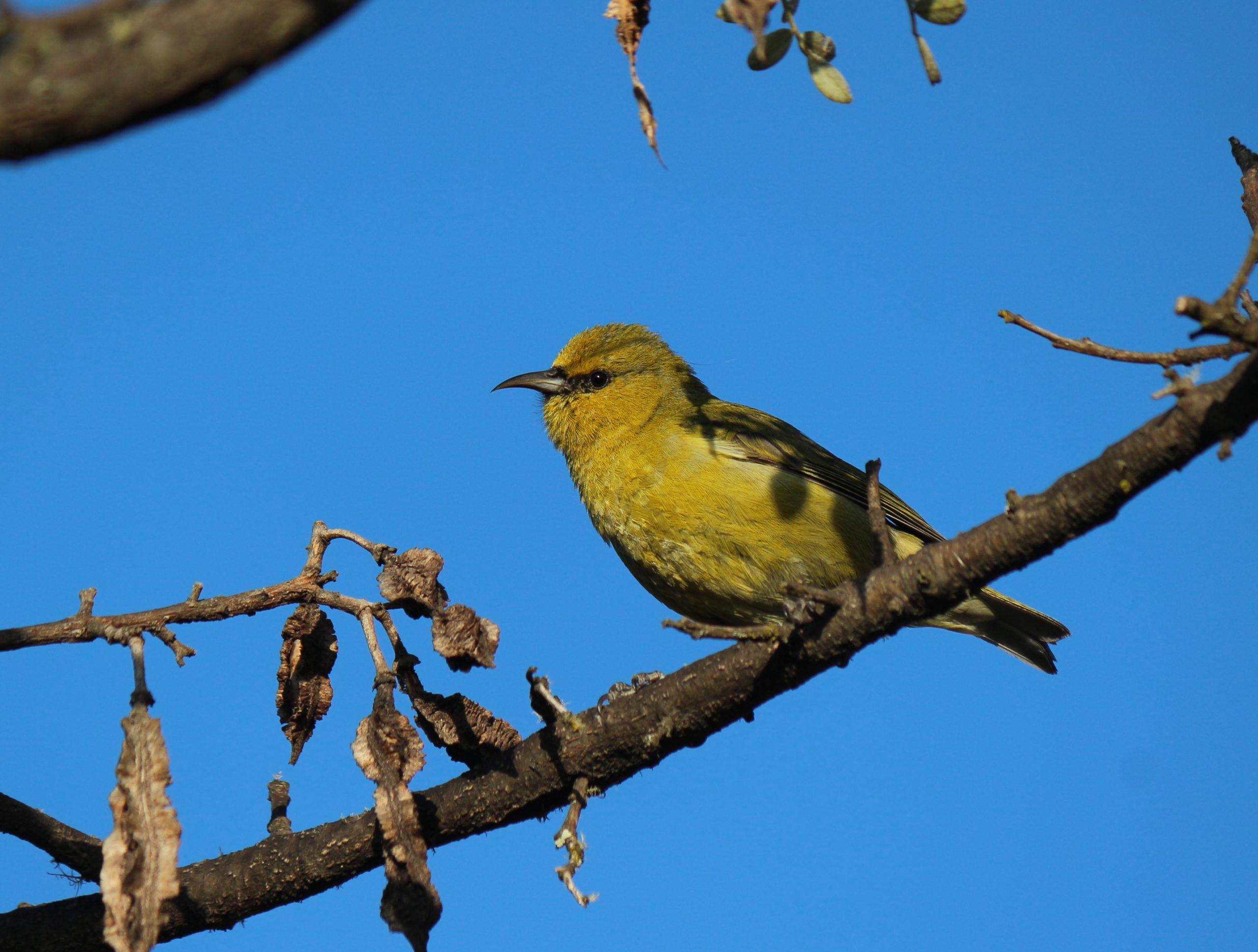
Hawaiʻi ʻAmakihi (Chlorodrepanis virens)
Resilient and adaptable, the Hawaiʻi ʻamakihi is one of the few native birds showing resistance to avian malaria. Its olive-yellow feathers and versatility in feeding—nectar, insects, and fruits—have helped it persist even as other species decline.
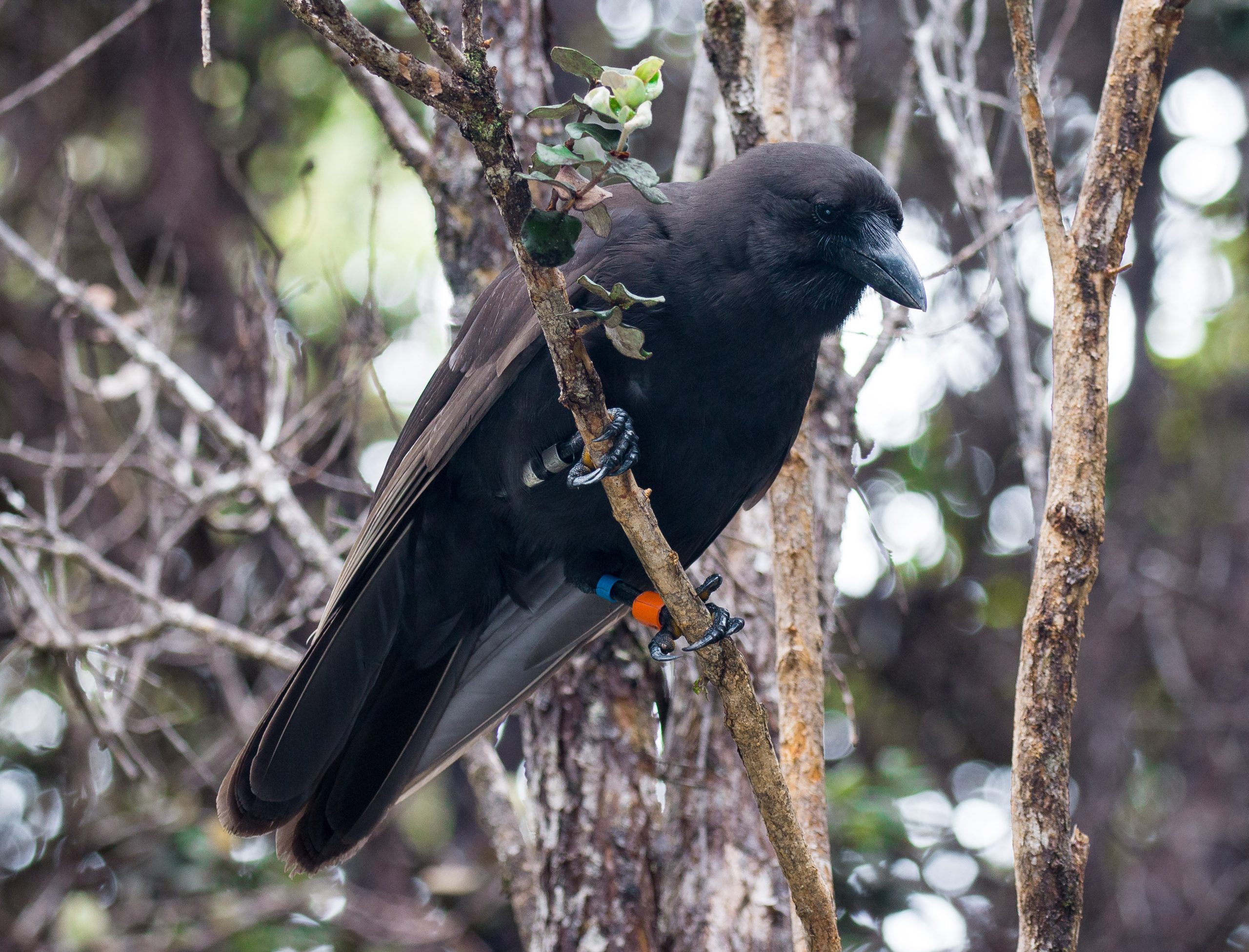
ʻAlalā (Hawaiian Crow, Corvus hawaiiensis)
Deeply significant in Hawaiian culture, the ʻalalā was once considered a guardian spirit and messenger. Sadly, it became extinct in the wild in the early 2000s, though captive breeding and reintroduction programs are ongoing. The ʻalalā is highly intelligent, known for using tools and complex vocalizations.
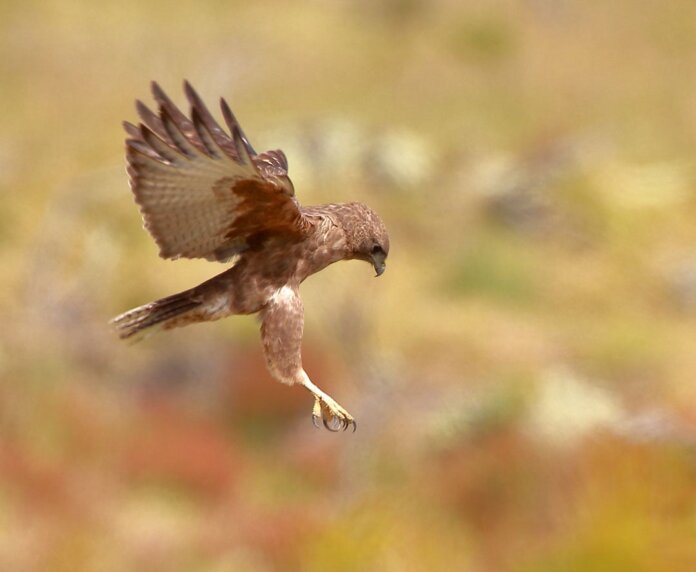
ʻIo (Hawaiian Hawk, Buteo solitarius)
The only hawk native to Hawaiʻi, the ʻio is found only on the Big Island. Revered in Hawaiian tradition as an embodiment of royalty and a messenger of the gods, the ʻio is a powerful predator that soars over forests and open fields alike.
Seabirds and Shorebirds
While forest birds often capture attention, Hawaiʻi’s seabirds are equally extraordinary. The islands provide nesting grounds for millions of seabirds that roam the Pacific.
- Laysan Albatross (Mōlī): Known for its massive wingspan and elaborate courtship dances, the Laysan albatross nests in colonies on remote islands such as Midway and Kauaʻi’s cliffs.
- Wedge-tailed Shearwater (ʻUaʻu kani): Recognizable by its haunting call, this seabird nests in burrows along coastlines.
- Hawaiian Stilt (Aeʻo): With long pink legs and black-and-white plumage, this native waterbird inhabits wetlands and is an important indicator of wetland health.
Introduced Birds
Not all birds in Hawaiʻi are native. Humans have introduced species such as the common myna, zebra dove, and house sparrow, which are now among the most commonly seen in towns and cities. While these birds add to the islands’ avian diversity, some compete with native species for food and nesting sites.
Cultural Significance
For Native Hawaiians, birds are deeply intertwined with tradition, art, and spirituality. The vibrant feathers of species like the ʻiʻiwi and ʻōʻō were once used to create royal cloaks and helmets, symbols of mana (spiritual power) and authority. Birds also appear in chants, legends, and proverbs, serving as guides, protectors, and omens.

The ʻio, for instance, was seen as a protector of chiefs, while the ʻalalā was viewed as a voice of the forest, bridging the human and spiritual realms.
Challenges and Conservation
Hawaiʻi is often called the “extinction capital of the world.” Since human arrival, more than half of the islands’ bird species have vanished. The primary threats today include:
- Avian diseases such as malaria and pox, spread by non-native mosquitoes.
- Habitat loss from agriculture, urbanization, and invasive plants.
- Introduced predators like cats, rats, and mongooses.
Conservation efforts are underway to protect the remaining species. Strategies include mosquito control programs, captive breeding and reintroduction of endangered birds, and habitat restoration. Organizations and agencies are working tirelessly to ensure that Hawaiʻi’s unique birds continue to thrive for generations to come.
A Living Treasure
The birds of Hawaiʻi are more than just beautiful creatures—they are storytellers of evolution, stewards of native ecosystems, and cultural treasures. Whether watching an ʻiʻiwi dart among ʻōhiʻa blossoms, listening to the haunting call of a shearwater, or spotting an ʻio soaring above the Big Island, one cannot help but feel a deep connection to the land and its living heritage.
Protecting these birds is not only about conservation—it is about preserving the soul of Hawaiʻi itself.
Helpful Links
- DLNR Hawaiʻi – Native Birds
- National Park Service – Native Birds of Hawaiʻi Volcanoes
- American Bird Conservancy – Native or Not? Birds of Hawaiʻi
- Hawaiian Crow (ʻAlalā) Profile
- Maui Forest Bird Recovery Project
- Birds of Hawaiʻi Information & Guides
Frequently Asked Questions
1. Why are Hawaiian birds so unique compared to birds elsewhere in the world?
Hawaiian birds are incredibly unique because the islands’ remote location allowed species to evolve in isolation for millions of years. A single finch-like ancestor led to the creation of the famous Hawaiian honeycreepers—birds with dramatically different beak shapes, colors, and feeding habits. Many Hawaiian birds are endemic, meaning they exist nowhere else on Earth, making them some of the rarest and most remarkable birds on the planet.
2. What are Hawaiian honeycreepers, and why are they so important?
Hawaiian honeycreepers are a group of native birds that evolved from one common ancestor around five million years ago. Through adaptive evolution, these birds developed specialized beaks to eat nectar, seeds, insects, and fruits. Their vibrant colors—from reds and yellows to greens—make them some of the most striking birds in Hawaiʻi. Honeycreepers are essential pollinators in native forests and are a living example of evolution’s creativity.
3. Which native Hawaiian birds should visitors look out for?
Some of the most notable native Hawaiian birds include:
- ʻIʻiwi – bright red with a curved bill, one of Hawaiʻi’s most iconic honeycreepers.
- ʻApapane – a nectar-feeding bird known for its sweet song.
- ʻAmakihi – adaptable and disease-resistant, found on multiple islands.
- ʻAlalā (Hawaiian crow) – culturally important and highly intelligent, currently part of reintroduction efforts.
- ʻIo (Hawaiian hawk) – a powerful bird of prey found only on the Big Island.
These species represent Hawaiʻi’s natural heritage and ecological diversity.
4. What seabirds and shorebirds can be found in Hawaiʻi?
Hawaiʻi is home to impressive seabirds and waterbirds, including:
- Laysan Albatross (Mōlī) – known for huge wingspans and elaborate mating dances.
- Wedge-tailed Shearwater (ʻUaʻu kani) – famous for its eerie nighttime calls.
- Hawaiian Stilt (Aeʻo) – long-legged and elegant, found in wetlands.
Many seabirds nest in colonies on remote islands or steep cliffs, making Hawaiʻi a crucial habitat for Pacific bird populations.
5. Are all the birds in Hawaiʻi native?
No—many birds in Hawaiʻi are introduced species brought by humans over the past 200 years. Common urban birds like mynas, zebra doves, and house sparrows are not native. While they add to the visual diversity of the islands, some introduced species compete with native birds for food and nesting areas, creating conservation challenges.
6. Why are so many Hawaiian birds endangered or extinct?
Hawaiʻi is known as the extinction capital of the world, and sadly, many native birds have disappeared. The main threats include:
- Avian malaria and pox, spread by invasive mosquitoes.
- Predators like cats, rats, and mongooses.
- Habitat loss, due to development, agriculture, and invasive plants.
- Climate change, which pushes mosquitoes into higher elevations.
These factors create difficult conditions for native species, especially honeycreepers that rely on high-elevation forests.
7. What conservation efforts are being made to protect Hawaiian birds?
Conservation in Hawaiʻi is extensive and ongoing. Efforts include:
- Mosquito control programs to reduce avian malaria.
- Captive breeding and reintroduction, especially for the ʻalalā.
- Habitat restoration to restore native forests.
- Predator control to protect nests and young birds.
Organizations, researchers, and local communities work together to preserve these irreplaceable species.
8. What role do birds play in Hawaiian culture and tradition?
Birds are deeply woven into Hawaiian culture. Feathers from birds like the ʻiʻiwi and ʻōʻō were once used to create royal cloaks and helmets, representing mana (spiritual power). Birds also appear in Hawaiian chants, mythology, and proverbs. For example:
- The ʻio was seen as a guardian of chiefs.
- The ʻalalā was believed to be a messenger between the human and spiritual realms.
Birds symbolize connection, protection, and the natural balance that is central to Hawaiian identity.
9. Where can visitors see native Hawaiian birds in the wild?
Some of the best places to see native Hawaiian birds include:
- Haleakalā National Park (Maui)
- Hawaiʻi Volcanoes National Park (Big Island)
- Hakalau Forest National Wildlife Refuge (Big Island – by permit/tour)
- Kokeʻe and Alakaʻi Plateau (Kauaʻi)
- Waikamoi Preserve (Maui – by guided tour)
These areas protect native forests where honeycreepers and other endemic species still thrive.
10. Why is protecting Hawaiian birds so important?
Protecting Hawaiian birds means preserving Hawaiʻi’s ecology, culture, and history. These birds pollinate forests, control insects, and reflect the islands’ evolutionary heritage. They carry cultural meaning and connect Hawaiians to their ancestral past. Saving them is about more than conservation—it’s about keeping the spirit and identity of Hawaiʻi alive for future generations.
If you would like to read and learn more about interesting things in Hawaii! Check out our blog page here on our website!
or