
Table of Contents
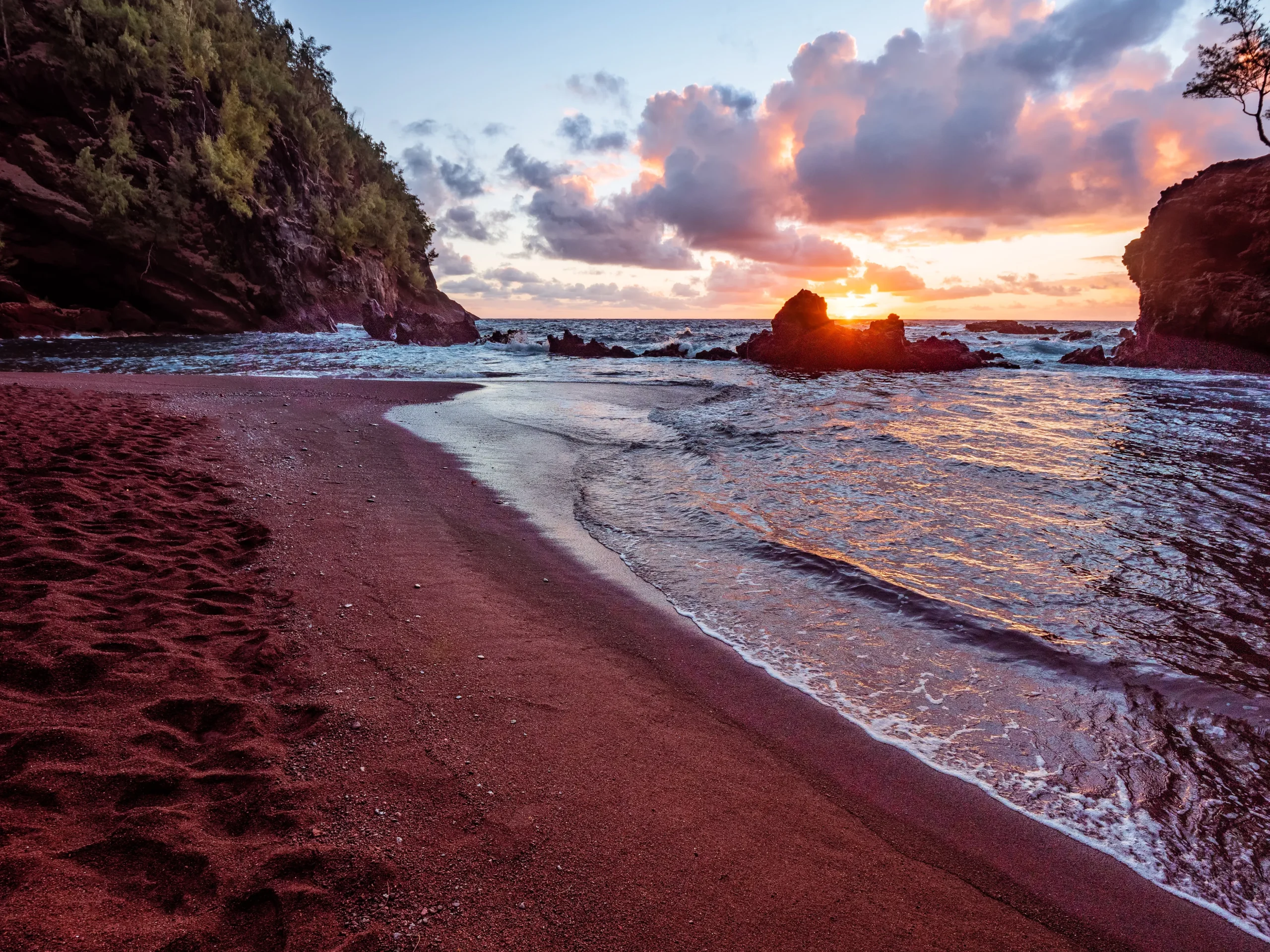
Along the rugged coastline of Hana, Maui, lies one of the island’s most captivating and hidden treasures: Kaihalulu Beach, more commonly known as Red Sand Beach. Famous for its striking crimson shoreline, jagged lava cliffs, and the serene, turquoise waters of the Pacific, this secluded beach offers a breathtaking escape for adventurers, photographers, and nature enthusiasts alike.
Visiting Red Sand Beach is more than just a stop on a travel itinerary—it’s an experience that engages all the senses, from the sight of its vibrant hues to the sound of the waves crashing against the volcanic rocks. Whether you’re hiking in for a scenic adventure, seeking a peaceful spot to reflect, or simply marveling at nature’s artistry, Red Sand Beach is a must-see gem on the island of Maui.
The Geology Behind the Red Sand
What makes Red Sand Beach truly extraordinary is its unique geological makeup. The beach’s distinctive reddish hue comes from the crumbling volcanic cinder cone that encircles the cove. The cinder cone, rich in iron oxide, erodes over time, depositing iron-rich sediment that gives the beach its deep, rust-colored sand.
The surrounding cliffs, composed of jagged lava rock, add to the beach's dramatic landscape. Their dark, rugged appearance contrasts with the vibrant red shoreline and the emerald-green foliage clinging to the rocks. The interplay of colors creates a scene that feels almost otherworldly—a place where nature’s raw beauty is on full display.
The Adventurous Hike to Red Sand Beach
Part of the allure of Red Sand Beach lies in its secluded and somewhat challenging accessibility. Unlike Maui’s more popular beaches, reaching this hidden gem requires a short but adventurous hike.
Trail Details:
- Location: The trailhead is located near the Hana Community Center on Uakea Road. You’ll need to follow a narrow, unmarked path that leads toward the coastline.
- Distance: The hike is approximately 0.5 miles round trip, but don’t let the short distance fool you—it can be tricky.
- Difficulty: Moderate to challenging. The trail includes narrow ledges, loose gravel, and some steep, uneven sections.
Tips for a Safe and Enjoyable Hike:
Footwear Matters: Wear sturdy shoes with good traction. Flip-flops are not recommended, as the loose, gravelly sections can be slippery.
Exercise Caution: The trail runs alongside steep cliffs, making it potentially hazardous, especially after rainfall when the path becomes muddy and slick. Walk carefully and avoid getting too close to the edge.
Travel Light: Since the hike is short, you don’t need to bring much. However, pack essentials like water, sunscreen, and a towel
Respect Private Property: The beach lies on private land, but public access is generally allowed. Be respectful of the area and follow all guidelines.
A Slice of Paradise: What to Expect at Red Sand Beach
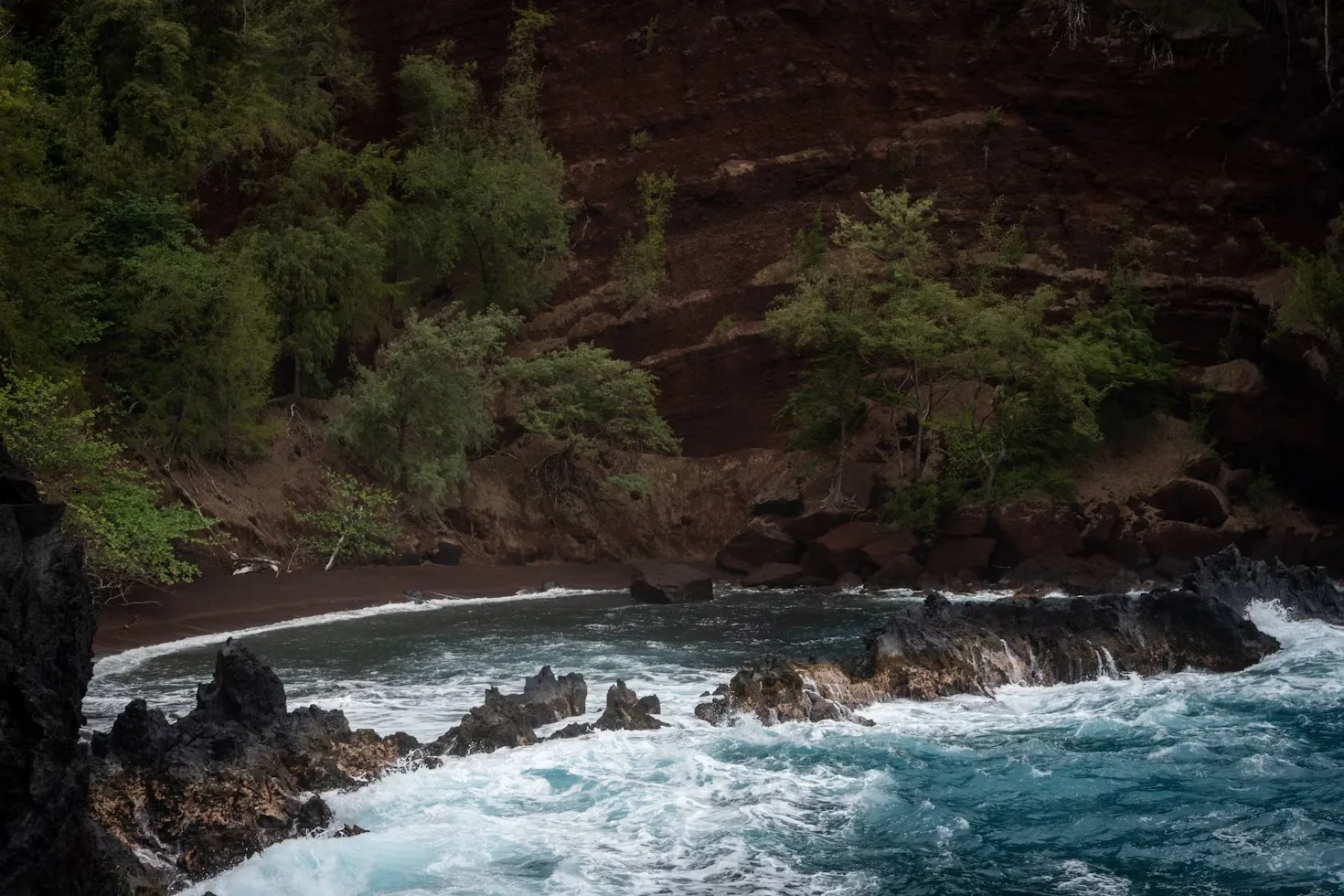
Once you arrive, you’ll be rewarded with a view that feels almost surreal. The crescent-shaped cove, embraced by steep lava rock cliffs, creates a sense of seclusion and intimacy. The beach’s vibrant red sand is soft underfoot, and the surrounding cliffs provide a natural wind barrier, making the cove feel peaceful and protected.
The offshore lava rock wall acts as a natural breakwater, creating a semi-protected swimming area with calmer waters—ideal for a relaxing dip. On calmer days, the water is clear and inviting, perfect for swimming or snorkeling.
Snorkeling Tip:
Bring your gear if you enjoy snorkeling. The reef area near the lava rock wall is home to colorful tropical fish, though visibility can vary depending on ocean conditions.
However, it’s important to note that Red Sand Beach does not have lifeguards. The water can sometimes be unpredictable, and strong currents are possible, especially beyond the protected cove. If you’re not a strong swimmer, it’s best to stay close to the shore and avoid venturing into deeper waters.
Perfect for Photography Enthusiasts
For photographers, Red Sand Beach offers endless visual inspiration. The contrast of the red sand against the blue sea and the green vegetation creates a scene that seems almost too vivid to be real.
- Best Time for Photos: The early morning and late afternoon offer the most flattering light, with softer tones and fewer shadows. The beach also tends to be less crowded during these times.
- Golden Hour Magic: The red sand takes on even deeper hues during sunset, creating a spectacular display of colors.
Whether you’re capturing wide-angle shots of the entire cove or focusing on the intricate patterns in the sand, this beach offers stunning photo opportunities.
When to Visit Red Sand Beach
Maui’s tropical climate makes Red Sand Beach accessible year-round, but some times are better than others for a more enjoyable experience.
- Best Time of Day: Visit in the morning or early afternoon. The sunlight enhances the vibrant red tones, and the beach is typically less crowded.
- Seasonal Considerations: The summer months (May–September) offer calmer ocean conditions, making it safer for swimming and snorkeling. In the winter (November–March), the surf can be rougher, making swimming more dangerous.
Preserving the Natural Beauty
As with all natural wonders, it’s vital to respect and preserve the pristine environment of Red Sand Beach.
- Pack out what you bring in: Do not leave trash behind.
- Respect the wildlife: Avoid disturbing marine life or stepping on coral reefs.
- Stay on the trail: Stick to the designated path to prevent erosion and protect the fragile cliffs.
By following these guidelines, you can help keep this hidden treasure beautiful for future visitors.
Red Sand Beach in Hana, Maui, is more than just a picturesque destination—it’s a place of wonder and adventure. From the rugged hike through volcanic terrain to the vibrant, iron-rich sands and tranquil waters, the experience is nothing short of magical.
Whether you’re an avid hiker, a photographer seeking the perfect shot, or simply someone who appreciates the beauty of nature, Red Sand Beach offers an unforgettable escape. As you breathe in the salty air, feel the soft red sand beneath your feet, and gaze out at the endless Pacific, you’ll understand why this beach is one of Maui’s most treasured hidden gems.
Frequently Asked Questions
What makes Red Sand Beach in Hana so unique?
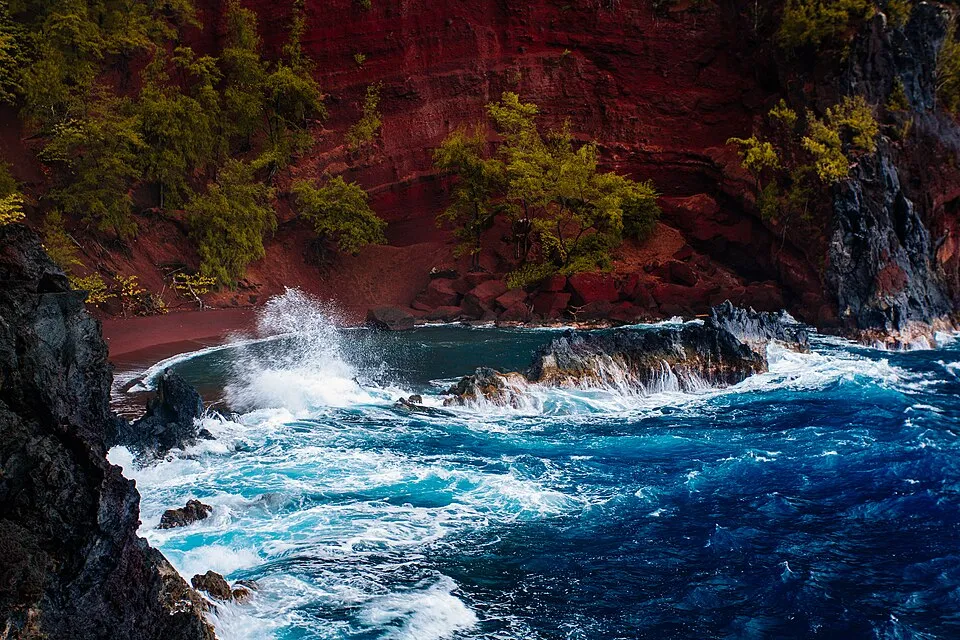
Red Sand Beach—also known as Kaihalulu Beach—is famous for its striking crimson sand, created by the erosion of a nearby volcanic cinder cone rich in iron oxide. This creates a bold contrast against the turquoise ocean and rugged black lava cliffs, making it one of Maui’s most visually stunning and geologically unique beaches.
Why is the sand at Kaihalulu Beach red?
The beach’s vibrant red color comes from the iron-rich cinder cone that surrounds the cove. As the cone erodes, the iron oxide deposits wash onto the shoreline, giving the sand its distinctive rust-red hue. This geological process is ongoing, so the red sands stay rich and colorful year after year.
How hard is the hike to Red Sand Beach in Maui?
The hike to Red Sand Beach is short but challenging. Though only about 0.5 miles round trip, the trail features narrow ledges, loose gravel, steep drop-offs, and slippery sections—especially after rain. It is considered moderate to difficult, depending on your comfort with uneven terrain. Wearing proper footwear is essential.
Where is the trailhead for Red Sand Beach located?
The trailhead begins near the Hana Community Center on Uakea Road. You’ll follow an unmarked coastal path toward the lava cliffs. Since it crosses private land (with public access generally tolerated), visitors should be respectful, stay on the actual trail, and avoid trespassing or disturbing nearby residents.
Is Red Sand Beach safe to visit?
Red Sand Beach is safe as long as hikers exercise caution. The trail is narrow and can be hazardous, especially when wet. At the beach, swimming is possible inside the protected cove, but conditions can change quickly. There are no lifeguards, and strong currents may occur beyond the lava rock barrier. Always assess conditions before entering the water.
Can you swim at Red Sand Beach?
Yes — but only with caution. The crescent-shaped cove is partially protected by a natural lava rock breakwater, creating calmer waters ideal for a light swim or snorkel on calmer days. However, strong currents and waves are common, especially in winter. Only confident swimmers should enter the water, and visitors should stay inside the protected area.
Is snorkeling good at Red Sand Beach?
Snorkeling can be enjoyable when the ocean is calm. The small reef near the lava rock wall hosts colorful tropical fish. However, visibility varies based on surf conditions, and the area can be hazardous when currents are strong. Bring your own gear and stay within the sheltered cove for safety.
What should I bring when visiting Red Sand Beach?
To hike and relax safely at Red Sand Beach, bring:
- Sturdy shoes (no flip-flops)
- Water and snacks
- Sunscreen and a hat
- Towel or beach blanket
- A camera for incredible photos
Because the trail is short, packing light is recommended.
When is the best time to visit Red Sand Beach?
The best time to visit is early morning or early afternoon, when lighting is softer and crowds are minimal. For photography, sunrise and late afternoon offer beautiful golden light that enhances the beach’s red tones. Summer months typically provide calmer ocean conditions, while winter brings larger swells.
Is Red Sand Beach good for photography?
Absolutely — Red Sand Beach is one of the most photogenic spots on Maui. Photographers love:
- The vivid contrast of red sand, turquoise water, and black lava rock
- The dramatic curves of the protected cove
- Golden hour light illuminating the cliffs and shoreline
It’s ideal for landscape photography, portraits, and drone shots (where permitted).
Is visiting Red Sand Beach legal?
The beach sits on private property, but public access is generally allowed as long as visitors are respectful. This means:
- Stay on the designated trail
- Don’t disturb residents
- Avoid littering or damaging vegetation
Local courtesy plays a huge role in keeping public access open.
Is Red Sand Beach family-friendly?
Red Sand Beach is more suitable for adults and experienced hikers. Because the trail is narrow and sometimes slippery, it's not ideal for young children, elderly visitors, or anyone unsure on uneven terrain. Families looking for easier access might prefer beaches like Hamoa, Koki, or Wai‘anapanapa Black Sand Beach.
How long should I plan to spend at Red Sand Beach?
Most visitors spend 1–2 hours enjoying the hike, swimming, relaxing, and photographing the landscape. Those staying in Hana may linger longer, while Road to Hana day-trippers often budget around an hour before continuing their journey.
How do I help preserve Red Sand Beach?
To protect this fragile coastal environment:
- Pack out all trash
- Stay on the trail to avoid erosion
- Do not climb the cliffs
- Respect marine life and coral
- Avoid taking sand or rocks
Preserving the beach ensures future generations can enjoy this rare natural wonder.
Is Red Sand Beach worth the hike?
Yes — Red Sand Beach is one of Maui’s most extraordinary hidden gems, offering unmatched color, scenery, and atmosphere. Its dramatic landscape, secluded feel, and rare red shoreline make it a must-see for travelers seeking a unique and memorable Maui experience.
If you would like to read and learn more about interesting things in Hawaii! Check out our blog page here on our website!
or
Image Credits:
Hero:
"Discover the stunning sunrise over Kaihalulu Beach's unique red sands in Hana, Hawaii." by James Wheeler, via Pexels
"Stopped by the Red Sand Beach on Road to Hana in Maui, Hawaii" by Alexandra Tran, via Unsplash
Photo: Anton Repponen, via Wikimedia Commons (CC0 1.0/Public Domain Dedication).