
Table of Contents
Polynesian Arrival and Early Cultivation
Sugar cane has deep historical roots in Hawaii, introduced by the Polynesians who arrived to the islands around 1,500 years ago. The early settlers brought with them a variety of plants, including sugar cane (known as "ko" in Hawaiian), which they cultivated for its sweet sap. This sap was consumed fresh, fermented into a beverage, or processed into syrup, making it a valuable food source.
Learn more about ko! https://ntbg.org/news/ko-saccharum-officinarum/
The 19th Century: The Rise of the Sugar Industry
The modern history of sugar cane on Maui began in the early 19th century when Western influences led to the commercialization of sugar production. In the 1830s, as whaling and trading industries flourished, demand for sugar increased, prompting the establishment of sugar plantations.
The first successful commercial sugar plantation on Maui was founded in 1835 by a group of American merchants who recognized the island’s ideal growing conditions, including its fertile soil and ample rainfall. This marked the beginning of a significant economic transformation on the island.
Ideal Growing Conditions: Drier Areas and Irrigation
While Maui features lush, rainy regions, its drier areas—particularly in the central and western parts of the island—were also well-suited for sugar cane production. These areas benefited from the fertile volcanic soil and favorable climate but required innovative irrigation solutions to support crop growth.
To irrigate these arid regions, plantation owners developed an extensive network of irrigation systems. One of the most notable projects was the East Maui Irrigation System, which utilized water from the mountains and diverted it to the fields. This infrastructure not only allowed sugar cane to thrive in drier areas but also marked significant engineering advancements of the time.
As water management improved, plantation agriculture expanded further into these regions, enabling larger-scale sugar production. The ability to irrigate previously arid land transformed Maui’s agricultural landscape and solidified sugar cane as a key crop.
Expansion and the Plantation Era
By the mid-19th century, sugar cane cultivation expanded rapidly, leading to the establishment of numerous plantations across Maui. The Hawaiian Commercial & Sugar Company (HC&S), founded in 1870, became the largest producer of sugar on the island and played a pivotal role in shaping Maui's agricultural landscape.
To meet the labor demands of the burgeoning industry, plantation owners imported workers from various countries, including China, Japan, Portugal, and the Philippines. This diverse workforce contributed to the multicultural fabric of Maui, although it also brought challenges, including labor disputes and harsh working conditions.
The 20th Century: Economic Boom and Decline
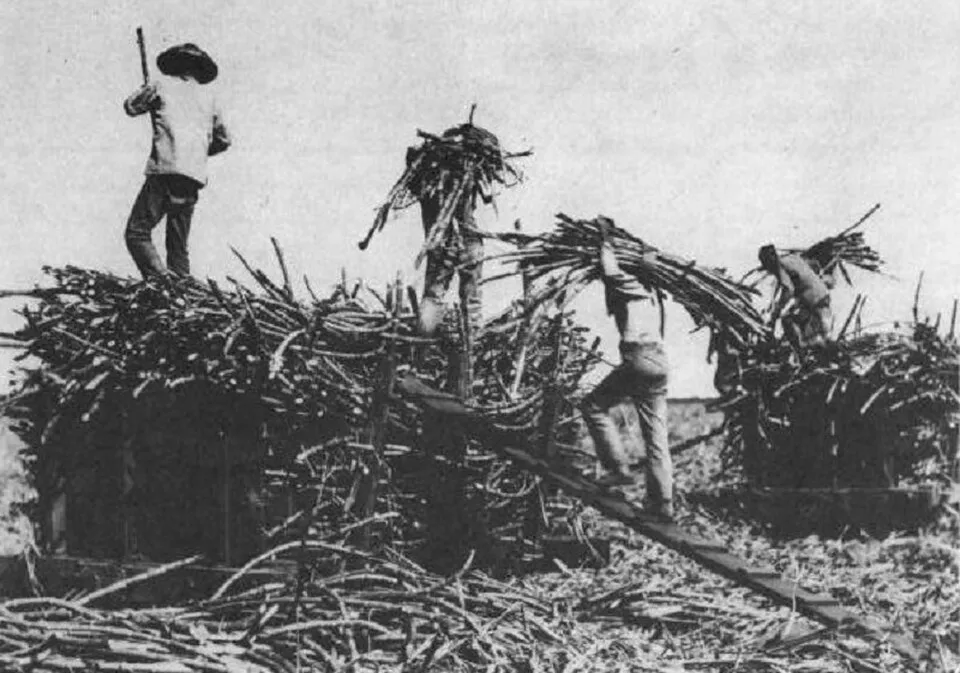
Throughout the early 20th century, the sugar industry thrived, becoming the backbone of Maui's economy. Sugar cane was processed into raw sugar and molasses, with much of the production exported to mainland United States and other markets. This period saw significant advancements in technology, including the introduction of mechanization, which improved efficiency but also led to job reductions.
However, by the latter half of the century, the sugar industry faced numerous challenges. Increased competition from cheaper sugar imports, rising production costs, and changing consumer preferences led to a decline in profitability. Environmental concerns, particularly regarding water usage and pesticide applications, also prompted scrutiny of the industry.
The Closure of Sugar Plantations
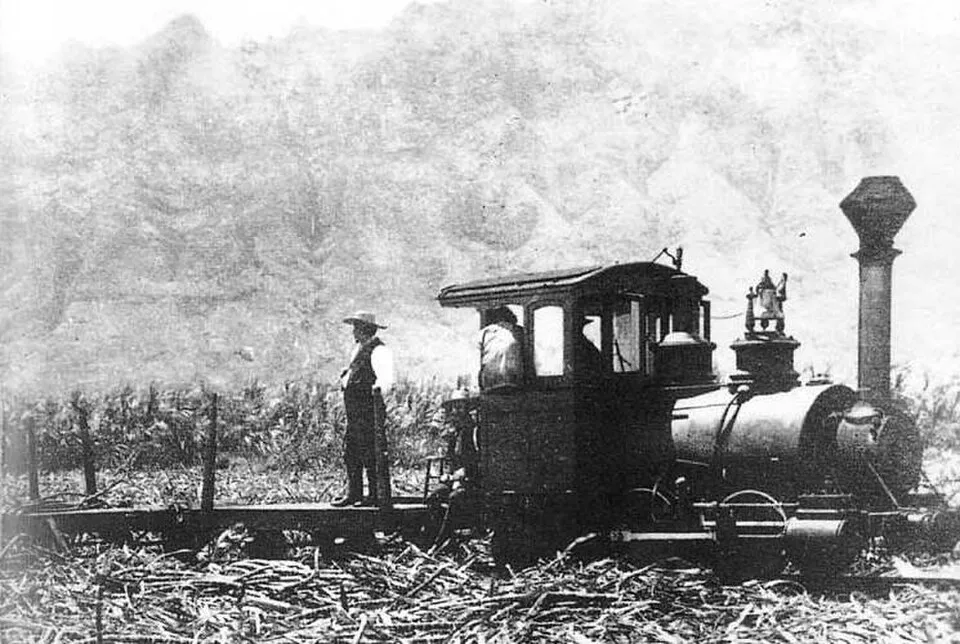
The decline of sugar cane on Maui culminated in the closure of major plantations in the 1990s. HC&S ceased operations in 2016 after over 145 years of production, marking the end of an era for the island’s agricultural history. This closure had significant economic implications, leading to job losses and the need for diversification in Maui's economy.
For more information about the history of sugar on Maui, visit the Sugar Museum! https://www.sugarmuseum.com/
The Future: Sustainable Agriculture and New Beginnings
In the wake of the sugar industry's decline, Maui has been shifting toward more sustainable agricultural practices. Former sugar lands are being repurposed for new crops, including fruits, vegetables, and flowers. Initiatives like Maui Pono are promoting sustainable farming and supporting local farmers, emphasizing organic practices and the cultivation of native plants.
The legacy of sugar cane on Maui remains a significant part of the island's history and cultural identity. As the community embraces new agricultural opportunities, there is a growing recognition of the need to balance economic development with environmental stewardship and cultural preservation.
Conclusion
The history of sugar cane on Maui reflects the island's evolution, from the early Polynesian settlers to the rise and fall of the plantation era. The development of irrigation systems allowed for successful cultivation in drier areas, shaping the agricultural landscape of the island.
As you drive through the valley today on Veterans Highway, Hana Highway and Haleakala Highway, you'll notice tens of thousands of acres where sugar cane was once cultivated. This land is currently being redeveloped for agriculture, and the next time you visit Maui, you'll bear witness to vibrant citrus fields and other crops flourishing in this rich landscape, marking a new chapter in Maui's agricultural story.
Helpful Links
- Alexander & Baldwin Sugar Museum — Explore Maui’s sugar plantation history, immigrant communities, agricultural equipment, and the legacy of the sugar industry.
- Sugar Museum – History of Sugar on Maui — Learn how sugar cane developed from an early Polynesian-introduced crop into one of Maui’s most important commercial industries.
- Sugar Museum – Exhibits — Discover exhibits about plantation life, irrigation, immigration, field work, sugar mills, and Maui’s agricultural history.
- NorthShore Zipline Maui Blog — Explore more stories about Maui history, Hawaiian culture, agriculture, and things to do around the island.
Frequently Asked Questions About the History of Sugar Cane on Maui
When was sugar cane first introduced to Hawaiʻi?
Sugar cane, known as kō in Hawaiian, arrived in Hawaiʻi with Polynesian voyagers more than a thousand years ago. Long before the development of commercial sugar plantations, Native Hawaiians cultivated different varieties of sugar cane and used the sweet stalks in everyday life.
What is the Hawaiian word for sugar cane?
The Hawaiian word for sugar cane is kō. Sugar cane was one of the plants transported across the Pacific by Polynesian voyagers and cultivated in Hawaiʻi generations before large commercial plantations appeared.
Did Native Hawaiians grow sugar cane before plantations?
Yes. Native Hawaiians cultivated sugar cane long before the plantation era. It was grown alongside other important crops and valued for its sweet juice and a variety of traditional uses. This early cultivation was very different from the large-scale commercial sugar industry that developed during the 19th century.
When did commercial sugar production begin on Maui?
Maui’s commercial sugar industry dates to 1839, when a sugar mill associated with King Kamehameha III began operating in Wailuku. Commercial production expanded considerably during the following decades as sugar became increasingly important to Hawaiʻi's economy.
Why was Maui good for growing sugar cane?
Maui offered fertile volcanic soils, warm temperatures, abundant sunshine, and a long growing season. Some of the most productive plantation lands were relatively dry, however, which made the development of extensive irrigation systems critical to large-scale sugar cultivation.
How did sugar plantations get water on Maui?
Plantation companies developed extensive networks of ditches, tunnels, reservoirs, and other infrastructure to transport water from wetter portions of Maui to drier agricultural lands. These irrigation systems transformed areas of Central Maui and allowed sugar cane to be cultivated on an enormous scale.
What was the East Maui irrigation system?
The East Maui irrigation system was an extensive network developed to divert and transport water from the wet windward slopes of East Maui toward agricultural lands in Central Maui. Water infrastructure played a major role in the expansion and profitability of Maui’s plantation economy.
What was Hawaiian Commercial & Sugar Company?
Hawaiian Commercial & Sugar Company, commonly called HC&S, became Maui’s dominant sugar producer and eventually the largest sugar plantation in Hawaiʻi. Its fields covered large portions of Central Maui, and generations of Maui residents worked in its fields, mills, offices, and plantation communities.
What was the Puʻunēnē Sugar Mill?
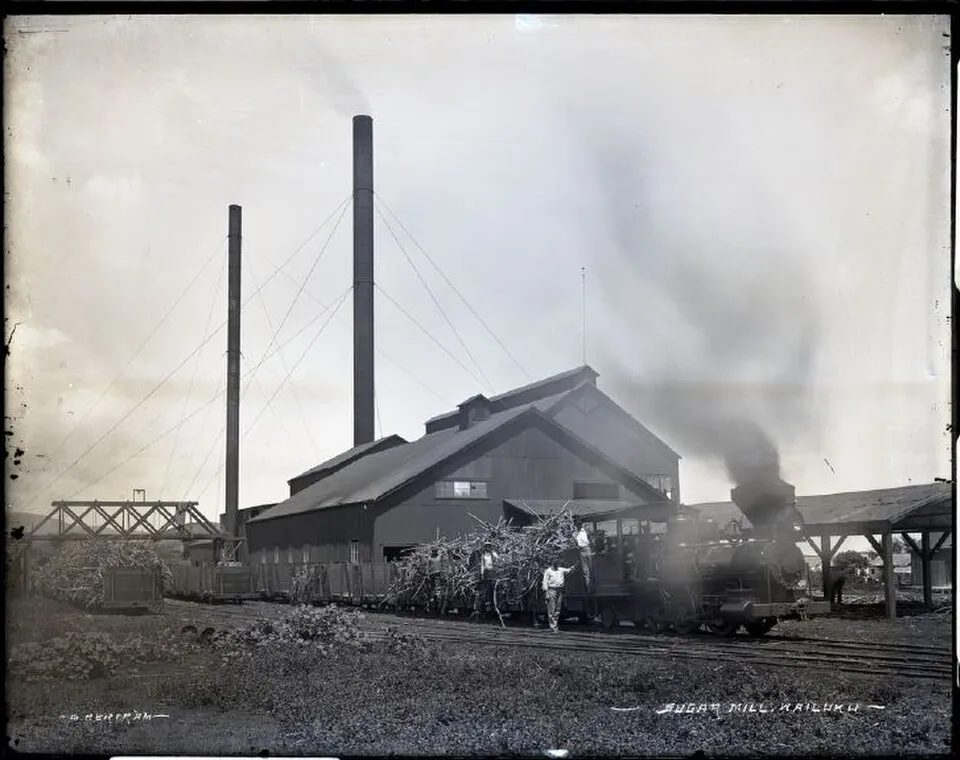
The Puʻunēnē Mill was the major processing facility for Hawaiian Commercial & Sugar Company. Harvested cane was transported to the mill, where its juice was extracted and processed into raw sugar and molasses. The mill became one of the most recognizable symbols of Maui’s plantation era.
Who worked on Maui's sugar plantations?
Plantation companies recruited workers from many parts of the world, including China, Japan, Portugal, Puerto Rico, Korea, and the Philippines. These workers and their families established communities across Maui and profoundly influenced the island's modern population and culture.
Why did immigrants come to Maui to work on sugar plantations?
Large sugar plantations required enormous amounts of labor. Plantation companies recruited workers internationally to plant, maintain, harvest, transport, and process sugar cane. Many workers eventually settled permanently in Hawaiʻi and raised families on the islands.
How did sugar plantations shape Maui's culture?
Plantation communities brought together people from numerous cultural and linguistic backgrounds. Their traditions influenced Maui’s food, celebrations, language, religion, music, businesses, and family life. Many elements of modern Hawaiʻi's multicultural identity have connections to the plantation era.
What was life like for sugar plantation workers on Maui?
Plantation work could be physically demanding and working conditions were often difficult. Workers lived in plantation camps that developed into communities with homes, stores, churches, schools, recreational facilities, and social organizations. Experiences varied considerably depending on the period, occupation, plantation, and worker.
How was sugar cane harvested on Maui?
For much of Maui’s plantation history, harvesting required substantial manual labor. Workers cut mature cane in the fields before it was transported to mills for processing. Over time, mechanized equipment increasingly replaced some of the labor-intensive harvesting methods.
Why were sugar cane fields burned on Maui?
Before harvesting, plantations historically burned sugar cane fields to remove dry leaves and other vegetation while leaving the sugar-rich stalks for collection. Although the practice made harvesting more efficient, cane burning later became controversial because of smoke, ash, and concerns about air quality.
How was sugar made from Maui sugar cane?
After harvesting, sugar cane was transported to a mill where machinery crushed and shredded the stalks to extract their sweet juice. The juice was then processed, concentrated, crystallized, and converted into raw sugar for further refining.
How important was sugar to Maui's economy?
For generations, sugar was one of Maui’s dominant industries. Plantations employed thousands of workers, influenced transportation and infrastructure, controlled large areas of agricultural land, and supported communities throughout the island.
Why did Maui's sugar industry decline?
Maui's sugar industry faced increasing production costs, competition from lower-cost sugar producers elsewhere in the world, changing economic conditions, and environmental concerns. Tourism also became increasingly important to Hawaiʻi's economy during the second half of the 20th century.
When did Maui stop growing sugar cane commercially?
Large-scale commercial sugar production on Maui ended in December 2016 when Hawaiian Commercial & Sugar Company closed. HC&S was the final sugar plantation operating in Hawaiʻi, making its closure the end of a major chapter in the state's agricultural history.
Why did HC&S close in 2016?
HC&S had struggled financially as the cost of producing sugar in Hawaiʻi became increasingly difficult to compete with lower-cost production elsewhere. Its closure in 2016 ended more than a century of large-scale sugar cultivation in Central Maui.
What happened to Maui's sugar cane fields after HC&S closed?
Approximately 36,000 acres of former HC&S agricultural land were sold in 2018. Much of the former plantation acreage has since been associated with efforts to diversify Central Maui agriculture with different crops rather than returning to large-scale commercial sugar production.
Can you still see sugar cane fields on Maui?
Maui no longer has the enormous active commercial sugar plantation that once dominated Central Maui. However, the landscape still contains reminders of the sugar era, including former agricultural lands, irrigation infrastructure, plantation communities, historic buildings, and the Puʻunēnē area.
Can you visit a sugar plantation on Maui today?
Maui’s large commercial sugar plantations are no longer operating. However, visitors interested in plantation history can visit the Alexander & Baldwin Sugar Museum in Puʻunēnē, which preserves artifacts, photographs, equipment, documents, and stories connected to Maui’s sugar industry.
Where can I learn about Maui's sugar plantation history?
The Alexander & Baldwin Sugar Museum in Puʻunēnē is one of the best places to learn about the subject. Its exhibits explore plantation workers, immigration, irrigation, field work, sugar processing, plantation communities, and the companies that shaped Maui’s sugar industry.
Is Maui's sugar plantation history still important today?
Yes. Although large-scale sugar production has ended, the plantation era continues to influence Maui's communities, agriculture, infrastructure, food, and multicultural identity. Understanding sugar plantation history provides important context for understanding how modern Maui developed.
If you would like to read and learn more about interesting things in Hawaii! Check out our blog page here on our website!
or
Image Credits:
Hero:
Photo: Brother Bertram (Gabriel Bertram Bellinghausen), Public Domain, via Wikimedia Commons.
Photo: Hawaiʻi State Archives, Public Domain, via Wikimedia Commons.
Photo: Public Domain, via Wikimedia Commons.