
Table of Contents
If you search “whale Maui” while planning a Hawaiian vacation, you are probably wondering when whales are around, where you can see them, and whether Maui is a good island for whale watching. The answer is simple: Maui is one of Hawaiʻi’s premier destinations for seeing humpback whales during the winter months.
Every year, thousands of North Pacific humpback whales, known in Hawaiian as koholā, migrate to the warm waters surrounding the Hawaiian Islands. Hawaiʻi serves as an important breeding, calving, and nursing area for these enormous marine mammals. According to NOAA, approximately half of the North Pacific humpback whale population uses Hawaiian waters during the winter and spring.
For Maui visitors traveling during whale season, spotting a humpback can become one of the most memorable experiences of the entire trip.
When Is Whale Season on Maui?
The Maui whale season generally runs from November into April or May, although the exact arrival and departure of the whales varies each year.
If whale watching is one of the main reasons for your trip, January through March is typically the best window to visit Maui. NOAA identifies these months as the usual peak period for humpback abundance in Hawaiian waters.
During the beginning of the season, visitors may notice occasional whales appearing offshore. Numbers generally increase as winter progresses before declining again during spring as whales begin migrating back toward northern feeding grounds.
Because whales are wild animals, sightings are never completely guaranteed. However, visiting during peak season can significantly improve your chances.
Why Do Humpback Whales Come to Maui?
Humpback whales don't come to Hawaiʻi primarily to feed. Instead, the islands provide important winter breeding habitat.
The whales travel from colder northern feeding areas to Hawaiʻi's warm waters to mate, give birth, and nurse their calves. The relatively warm, shallow waters surrounding the Hawaiian Islands provide important habitat during this stage of their lives.
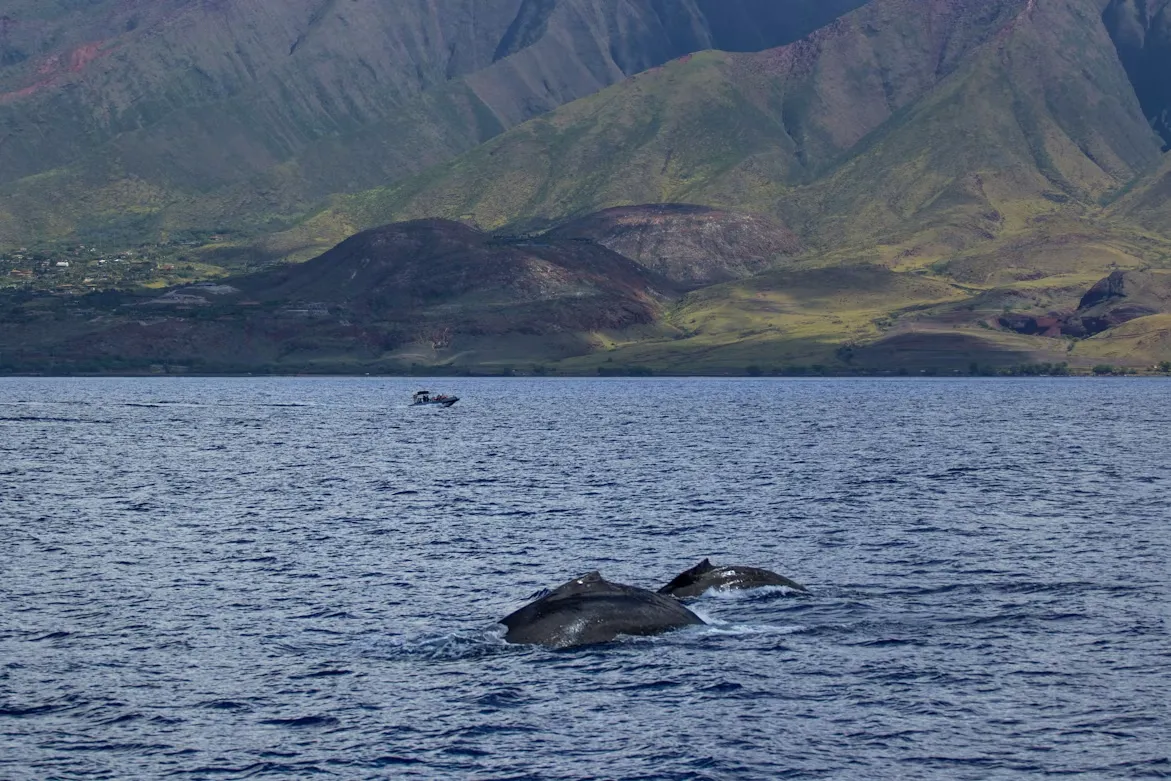
This migration is impressive considering the enormous distances the whales travel between their seasonal habitats.
Maui is especially interesting because of the extensive shallow-water habitat surrounding Maui Nui. NOAA has conducted dedicated vessel surveys off West Maui to better understand the abundance and distribution of humpback whales in the region.
Where Can You See Whales on Maui?
One of the great things about searching for whales on Maui is that you don't necessarily have to get on a boat.
During peak season, whales can sometimes be spotted directly from shore. Elevated viewpoints can be particularly useful because they provide a wider view of the ocean.
Visitors often look for activity in the waters around West and South Maui, including areas facing the channels between Maui, Lānaʻi, Molokaʻi, and Kahoʻolawe.
Watch carefully for a sudden misty plume above the ocean. This is the whale's blow, created when it exhales at the surface.
You might also see a dark back rolling through the water, a tail disappearing beneath the surface, or more dramatic behaviors such as breaches and fin slaps.
Bringing binoculars can make shoreline whale watching even better.
Should You Take a Maui Whale-Watching Tour?
For travelers who want to dedicate part of their vacation specifically to whales, a guided Maui whale-watching tour can be worthwhile.
Boat tours allow visitors to experience the ocean environment while knowledgeable guides explain humpback whale behavior, migration, conservation, and Hawaiian marine ecology.
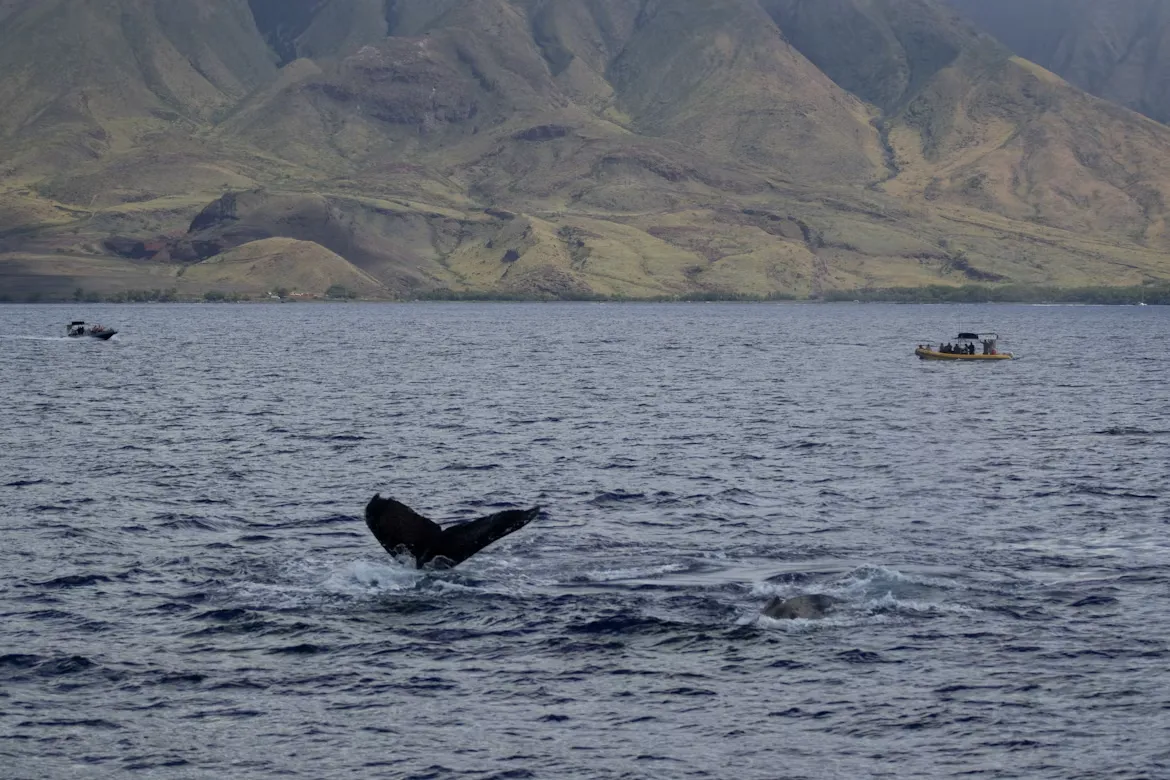
However, responsible wildlife viewing is extremely important.
Humpback whales in Hawaiian waters are protected, and ocean users cannot approach within 100 yards of a humpback whale. The rule applies to vessels as well as swimmers, kayakers, paddleboarders, and other ocean users.
Whales may occasionally choose to approach a vessel themselves. In those situations, operators must continue following applicable wildlife-viewing regulations rather than intentionally moving closer.
What Whale Behaviors Might You See?
Every whale-watching experience is different, which is part of what makes seeing humpbacks so exciting.
One of the most famous behaviors is breaching, when much of a whale's enormous body launches above the surface before crashing back into the ocean.
Visitors might also see:
- Tail slaps, when the whale strikes the surface with its flukes
- Pectoral fin slaps, involving the whale's long fins
- Spyhopping, when a whale raises its head vertically above the surface
- Blows, when a whale exhales at the surface
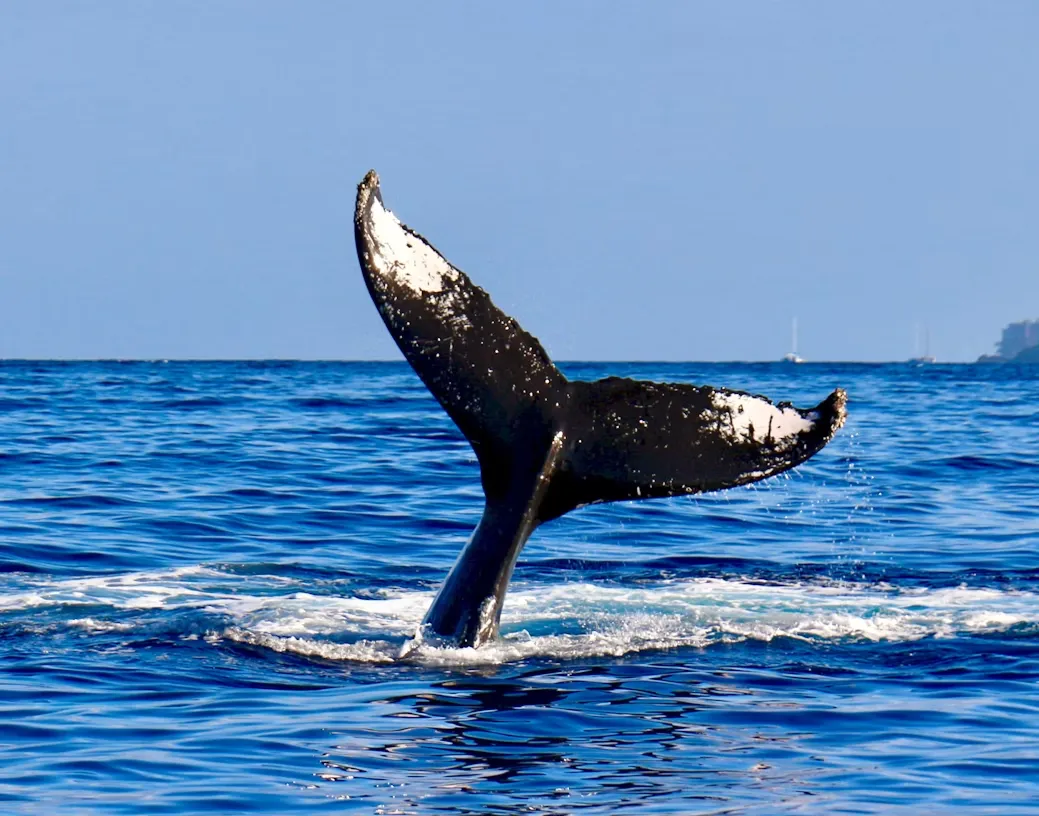
- Fluking, when the tail rises above the water before a deeper dive
- Mother-and-calf pairs traveling together
Male humpback whales are also famous for their complex songs. NOAA researchers use acoustic monitoring because humpback song becomes a major part of Maui's underwater soundscape during winter.
Whale Watching and Other Maui Adventures
Whale season doesn't mean your entire vacation has to revolve around the ocean.
One of the best ways to experience Maui is to combine marine activities with adventures on land. You might spend the morning searching for humpback whales and then explore Upcountry Maui, visit the slopes of Haleakalā, hike through a tropical landscape, or go ziplining.
This creates a more complete Maui itinerary, especially for families and groups with different interests.
For an adventurous land-based experience, NorthShore Zipline in Haʻikū offers visitors an opportunity to explore a completely different side of Maui after spending time along the coast. Instead of making every vacation day a beach day, travelers can experience Maui's forests, mountain scenery, history, and outdoor adventures as well.
Respecting Koholā While Visiting Maui
Whale watching should always be about observing these animals without interfering with their natural behavior.
The Hawaiian Islands Humpback Whale National Marine Sanctuary works to protect humpback whales and their Hawaiian habitat through research, education, conservation, and resource protection. Threats can include vessel collisions, entanglement, harassment, and broader environmental changes.
Visitors can help by keeping the required distance, choosing responsible tour operators, reducing marine debris, and never attempting to touch or swim toward a whale.
Respecting these animals helps ensure that future generations can continue experiencing the return of koholā to Hawaiʻi.
Experience Whale Season and More on Maui
Searching “whale Maui” might start with the hope of seeing a humpback breach offshore, but whale season can become part of a much larger Maui adventure.
From watching koholā along the coastline to exploring Haleakalā, Upcountry Maui, tropical forests, snorkeling destinations, hiking trails, and outdoor adventures like ziplining, Maui offers far more than a single attraction.
If you're visiting between winter and early spring, keep your eyes on the ocean. That splash in the distance might be one of Maui's most famous seasonal visitors.
Helpful Maui Whale Resources
For current regulations, whale information, conservation resources, and responsible viewing guidance, these official resources are useful when planning your trip:
Hawaiian Islands Humpback Whale National Marine Sanctuary — Learn about humpback whales, research, conservation, and Hawaiʻi's protected whale habitat.
NOAA Humpback Whale Boating Guidelines — Review safe and responsible boating practices around whales.
NOAA Humpback Whale Regulations — Learn about required approach distances and other protections for humpback whales in Hawaiʻi.
NOAA Humpback Whale Research and Monitoring — Explore research into whale abundance, behavior, acoustic activity, and distribution.
NOAA Responsible Recreation Guidelines — Helpful information for enjoying Hawaiʻi's marine environment responsibly.
Frequently Asked Questions About Whales on Maui
What months are whales in Maui?
Humpback whales are generally found around Hawaiʻi from approximately November through April or May, with the greatest abundance typically occurring from January through March.
What is the best month to see whales in Maui?
January, February, and March are generally excellent months for Maui whale watching because they fall within the peak period for humpback whale abundance. February is particularly popular for travelers planning a vacation specifically around whale watching.
Can you see whales from shore in Maui?
Yes. During peak whale season, humpback whales can often be spotted from Maui's shoreline. Look for whale blows, breaches, tail slaps, and other surface activity. Binoculars and elevated coastal viewpoints can improve your chances of seeing them.
Where is the best place to see whales in Maui?
West and South Maui provide many opportunities for shoreline whale watching, while whale-watching boat tours depart from several locations around the island. The best location on any particular day can depend on whale activity, weather, and ocean conditions.
Why are there so many whales around Maui?
Humpback whales migrate to Hawaiian waters during winter to breed, give birth, and nurse their calves. The warm and relatively shallow waters surrounding the islands provide important winter habitat.
Can you swim with humpback whales in Maui?
You cannot intentionally approach humpback whales for a close encounter. In Hawaiian waters, regulations prohibit approaching a humpback whale within 100 yards by any means while on or in the water.
Are Maui whale-watching tours worth it?
For many visitors, yes. A whale-watching tour can provide a dedicated opportunity to look for whales while learning about humpback behavior, migration, and conservation from experienced guides. Remember that humpbacks are wild animals, so specific sightings or behaviors can never be guaranteed.
Can you see whales in Maui in December?
Yes. December falls within Maui's general humpback whale season, and sightings are possible. However, whale abundance typically increases later in winter, with the peak generally occurring from January through March.
Can you see whales in Maui in April?
Yes. Humpback whales can still be present around Maui in April, although numbers generally begin decreasing as whales migrate away from Hawaiʻi toward their northern feeding grounds.
Is Maui good for whale watching with kids?
Absolutely. Whale watching can be a memorable family activity, especially during peak season. Families can choose between shoreline viewing and boat excursions depending on children's ages, comfort on the ocean, and weather conditions.
If you would like to read and learn more about interesting things in Hawaii! Check out our blog page here on our website!
or
Image Credits:
Blog Photos:
"black whale tail" by Andrew Bain, via Unsplash
"green mountain beside body of water during daytime" By Colton Jones, via Unsplash
"black whale on blue sea during daytime" by Colton Jones, via Unsplash