
Table of Contents
Every winter, thousands of humpback whales make their epic journey from Alaska to the warm, protected waters of Hawaiʻi. Of all the islands, Maui consistently offers the most reliable and exciting whale-watching experience anywhere in the state. Calm channels, shallow waters, and ideal viewing conditions make it the best place in Hawaiʻi to see breaching whales, mothers with calves, and large competing groups of males. If you're planning a visit and want to experience these incredible animals up close, this FAQ guide covers everything travelers frequently ask about Hawaii whale watching.
1. When is the best time of year to see humpback whales in Hawaiʻi?
The official whale season in Hawaiʻi begins in November and continues through April, with the greatest concentration of whales occurring between January and March. During these peak months, whales are highly active as they mate, give birth, and nurse their calves. Visitors during this period can expect daily sightings from both land and sea, with countless opportunities to witness breaching, tail slapping, and other spectacular behaviors.
2. Which Hawaiian island is the best for whale watching?
Although whales are present throughout the archipelago, Maui stands out as the premier destination. The island’s west and south shores border the sheltered Auʻau Channel, an area known for calm seas and optimal breeding conditions. This natural environment draws a significant portion of the entire North Pacific humpback population, giving Maui unmatched visibility and encounter rates.
3. What month has the most whale activity in Maui?
While the season is productive overall, whale activity on Maui typically peaks in February, when the waters are filled with mothers nursing calves, competitive male groups, and frequent surface behavior. Late January through early March consistently provides the most dramatic displays, making this the best window for travelers seeking high-energy encounters.
4. Can you see humpback whales from the shore in Hawaiʻi?
Yes, especially on Maui. The island’s coastline offers numerous vantage points where whales often swim surprisingly close to shore. Locations such as Kāʻanapali, Kihei, Wailea, and various pull-offs along Honoapiʻilani Highway provide excellent visual access. On calm days, you may spot multiple pods within minutes just by scanning the horizon.
5. What are the best whale-watching tours in Maui?
Tours on Maui range from large catamarans to small, fast rafts, each providing a unique experience. Catamarans offer comfort, stability, and ample viewing areas, making them popular with families. Rafts provide a closer-to-the-water vantage point and a more adventurous feel. Sailing vessels provide a peaceful, quiet environment perfect for hearing whale blows and observing surface activity. Choosing the best tour depends on your comfort level, group size, and preference for adventure or relaxation.
6. What time of day is best for whale watching in Hawaiʻi?
Generally, morning conditions are calmer and clearer, offering smooth seas and excellent visibility. However, whales are active around the clock, so midday and afternoon tours can also be rewarding. Weather and ocean conditions have more impact on the viewing experience than the whales’ behavior, which remains consistent throughout the day.
7. Where are the best spots to see whales from land on Maui?
Maui offers exceptional shoreline viewing areas such as Papawai Point, the Kapalua Coastal Trail, the Wailea Beach Path, and the scenic overlooks along the Lahaina-to-Olowalu coastline. These spots are elevated or strategically positioned, giving you a broad view of the ocean where whales frequently travel and rest.
8. Are humpback whales dangerous to be near?
Humpback whales are not aggressive, but their massive size means they must be approached cautiously. Federal regulations protect both whales and humans by requiring boats, swimmers, and drones to maintain safe distances. Following these guidelines ensures peaceful and safe wildlife encounters without disturbing the animals’ natural behavior.
9. How close can boats legally get to humpback whales in Hawaiʻi?
U.S. federal law requires that all vessels remain at least 100 yards away from humpback whales and 300 yards from mothers with young calves. These distances are strictly enforced to protect vulnerable animals. If a whale voluntarily approaches a vessel, known as a “mugging,” the boat must keep engines neutral until the whale moves on.
10. Why do humpback whales come to Hawaiʻi every winter?
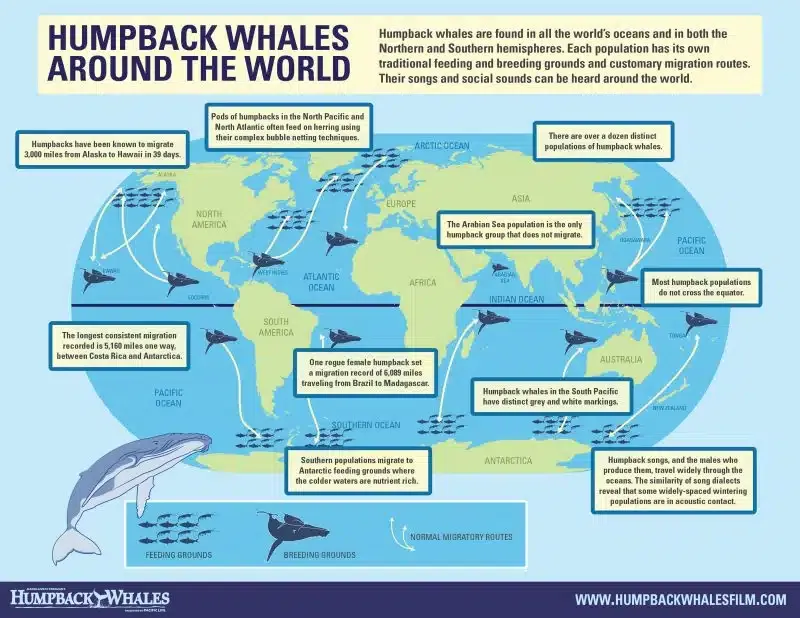
Humpback whales migrate more than 3,000 miles from Alaska to Hawaiʻi each year to breed, give birth, and raise their calves. Hawaiʻi’s warm, clear waters provide a safe environment free from major predators such as orcas. Interestingly, the whales do not feed in Hawaiʻi; all feeding occurs in Alaska. Their time here is spent resting, nurturing calves, and preparing for the journey back north.
11. Can you hear humpback whales singing while snorkeling?
Yes, it is possible to hear whale songs underwater even if the whales are far away. Their vocalizations travel long distances, especially in calm conditions. Hearing whale songs does not require you to be near them, and swimmers should never attempt to approach whales intentionally, as it is both unsafe and illegal.
12. Is whale watching better in Maui, Big Island, or Kauaʻi?
All islands offer opportunities, but Maui consistently delivers the highest number of sightings due to its protected channels and shallow waters. Big Island has deep drop-offs close to shore that provide unique whale-watching perspectives, while Kauaʻi offers scenic tours along dramatic cliffs. Oʻahu has reliable viewing along the southeastern coastline near Makapuʻu. However, Maui remains unmatched for density and frequency of interactions.
13. Do whales come close to Lahaina or South Maui beaches?
Yes, whales often travel very close to shore in Lahaina, Kihei, Wailea, and Mākena. Mothers with calves frequently rest and nurse in these sheltered waters. It’s not uncommon to see breaches just a few hundred yards offshore during peak season.
14. What is the best month to visit Hawaiʻi for whale watching?
For the strongest combination of weather and whale activity, plan your visit between late January and early March. This period consistently provides high sighting rates, calm conditions, and the most dramatic surface behaviors.
15. Are there whale-watching tours for families with kids?
Yes. Many Maui operators offer family-friendly tours with shaded seating, safe boarding, bathrooms, and naturalist guides who explain whale behavior in engaging, kid-friendly ways. Morning tours tend to be the smoothest and most comfortable for young children.
16. Can you see whales while on the ferry between Maui and Lānaʻi?
In winter, sightings from the ferry are extremely common. The route passes directly through whale territory, giving passengers a strong chance of seeing spouts, breaches, and tail slaps even without booking a dedicated tour.
17. How long does the whale season last in Hawaiʻi?
The first whales often arrive as early as late October. Numbers steadily rise through December, peak in January–March, and taper off by early May. Tours typically operate from November through April to match the bulk of whale activity.
18. What is “whale soup,” and why is Maui known for it?
“Whale soup” is a local nickname given to days when the waters around Maui are filled with so many whales that it becomes difficult to look anywhere without seeing activity. This phenomenon occurs most often in the Auʻau Channel, where calm, warm waters attract a high density of humpbacks.
19. Can pregnant women or seniors safely go on whale-watching tours?
Yes, depending on the type of boat and sea conditions. Larger, stable catamarans are generally the best option for pregnant guests, seniors, and those with mobility concerns. It’s always best to check with the tour operator ahead of time to ensure the vessel can comfortably accommodate your needs.
20. Do humpback whales ever breach close to shore in Hawaiʻi?
Yes. Maui often experiences near-shore breaches, particularly around Kihei, Wailea, and Lahaina. Calm winter mornings frequently bring whales surprisingly close to beachgoers, creating memorable moments even without stepping onto a boat.
21. Are drones allowed for filming whales in Hawaiʻi?
Drone operators must maintain a minimum distance of 1,000 feet from whales, according to federal regulations. Flying closer than this is prohibited and subject to significant fines. These rules protect both marine life and visitors while maintaining safe airspace.
22. Can you swim with humpback whales in Hawaiʻi?
It is illegal to attempt to swim with or approach humpback whales in the water. Swimmers and snorkelers must keep a respectful distance at all times. If whales approach unintentionally, the safest action is to remain still and let them pass naturally.
23. Why are there more whales in Maui than other islands?
Maui’s west and south shores border a uniquely sheltered body of water known as the Auʻau Channel. Its warm, shallow, and calm conditions provide exceptional protection for mothers and calves, and it is one of the most important breeding grounds for humpbacks in the entire North Pacific.
24. Can you see whales on the Road to Hāna?
Yes, especially from elevated cliff areas. While the eastern coastline is not as densely populated with whales as West and South Maui, travelers on clear days often spot spouts and breaches from scenic pull-offs along the route.
25. Is it possible to see whales from the Kāʻanapali beachwalk?
Very much so. The Kāʻanapali and Aliʻi Kahekili beachwalks offer excellent shoreline viewing, particularly during calm weather. Many visitors witness breaching whales while enjoying a casual walk along the path.
26. What weather is best for whale watching in Hawaiʻi?
Light wind and smooth seas make for the best viewing conditions. Calm oceans allow you to spot subtle movements such as blows or fin slaps from farther away. Overcast or sunny skies both work well; the primary factor is ocean surface texture rather than sky conditions.
27. How early in the season do the whales arrive?
A small number of whales may arrive in October, but sightings increase dramatically in late December. By January, the majority of migrating whales have reached the Hawaiian Islands.
28. Do humpback whales migrate with their babies?
Yes. After spending the winter months nursing and growing in Hawaiʻi, calves travel north with their mothers to Alaska. This migration helps them acclimate to colder waters and prepares them for feeding in nutrient-rich northern seas.
Helpful Links for Planning Your Hawaii Whale Watching Experience
Here are some useful and reputable resources for whale watching, wildlife protection, and Maui travel:
- Hawaiian Islands Humpback Whale National Marine Sanctuary: https://hawaiihumpbackwhale.noaa.gov/
- Pacific Whale Foundation (Maui-based research and tours): https://www.pacificwhale.org/
Maui Travel & Visitor Info
- GoHawaii – Official Hawaiʻi Tourism: https://www.gohawaii.com/maui
- Maui Visitors Bureau: https://www.gohawaii.com/islands/maui
- Haleakalā National Park (if pairing whale tours with sunrise trips): https://www.nps.gov/hale
Boat Tour Guidance
- Hawaii Ocean Safety and Regulations: https://dlnr.hawaii.gov/dobor/
- NOAA Marine Wildlife Viewing Guidelines: https://www.fisheries.noaa.gov
If you would like to read and learn more about interesting things in Hawaii! Check out our blog page here on our website!
or