
Table of Contents
When travelers hear the words “North Shore of Hawaiʻi,” they often imagine towering ocean waves, world-famous surf breaks, lush tropical landscapes, and small coastal towns where life moves at a slower pace. But what exactly is the North Shore of Hawaiʻi, and where can visitors find it?
The answer may surprise first-time visitors: Hawaiʻi doesn't have just one North Shore. While Oʻahu's North Shore is internationally recognized as a surfing destination, other Hawaiian islands, including Maui and Kauaʻi, have their own northern coastlines with distinct landscapes, communities, and attractions.
From the legendary winter surf of Oʻahu to the rainforest-covered coastline of North Shore Maui, understanding these regions can help travelers discover a side of Hawaiʻi that extends far beyond the traditional resort experience.
What Does "North Shore" Mean in Hawaiʻi?
In Hawaiʻi, the term North Shore generally refers to the northern coastal region of an island. However, its meaning varies depending on which island you're visiting.
Most commonly, “the North Shore” refers to Oʻahu's famous northern coastline, particularly the communities surrounding Haleʻiwa, Waialua, Waimea Bay, Pūpūkea, and Sunset Beach.
This region has earned international recognition for its powerful winter surf, professional surfing competitions, and deeply rooted surf culture.
However, visitors exploring Maui or Kauaʻi will encounter different North Shore experiences.
- Oʻahu's North Shore: Famous for big-wave surfing, beaches, and historic Haleʻiwa Town.
- Maui's North Shore: Known for Hoʻokipa Beach Park, Pāʻia Town, Haʻikū, tropical scenery, and the beginning of the Road to Hāna.
- Kauaʻi's North Shore: Celebrated for Hanalei Bay, dramatic mountains, lush valleys, and access to the Nāpali Coast region.
Although these areas share a geographic orientation, each offers a different perspective on Hawaiʻi's natural beauty and island lifestyle.
Oʻahu's North Shore: The Surfing Capital of the World
For many travelers, Oʻahu's North Shore is the first place that comes to mind when discussing Hawaiʻi's northern coastline.
Located approximately an hour or more from Honolulu by car, depending on traffic and your destination, this stretch of coastline attracts surfers, photographers, and travelers seeking an experience away from Waikīkī's busy resort district.
Famous North Shore Beaches
Banzai Pipeline (ʻEhukai Beach Park)
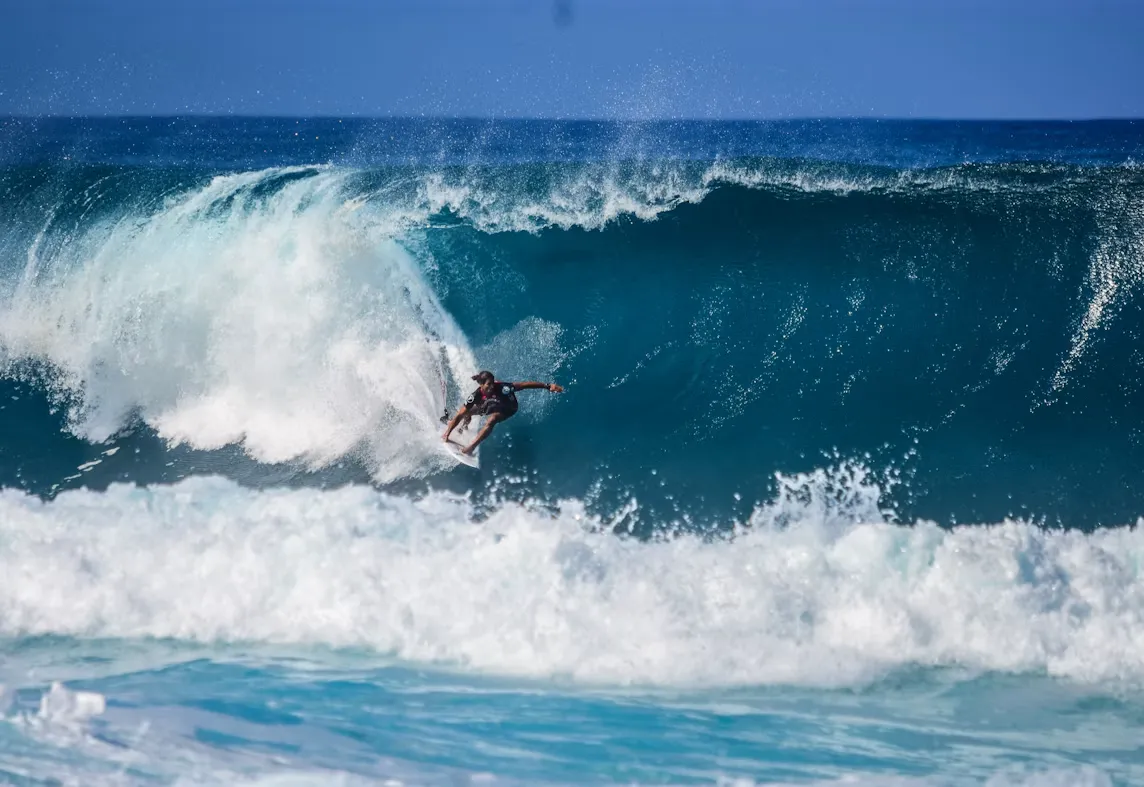
Pipeline is one of the world's most recognizable surf breaks, famous for powerful waves that break over a shallow reef. During winter swells, experienced professional surfers travel from around the world to challenge its conditions.
Waimea Bay
Known for its enormous winter waves, Waimea Bay has played a significant role in big-wave surfing history. During calmer summer conditions, the bay can look dramatically different, although ocean safety remains essential year-round.
Sunset Beach
Another internationally recognized surfing destination, Sunset Beach hosts powerful winter swells and offers scenic coastal views.
Explore Historic Haleʻiwa Town
Beyond surfing, Haleʻiwa offers a combination of local restaurants, art galleries, boutiques, and shave ice shops.
Visitors can spend an afternoon exploring the town, sampling local food, or discovering the region's surfing heritage.
While Oʻahu's North Shore attracts visitors throughout the year, November through April generally brings the most powerful surf, making winter particularly appealing for spectators.
These same conditions can create dangerous shorebreaks, currents, and unexpected waves. Visitors should follow lifeguard instructions and avoid entering the water when conditions are hazardous.
Maui's North Shore: Tropical Landscapes, Surf Culture, and Adventure
Although Oʻahu's North Shore receives much of the international attention, Maui's North Shore offers an equally memorable experience with a completely different atmosphere.
Stretching along Maui's northern coastline, this region includes communities such as Pāʻia and Haʻikū, with nearby attractions extending toward Hoʻokipa and the Road to Hāna.
Rather than being defined solely by surfing, North Shore Maui combines historic plantation-era communities, scenic coastlines, tropical vegetation, outdoor recreation, and access to some of the island's most beautiful landscapes.
Pāʻia Town: The Gateway to North Shore Maui
Located east of Kahului, Pāʻia is a historic town known for its colorful storefronts, independent businesses, restaurants, and laid-back atmosphere.
Once closely associated with Maui's sugar plantation industry, Pāʻia has developed into a popular stop for travelers exploring the island's northern and eastern regions.
Visitors can browse locally operated shops, enjoy fresh seafood, or stop for coffee before continuing toward Hoʻokipa Beach Park.
Pāʻia is also a common starting point for travelers beginning their journey along the Road to Hāna.
Hoʻokipa Beach Park: A World-Renowned Windsurfing Destination
Just east of Pāʻia, Hoʻokipa Beach Park is one of Maui's most recognizable coastal attractions.
Known internationally for windsurfing and surfing, Hoʻokipa attracts skilled water athletes who take advantage of the area's consistent trade winds and seasonal swells.
The beach's elevated lookout provides an excellent opportunity to watch surfers and windsurfers while enjoying panoramic views of the Pacific Ocean.
Hoʻokipa is also known for Hawaiian green sea turtles, or honu, which sometimes rest along the shoreline.
Visitors should observe wildlife from a respectful distance, never touch or disturb resting turtles, and follow posted conservation guidance.
Because of strong currents, reefs, and powerful surf, Hoʻokipa is not always suitable for casual swimming.
Haʻikū: Discover Maui's Lush Tropical Side
Traveling farther inland and eastward, visitors encounter Haʻikū, a community characterized by tropical vegetation, rolling hills, rural landscapes, and frequent rainfall.
Unlike the drier resort regions of South and West Maui, Haʻikū's windward location supports the lush greenery that many travelers associate with tropical Hawaiʻi.
The area offers opportunities to explore local businesses, scenic countryside, and outdoor adventures.
For visitors looking to experience North Shore Maui beyond its beaches, activities such as ziplining provide a different perspective on the region's natural surroundings.
NorthShore Zipline in Haʻikū offers a guided outdoor adventure that can complement a day exploring Pāʻia and Hoʻokipa. Located on the historic Camp Maui property, the attraction combines outdoor recreation with a connection to the area's past.
The Road to Hāna: Beyond Maui's North Shore
One of Maui's most famous scenic drives begins near the North Shore region and continues eastward along the Hāna Highway.
The Road to Hāna features rainforest scenery, waterfalls, coastal overlooks, and winding roads through East Maui.
Although Hāna itself is generally considered part of East Maui rather than North Shore Maui, the journey begins near several of the North Shore's most popular communities.
Travelers should plan sufficient time, respect private property, check road conditions, and avoid stopping where parking is prohibited.
Some attractions require advance reservations, and certain areas may be inaccessible because of weather or maintenance.
Kauaʻi's North Shore: Dramatic Mountains and Coastal Beauty
Kauaʻi's North Shore presents another interpretation of Hawaiʻi's northern coastlines.
Known for its extraordinary mountain scenery, tropical vegetation, and picturesque beaches, this region includes Hanalei, Princeville, and Hāʻena.
Hanalei Bay
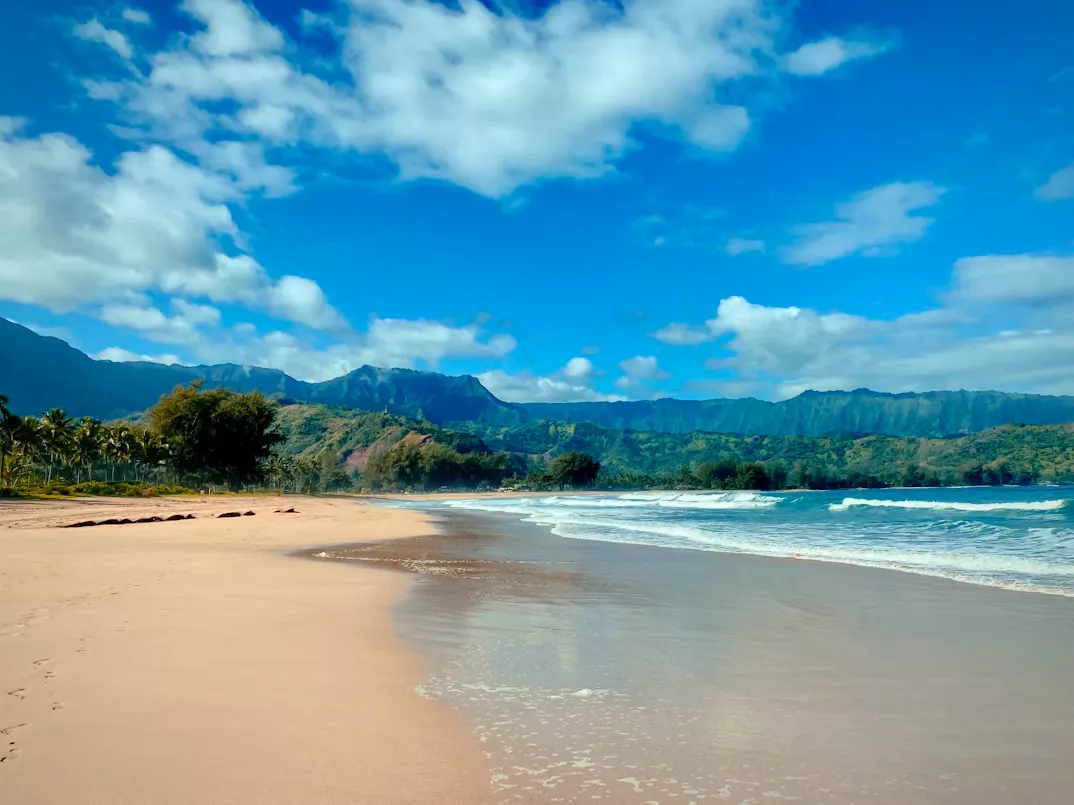
Hanalei Bay is among Kauaʻi's most recognizable natural landmarks, featuring a sweeping crescent-shaped beach surrounded by dramatic green mountains.
The area is popular for photography, beachgoing, and enjoying the scenery, although ocean conditions vary significantly by season.
Hāʻena State Park and the Nāpali Coast
Farther west, Hāʻena State Park provides access to the beginning of the famous Kalalau Trail along the Nāpali Coast.
This rugged coastline features towering sea cliffs, remote valleys, and breathtaking views.
Visitors should understand that park entry, parking, and shuttle access may require advance reservations, while hiking beyond certain points requires additional permits.
For travelers who appreciate dramatic landscapes and outdoor exploration, Kauaʻi's North Shore offers a memorable experience.
Which Hawaiian Island Has the Best North Shore?
The answer depends on the type of experience you're seeking.
- Oʻahu: Best for world-famous surfing, iconic beaches, and historic Haleʻiwa Town.
- Maui: Best for tropical scenery, outdoor adventures, historic Pāʻia, Hoʻokipa, and Haʻikū.
- Kauaʻi: Best for dramatic mountains, Hanalei Bay, hiking, and scenic coastal landscapes.
Travelers hoping to watch some of the world's best surfers may prefer Oʻahu. Those seeking tropical countryside, historic towns, and a combination of coastal and inland activities may enjoy Maui.
Meanwhile, Kauaʻi is particularly appealing to visitors drawn to dramatic mountain landscapes and hiking opportunities.
There is no single North Shore experience that represents every Hawaiian island.
When Is the Best Time to Visit Hawaiʻi's North Shore?
The ideal season depends on the island and your planned activities.
Winter (approximately November through April) brings larger north and northwest swells to many northern coastlines. This makes winter an exciting time for watching experienced surfers, but ocean conditions can become extremely hazardous.
Summer (approximately May through September) often brings smaller surf to north-facing beaches, particularly on Oʻahu and Kauaʻi. However, changing weather, currents, and local conditions can still create risks.
On Maui, trade winds can affect North Shore beaches throughout the year, especially areas popular with windsurfers.
For visitors interested primarily in sightseeing, restaurants, scenic drives, and land-based adventures, the North Shore can be explored in any season with appropriate planning.
Experience a Different Side of Hawaiʻi
The North Shore of Hawaiʻi is more than a geographic description. It represents a collection of coastal communities shaped by the ocean, local history, Hawaiian culture, and the natural environment.
From Oʻahu's legendary surf breaks to Kauaʻi's towering mountains and Maui's lush tropical countryside, each island offers its own interpretation of the North Shore experience.
For visitors staying on Maui, exploring Pāʻia, Hoʻokipa, and Haʻikū is an excellent way to discover attractions beyond the island's major resort destinations.
Whether you're watching world-class surfers, exploring a historic town, photographing tropical landscapes, or enjoying an outdoor adventure, Hawaiʻi's northern coastlines offer experiences that can become highlights of your island vacation.
Helpful Links for Planning Your North Shore Adventure
- Oʻahu's North Shore — GoHawaii — Official visitor information about Haleʻiwa, surfing, and North Shore attractions.
- Maui Visitors Guide — GoHawaii — Explore Maui's regions, communities, and outdoor activities.
- Hāʻena State Park — Hawaiʻi DLNR — Official park access, reservation requirements, and visitor guidance.
- Kalalau Trail — Hawaiʻi DLNR — Hiking regulations, permits, and trail information.
- Hawaiʻi Beach Safety — Ocean conditions, beach hazards, and safety guidance.
Frequently Asked Questions About the North Shore of Hawaiʻi
What is the North Shore of Hawaiʻi known for?
The North Shore of Hawaiʻi is best known for its surfing culture, beautiful coastlines, historic communities, and natural scenery. Oʻahu's North Shore is particularly famous for Pipeline, Waimea Bay, and Sunset Beach, while Maui's North Shore is known for Hoʻokipa Beach Park, Pāʻia, and Haʻikū.
Which Hawaiian island is the North Shore on?
The most famous North Shore is located on Oʻahu, but Maui and Kauaʻi also have regions commonly called the North Shore. Each island offers different beaches, landscapes, and activities.
Is the North Shore of Hawaiʻi on Maui or Oʻahu?
Both islands have a North Shore. When travelers refer to "the North Shore" without specifying an island, they usually mean Oʻahu. Maui's North Shore is a separate region that includes Pāʻia, Hoʻokipa, and Haʻikū.
What is there to do on the North Shore of Maui?
Popular activities include exploring Pāʻia Town, watching surfers and windsurfers at Hoʻokipa Beach Park, discovering Haʻikū's tropical countryside, enjoying guided zipline adventures, and beginning a scenic drive along the Road to Hāna.
How far is Maui's North Shore from Kahului Airport?
Pāʻia Town is approximately 6–7 miles from Kahului Airport, typically around 15–20 minutes by car in normal traffic. Hoʻokipa and Haʻikū are farther east, with driving times depending on the specific destination and traffic conditions.
Is the North Shore of Hawaiʻi safe for swimming?
Swimming conditions vary by beach, season, and daily ocean conditions. North-facing beaches can experience extremely powerful surf during winter. Some locations, including Pipeline and Hoʻokipa, are primarily known for experienced water athletes rather than casual swimming. Always check conditions and follow lifeguard guidance.
What is the best month to visit the North Shore of Hawaiʻi?
For watching large surf on Oʻahu, November through February is particularly popular. For calmer north-facing beach conditions, summer months are often preferable. On Maui, sightseeing and land-based activities can be enjoyed throughout the year, although weather and ocean conditions vary.
Is Maui's North Shore worth visiting?
Yes. Maui's North Shore offers a different experience from the island's major resort areas, with historic towns, scenic beaches, tropical countryside, surfing culture, and outdoor adventures. It is particularly appealing to travelers who want to explore beyond Kāʻanapali, Wailea, and other resort destinations.
Can you visit the North Shore and Road to Hāna in one day?
Yes, travelers commonly pass through Pāʻia and the North Shore region on their way to Hāna. However, fully exploring both areas in a single day can feel rushed. Visitors interested in sightseeing, shopping, beach overlooks, and outdoor activities may benefit from dedicating separate days to each experience.
Why is Hawaiʻi's North Shore famous for big waves?
During winter, powerful storms across the North Pacific generate ocean swells that travel toward the Hawaiian Islands. Many north-facing coastlines receive these swells directly, creating large waves at renowned surf breaks such as Pipeline, Waimea Bay, and Sunset Beach.
If you would like to read and learn more about interesting things in Hawaii! Check out our blog page here on our website!
or
Image Credits:
Blog Photos:
"riding the blue sea" by Thomas Ashlock, via Unsplash
"blue ocean" by Jason Weingardt, via Unsplash